
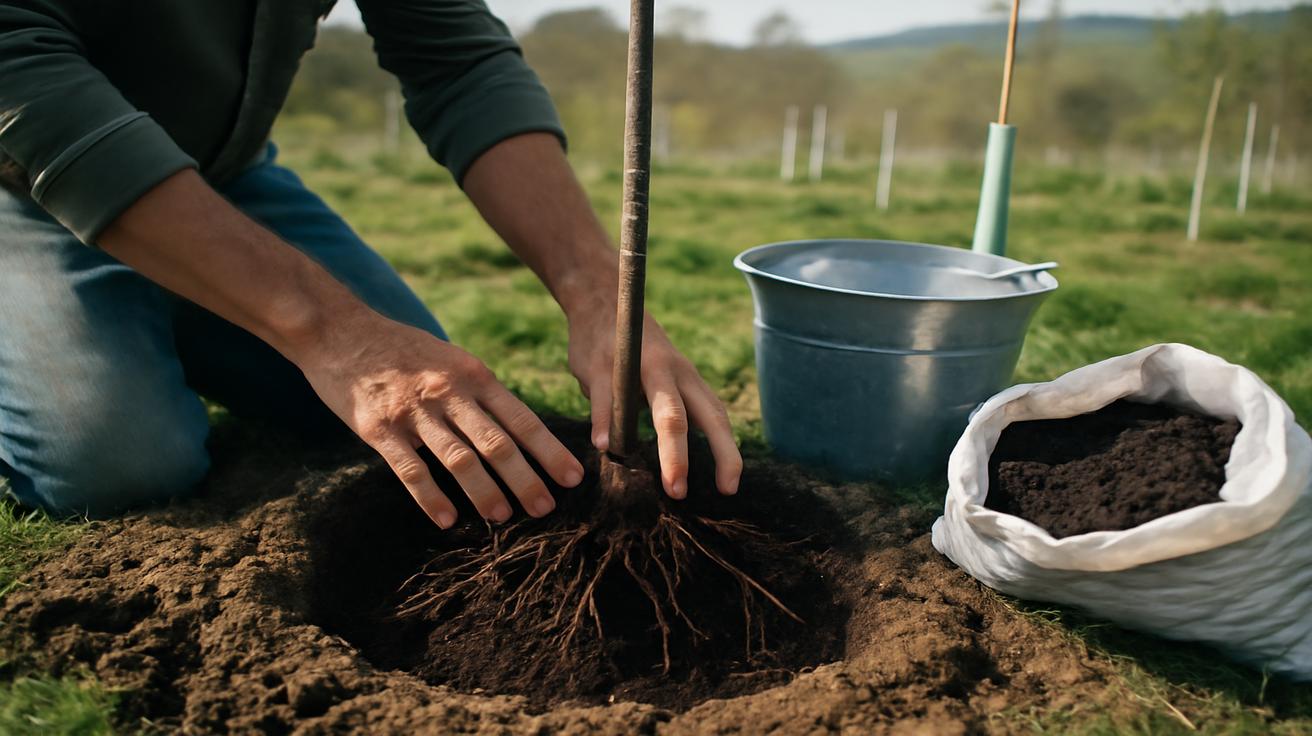
The first warm day of late winter always smells a little like possibility. The soil is still cold, the trees still mostly bare, but the air carries a damp sweetness—like something is waking up just beneath your feet. You stand in your backyard or on your little plot at the edge of town, and there it is: the dream of a spring orchard. Not the postcard version with perfectly pruned trees and impossible abundance, but a real, living place that feeds birds and bees and you. Gardeners who’ve walked this path for years will tell you: it’s not just the fruit trees that make an orchard flourish. It’s the supporting cast—the quiet, essential plantings that turn a few trees into an ecosystem.
The Secret Architecture Beneath Your Trees
Before you buy another bare-root apple or peach, old orchard hands will gently nudge you toward something less glamorous: the ground. Their stories often start the same way—years spent planting trees and waiting for magic, only to get mediocre harvests, pest explosions, and soil that felt like stale bread. Then, someone taught them to plant for the unseen.
Push your fingers into the soil beneath a thriving orchard and you can feel the difference: crumbly, slightly springy, dotted with thin white threads of mycorrhizal fungi. It smells like humus, like wet leaves, like a forest floor after rain. That’s not an accident. It’s the result of intentional plantings that feed the underground life as much as the trees themselves.
Veteran gardeners almost whisper about a few non-negotiables: nitrogen-fixing companions that quietly fertilize, dynamic accumulators that mine minerals from deep below, and low-growing herbs that hold the earth in place. To them, an orchard without these is like a house without a foundation.
| Role in Orchard | Plant Examples | Main Benefits |
|---|---|---|
| Nitrogen Fixers | Clover, Lupine, Goumi, Siberian pea shrub | Natural fertilization, soil structure improvement |
| Dynamic Accumulators | Comfrey, Yarrow, Dandelion | Deep mineral cycling, living mulch |
| Pollinator Magnets | Phacelia, Borage, Calendula | Improved fruit set, biodiversity |
| Pest Patrol & Aromatics | Chives, Garlic, Marigold, Tansy | Pest confusion, disease suppression |
| Groundcovers | Strawberries, Creeping thyme, White clover | Weed suppression, moisture retention |
When you plant these under and around your trees, you’re not just filling space. You’re building a living architecture—one that breathes, stores, and shares nutrients with the trees that will carry your spring blossoms and summer fruit.
The Nitrogen Whisperers: Quiet Fertilizers with Wild Roots
Ask any seasoned orchardist what they’d never plant without, and they’ll usually answer with something that doesn’t even bear fruit: clover. Low, cheerful, and often overlooked, clover is the ground-level alchemist of the orchard. Its roots partner with specialized bacteria to take nitrogen straight from the air and anchor it in the soil, where tree roots can eventually sip it like a slow-release tonic.
Picture a ring of soft white or crimson clover around each young tree. In early spring, when the branches are still bare but the ground is starting to green, the clover is already at work. Under the surface, tiny nodules on its roots are quietly fixing nitrogen, a process as invisible as it is powerful. You walk across that patch, and it feels like stepping on a living quilt.
Then there are shrubs with the same quiet talent. Goumi berry and Siberian pea shrub don’t just tolerate the tough edges of your orchard—they thrive there. Older gardeners plant them along fences and at the windy margins, where their thicket of roots intercepts harsh weather and their presence softens the orchard’s boundary.
In early spring, these shrubs leaf out with a resilient brightness, shrugging off cold snaps. They offer flowers for pollinators and, eventually, edible berries or seeds for you or the birds. Beneath them, the soil slowly fattens. When you cut back a few branches and drop them on the ground, you’re not just pruning—you’re spreading homegrown fertilizer that came from the sky.
How to Invite the Nitrogen Fixers In
You don’t need much to start. A packet of clover seed scattered in a ring a meter or so out from the trunk of each tree. A row or two of lupines along the sunny border, their blue, pink, or white spires rising through spring. A handful of nitrogen-fixing shrubs tucked into the corners and fence lines.
Within a couple of seasons, the change becomes obvious. Tree leaves look a little greener, growth a little steadier. You’re feeding the trees—not with pellets from a bag, but with plants that pull fertility from thin air.
Comfrey, Yarrow, and the Deep-Rooted Alchemists
There’s a moment in late spring when the orchard feels like it’s exhaling. The blossoms are fading, small fruits have set, and the ground is starting to hum with life. This is when the deep-rooted companions show their worth.
Comfrey is one of those plants gardeners talk about with a mix of awe and warning. Its leaves are thick and almost velvety, a rich, deep green that looks like concentrated fertility. Below the surface, taproots drill down into the subsoil, reaching minerals your fruit trees could never touch on their own. Those nutrients ride back up into the broad leaves, turning comfrey into a walking, waving bag of slow-release fertilizer.
Old-timers cut comfrey two, three, even four times a season. They let it fall in thick, fragrant piles around the base of their trees, where it forms a darkening ring as it rots into the soil. This “chop and drop” mulching becomes a kind of ritual—every cut a quiet promise to the trees: here, take some more.
Yarrow and even humble dandelions play similar roles. Yarrow sends down fibrous roots that loosen compacted earth and bring up calcium and other minerals. Its lacy foliage and flat-topped flowers attract hoverflies and beneficial wasps, tiny allies that patrol the orchard for aphids and caterpillars. Dandelions, so often cursed in lawns, punch taproots into the soil and leave the ground a little more open, a little more breathable every year.
Planting the Mineral Miners
Gardeners who swear by these plants rarely just toss them in randomly. They plant a ring of comfrey a little beyond the dripline of each mature tree—far enough not to compete directly with the trunk, close enough that the nutrients cycle back where they’re needed. Yarrow and dandelions are allowed in the aisles and edges, tolerated and even encouraged where others might weed relentlessly.
Over time, you begin to see the pattern: fruit trees standing like anchors in a sea of supporting plants, each playing a small part in lifting the health of the whole orchard up from below.
The Pollinator Carnival: Flowers That Wake the Orchard
On a still, bright morning in late spring, the orchard should sound alive. Not just with birds and rustling leaves, but with the soft, constant hum of bees. Gardeners who harvest armfuls of cherries and branches bending under apples will tell you: you don’t get that without an invitation. That invitation is flowers—plenty of them, and not just on the trees.
Phacelia, with its curling, purple-blue blossoms, is one of those plants that seems designed for the joy of bees. In cool mornings, you can see them already lined up, small bodies dusted with pollen, working each flower like a tiny, methodical dancer. Borage, with its star-shaped blue flowers, offers nectar day after day, its stems fuzzy and strong, its presence almost whimsical.
Calendula throws out orange and yellow blooms like small suns scattered across the orchard floor. These flowers don’t just look cheerful from a distance; up close, they’re landing pads, feeding stations, and warm gathering places for bees and hoverflies.
Sequencing the Bloom
Skilled orchard keepers think about time as much as space. They plant early bloomers, mid-season feeders, and late-season anchors so that the pollinators always have a reason to stay.
In early spring, before the trees fully open, bulbs and early-flowering herbs wake up first. As the orchard canopy bursts into blossom, the underplanting is already in motion, making the area a buzzing, irresistible magnet. By the time the trees finish their show, phacelia, borage, and calendula are in full swing, keeping pollinators fed so they’re still around for the later flowering varieties.
This continuity is what gardeners quietly rely on. It’s one of those “guarantee” strategies they mention with a wry smile: don’t chase pollinators; give them a reason never to leave.
The Scented Shield: Herbs That Confuse Pests and Calm Disease
On some days, the orchard smells like a kitchen garden. Crush a leaf of chive or garlic beneath your fingers, and the sharp, sulfurous fragrance briefly overtakes the sweeter scents of blossoms. That smell, to many pests, is an alarm bell—or at least a confusing blur in their search for a perfect apple leaf or tender pear shoot.
Chives and garlic, planted in loose rings around trees or in small clumps along paths, release subtle fumes that can help mask the scent of your fruit trees. They don’t form an impenetrable barrier, but they do add layers of complexity to the orchard’s aroma, which can be enough to throw off the predictable march of some pests. When they bloom, their round purple chive blossoms and tall garlic scapes add another texture to the spring show, feeding bees while they stand guard.
Marigolds, with their bright, almost painted flowers, have long been trusted in gardens of all kinds. Their roots exude compounds that can discourage certain soil-dwelling pests, and their strong scent above ground helps confuse flying insects. Tansy, with its clusters of button-yellow flowers, brings a bitter edge to the orchard’s smell, one that many insects would rather avoid.
Most gardeners discover, somewhere between their first and fifth battle with aphids, that a healthy orchard isn’t about eradicating every threat. It’s about tilting the odds. Aromatic herbs don’t eliminate pests, but they make it harder for them to locate their favorite victims. They invite beneficial insects, too—tiny parasitic wasps and ladybug larvae that quietly patrol the leaves.
Layering Your Protective Scents
The gardeners who sleep well at night while their trees leaf out in spring often do this one simple thing: they interweave herbs everywhere. Alium family plants (chives, garlic) near trunks. Marigolds in sunny openings. A patch of tansy at the back fence, not too close to the trees, where it can wave its bitter clouds without taking over.
Walk through such an orchard in May, and the smell tells a story: sweetness of flowers, sharpness of alliums, spice of herbs. To you, it’s beautiful. To many pests, it’s confusing. That confusion is another subtle guarantee in the gardener’s quiet playbook.
The Living Carpet: Strawberries, Clover, and Thyme Underfoot
There is a particular pleasure in walking through an orchard where the ground feels soft and alive instead of bare and baked. The air is cooler near your ankles; the soil, when you brush it aside, is dark and moist. This is the work of groundcovers—the living carpet that holds moisture, feeds soil life, and keeps weeds from stealing the stage.
White clover, once again, plays a star role here. It creeps between tree rows, low and forgiving, flower heads nodding like tiny lanterns. Every time you mow it, you’re turning it into instant green manure right in place. Its tiny leaves shade the soil, and its roots trace a thin, intricate network through the earth, preventing erosion with the effortlessness of something that’s been doing this for a million years.
Strawberries bring a different kind of promise. Their leaves form dense mats under and between trees, suppressing many of the pushier weeds. Then, in late spring or early summer, they pay rent in jewels—sweet, red berries hiding in the shadows. For small orchards, they turn the space between trees into an edible understorey, beating back thistles and grasses while feeding whoever wanders by with a handful of sun-warmed fruit.
Creeping thyme finds its place along paths and in the driest patches. When you step on it, a warm herbal scent drifts up, and small purple flowers later in the season give bees another feast. Thyme doesn’t mind being ignored. It simply spreads out in low cushions, softening edges and inviting bare feet.
Sewing the Orchard Quilt
Gardeners who’ve shifted from bare soil to lush groundcovers often describe it as a turning point. Suddenly, spring doesn’t mean endless weeding. Instead, it means walking through a tapestry they intentionally designed. Strawberries under dwarf trees. Clover between standard trees. Thyme along the edge of paths and beds.
The result is subtle but profound: cooler soil, fewer weeds, less erosion, and an orchard that feels less like a row of lonely trees and more like a continuous, breathing organism.
Planting Your Own Flourishing Spring Orchard Guild
When experienced gardeners talk about “guaranteeing” a flourishing spring orchard, they’re not sharing a secret product. They’re describing a pattern—a guild of plants working together.
Imagine standing in your orchard next spring and seeing it in layers:
- At the center, your fruit trees, pruned and hopeful, buds swelling with the promise of blossom.
- Beneath them, rings of comfrey, yarrow, and dandelion, quietly cycling minerals from deep below.
- Between the trees, clover and strawberries knitting the soil together, feeding, shading, and softening every step.
- At the edges and corners, shrubs like goumi and Siberian pea shrugging off wind and fixing nitrogen as they bloom.
- Threaded through it all, herbs and flowers—chives, garlic, thyme, marigold, phacelia, borage, calendula—calling in pollinators and confusing pests with their layered scents and colors.
This is what gardeners are swearing by when they talk about “essential plantings.” Not just one miraculous flower or a single wonder shrub, but a community of plants that stack their gifts: fertility, protection, pollination, and beauty.
You don’t have to do it all at once. Start with a ring of clover under each tree this year, and maybe a few comfrey crowns. Next season, weave in herbs and pollinator patches. Little by little, the orchard will start to feel different. Warmer, fuller. More birds will linger. More bees will stay. The soil will deepen in color, the trees will meet spring with a little more vigor, and your own footsteps will grow slower as you notice the small changes.
In a world that often pushes quick fixes and bottled solutions, the guarantee experienced gardeners offer is softer, slower, and far more durable: plant the right companions, and your spring orchard will not stand alone. It will live inside a woven web of roots and wings and humus and petals. And in that living web, flourishing stops being a matter of luck—it becomes the natural outcome of a carefully planted community.
Frequently Asked Questions
How close should I plant companion plants to my fruit trees?
Avoid crowding the trunk. Keep a small bare ring of about 30–45 cm around each trunk for airflow and ease of care. Plant most companions just beyond that, especially comfrey and herbs, and extend outward toward the dripline and beyond with clover and groundcovers.
Will these companion plants compete with my fruit trees?
Shallow-rooted groundcovers like clover, strawberries, and thyme generally help more than they compete, especially once trees are established. Deep-rooted plants like comfrey draw nutrients from deeper layers and return them to the surface. The key is balance: don’t let any one companion dominate the entire root zone.
Can I use these strategies in a small backyard or even with just one tree?
Yes. Even a single potted or dwarf tree can benefit from nearby herbs, flowers, and groundcovers planted in the same bed or in neighboring containers. Think in miniature: a ring of chives, a patch of thyme, a bit of clover, and a few pollinator-friendly blooms.
Are there any plants I should avoid near my fruit trees?
Avoid highly aggressive, invasive species that can choke roots or dominate space, such as certain running mints or invasive groundcovers common in your region. Also be cautious with very tall, dense plants that shade young trees or compete heavily for water.
How long before I see results from these companion plantings?
Some benefits, like increased pollinator activity, can appear in the first season. Soil improvements and stronger, more resilient trees typically become noticeable over two to three years, building year after year as the plant community matures.








Leave a Comment