
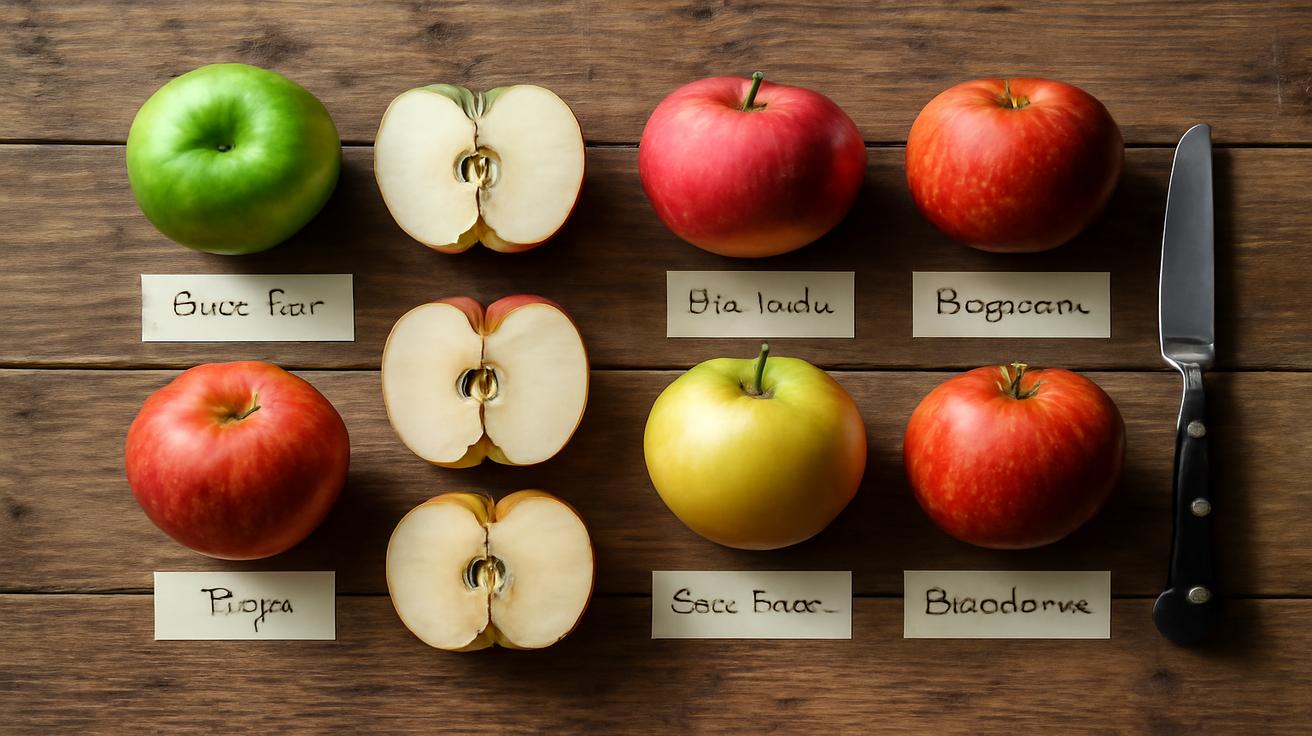
On a cool afternoon in late September, you stand in front of a farm stand or grocery display, staring at a wall of color: blushing pinks, striped reds, pale greens, and yellows flecked with tiny freckles. The apples are piled high, all shining under the lights, and you’re holding a list that says, simply, “Make apple dessert.” Easy, you think—until the questions begin. Which one is best for pie? Will these turn to mush in a crumble? Are sweet apples okay for a tart? You reach for a familiar glossy Red Delicious, then pause. Somewhere, you remember, someone once said: “Not that one for baking.” You withdraw your hand. You are suddenly, unexpectedly, in the middle of an apple identity crisis.
The Secret Life of Apples: Texture, Flavor, and Heat
Every apple has a secret life, a personality that only appears fully when heat gets involved. Bite into a Honeycrisp raw and it shatters, sweet and explosive, juice running down your wrist. Toss that same Honeycrisp into a 45-minute bake, and you’ll meet a gentler creature: soft, honeyed, and faintly floral, still holding its shape but no longer shouting for attention.
To choose the right apple for a dessert, you need to know what happens when you move from the cool crunch of a countertop nibble to the slow, transforming power of your oven. Heat pulls sugars forward, tames acidity, and gently breaks down the cell walls of the apple’s flesh. Some varieties surrender quickly, collapsing into a fragrant sauce. Others stand their ground, keeping tender slices and neat layers even after a long bake.
Two questions can guide nearly every apple decision you make:
- Do I want the apple to hold its shape, or to melt down?
- Do I want bold, tart flavors or gentle, sweet ones?
Once you can answer those, you’re already closer to the right apple than most recipe labels that vaguely say “baking apples.” Think of it like casting characters for a story: some apples are the steadfast backbone of a plot, others are the wild comedic relief, and some are quiet supporting roles that deepen the scene without stealing the spotlight.
Know Your Apple Types: A Simple Dessert-Friendly Guide
Step closer to the pile. Look beyond the supermarket’s assumption that all apples are equal. They aren’t, and that’s the beauty of it. To make this easier, imagine three broad apple personalities you’ll meet again and again:
1. The Firm-and-Tart Heroes
These are the backbone of classic baked apple desserts. They keep their shape, have enough acidity to stay lively after a long bake, and never turn mealy or bland. Think Granny Smith, Braeburn, Pink Lady (Cripps Pink), and sometimes Cortland and Jonathan. When your dessert needs clearly defined slices or chunks—like in a pie, tart, or galette—these are your best friends. Tartness is their secret weapon: as sugar and fat enter the scene, that tang keeps everything from drifting into one-note sweetness.
2. The Sweet-and-Crisp Crowd-Pleasers
These apples shine in desserts where you want a bit of structure but also plenty of natural sweetness: Honeycrisp, Gala, Fuji, Ambrosia, and Envy. They don’t have the electric tartness of the first group, but they offer beautiful texture and a more universally loved flavor. In crumbles, crisps, or simple skillet bakes, they caramelize beautifully, their sweetness concentrating under cinnamon and brown sugar. Mix one or two of these with a tarter apple, and your dessert gains complexity without needing a mathematician’s sugar adjustment.
3. The Soft-and-Fragrant Melters
Some apples were born to collapse in the heat: McIntosh, Empire, Golden Delicious, and older heritage varieties with soft, tender flesh. They may not hold up well in a tall, rigid pie, but give them a pot, a bit of water, and time, and they’ll reward you with velvety sauces, butters, and fillings. For applesauce, apple butter, compotes, or fillings meant to be spooned and swirled, these are treasures. Their perfume intensifies as they fall apart, turning grainy raw flesh into spoonable comfort.
Of course, many apples live somewhere between these neat categories, but thinking in these broad types will help you make quick, confident choices—even if you’ve never met a variety before.
Pairing Apples with Classic Desserts
Here’s where the fun really starts. You have your dessert idea. You have a basket of apples. Now you get to play matchmaker—no drama, just perfect pairings.
Apple Pie: The Big Test
Apple pie is the trial by fire for any apple variety. You need slices that soften but don’t dissolve, flavor that cuts through butter and sugar, and enough juiciness to make a luscious filling without turning the bottom crust into a soggy tragedy.
Best picks: Granny Smith, Braeburn, Pink Lady, Northern Spy, Jonagold.
Granny Smith brings sharp, bright tartness and firm flesh. Pink Lady offers a slightly sweeter, floral edge with good structure. Northern Spy and Jonagold, if you can find them, are old-school baker favorites: rich in flavor, sturdy in the oven, deeply appley. For the most interesting pies, use a blend—some tart, some sweet. Think Granny Smith plus Honeycrisp, or Pink Lady plus Golden Delicious. The finely diced sweet apples nestle between heartier slices, giving you pockets of softness in a structure that still stands tall when sliced.
Crumbles and Crisps: Comfort in a Dish
For crumbles and crisps, you have more wiggle room. The oats, butter, and sugar on top do much of the textural heavy lifting, so the apples can be a bit softer without any loss of joy.
Best picks: Honeycrisp, Gala, Fuji, Braeburn, Golden Delicious, mixed with something tart like Granny Smith or Pink Lady.
Here, the goal is contrast: some pieces nearly saucy, others holding a tender bite. A mix of softer and firmer apples creates that layered experience: spoonfuls where the topping cracks, then gives way to a deep, cinnamon-scented pool of apples that aren’t one-note sweet. If you crave tang, let at least a third of your mix be a tarter variety.
Tarts and Galettes: When Looks Matter
In a tart or galette, apples are part fruit, part architecture. You lay them down in fanning spirals or neat rows, counting on them to stay recognizable once baked.
Best picks: Pink Lady, Braeburn, Granny Smith, Jonagold, Honeycrisp.
Here you want apples that hold their form and edges—no collapsing, no dramatic slumping. Pink Lady is especially lovely: its rosy skin and firm, slightly sweet flesh make picture-perfect slices that brown evenly and remain distinct. Granny Smith gives that sharp green edge and classic apple-pie flavor, while Honeycrisp adds juicy sweetness without dissolving into mush.
Cakes, Muffins, and Breads
When apples go into batters—like in apple cakes, spice loaves, and muffins—they become tender nuggets rather than the main structural element. You want pieces that soften but don’t vanish, and flavor that can stand up to cinnamon, nutmeg, and brown sugar.
Best picks: Honeycrisp, Gala, Fuji, Golden Delicious, Pink Lady.
Cut your apples into small cubes for even distribution. A sweeter variety like Gala or Golden Delicious adds natural sugar and moisture, preventing the crumb from drying out. For more contrast, add a handful of something tart; those little bright, sharp pockets in a caramel-toned cake are like gusts of fresh air in a warm room.
Applesauce, Apple Butter, and Compotes
Here, you’re not protecting shape—you’re chasing silkiness, fragrance, and depth. Let the melters shine.
Best picks: McIntosh, Empire, Golden Delicious, Cortland, or any soft-fleshed local varieties.
McIntosh practically dissolve on the stove, turning into sauce with minimal effort. Golden Delicious bring a honeyed sweetness that reduces the need for added sugar. For a truly complex flavor, throw in a couple of tart apples—just enough to keep the sauce lively.
A Pocket Apple Chart for Dessert Lovers
To make things delightfully practical, here’s a compact guide you can keep in mind the next time you’re facing that overwhelming pile of apples. This table is designed to be clean and scroll-friendly on mobile screens.
| Apple Variety | Flavor & Texture | Best For |
|---|---|---|
| Granny Smith | Very tart, firm, juicy | Pies, tarts, galettes, mixed crumbles |
| Honeycrisp | Sweet, very crisp, juicy | Crisps, crumbles, cakes, mixed pies |
| Pink Lady (Cripps Pink) | Tart-sweet, firm, aromatic | Pies, tarts, galettes, salads |
| Braeburn | Balanced tart-sweet, firm | Pies, crisps, tarts, cakes |
| Gala | Mild, sweet, crisp | Cakes, muffins, snacks, mixed crumbles |
| Fuji | Very sweet, crisp, juicy | Crisps, snacking, mixed pies |
| Golden Delicious | Sweet, mellow, tender | Sauce, butter, cakes, softer pies |
| McIntosh | Tart-sweet, soft, very aromatic | Applesauce, apple butter, compotes |
| Jonagold | Sweet-tart, juicy, fairly firm | Pies, crisps, galettes |
| Cortland | Mild, tender, slow to brown | Salads, sauces, softer pies and crisps |
When the Label Is Vague: Choosing Apples in the Real World
Sometimes you don’t have ten varieties neatly labeled before you. Maybe you’re at a roadside stand with a hand-lettered sign that simply says “Apples,” or your grocery store is pushing giant bags of “Baking Apples” without details. You still have tools.
Touch, Taste, and Trust Your Senses
Start with a gentle squeeze. Apples that feel rock-hard and dense are more likely to hold shape. Those with a little give may be better for sauces and soft fillings. Next, if possible, taste one. Does it make your eyes widen with tartness? That’s a good candidate for pies and tarts. Is it sweet, floral, and low in acidity? That can soften and sweeten cakes, crisps, and sauces.
Notice the fragrance. A highly aromatic apple, even if mildly flavored when raw, often blooms in the oven. When in doubt, use a mix. Combining whatever firm, tart apples you can find with softer, sweeter ones is one of the most reliable ways to build character into a dessert. Even if you never learn their variety names, your tongue will remember the way they behaved together.
Local and Heirloom Apples
If you’re lucky enough to shop at farm markets or orchards, you’ll encounter names you’ve never heard: Wickson, Winesap, Bramley, Ashmead’s Kernel, Spitzenburg, and more. Ask the grower two simple questions: “Is it more tart or more sweet?” and “Does it hold its shape when baked?” Those answers tell you nearly everything you need to know.
Heirloom and local varieties often have wilder personalities: sharper acidity, complex spice notes, or unusual texture. They make extraordinary pies and tarts. Use them boldly, and don’t worry too much about being perfect. Dessert is as much about discovery as it is about precision.
Perfect Pairings: Matching Specific Desserts to Apples
To bring this all into focus, imagine a week of apple desserts, each with its ideal partner.
Monday night, you’re making a deep-dish apple pie that will be the centerpiece of a family dinner. You choose Granny Smith and Jonagold. The Granny Smith slices stay bright and tart against the buttery crust, while Jonagold adds lush sweetness and aroma. When the knife cuts into the first slice, it stands tall, slices layered like a cross-section of a hillside.
Wednesday, you want something casual: a skillet apple crisp eaten warm with melting vanilla ice cream. You reach for Honeycrisp and Golden Delicious. The Honeycrisp chunks stay plump and juicy; the Golden Delicious slumps into a thick, almost caramel-like sauce beneath the oat topping. Each spoonful is contrast—crunch, silk, tartness, toffee-like sweetness.
Friday, a friend drops by for coffee, so you whip up an apple cake. You dice Gala into small cubes, toss them with cinnamon, and fold them into the batter. The apples turn tender and sweet, little pockets of moisture studded throughout the crumb. If you had Pink Lady, you might add a handful for spark—but even with one variety, you’ve given the cake a pulse.
On Sunday, the house is quiet and you feel like making something meditative: a pot of applesauce. You pile in McIntosh and Cortland, add a splash of water, and set them on low heat. As the apples break down, the kitchen fills with a nostalgic scent—school lunches, autumn festivals, childhood snacks. You mash them with a wooden spoon, maybe add a pinch of cinnamon or leave them plain and bright. You taste. It’s far better than anything from a jar, and the apples did nearly all the work themselves.
For Every Dessert, Its Apple
Underneath all these choices lies one simple truth: no single apple is “best.” There is only the best apple for the dessert you’re making, and for the experience you want at the table. Do you want a pie that slices into perfect architectural wedges? Seek the firm, tart varieties. Do you want a spoonful of soft, cinnamon-laced comfort under a crispy topping? Bring in the sweet, the soft, the juicy.
The next time you’re standing in front of that apple display, remember this: you’re not just buying fruit; you’re casting the players in a little drama inside your oven. Taste, touch, and imagine how they’ll behave when the heat rises. Mix varieties. Follow your curiosity. And trust that somewhere in that pile, the right apple is waiting for the dessert you have in mind.
For every dessert, there truly is its apple—and once you learn to listen to what each variety is saying, the pairing becomes not a puzzle, but a pleasure.
FAQ
Can I use any apple for any dessert?
You can, but the results will vary. Firm, tart apples are best for pies and tarts; softer apples shine in sauces and butters. Mixing varieties usually improves flavor and texture.
Are Red Delicious apples good for baking?
Red Delicious are generally not ideal for baking. They tend to become mealy and bland when cooked, so they’re better reserved for raw snacking.
What if my recipe just says “baking apples”?
Choose firm varieties that are known to hold shape, such as Granny Smith, Braeburn, Pink Lady, or Honeycrisp. If possible, combine at least one tart and one sweet variety.
Do I need to peel apples for desserts?
For pies, tarts, and most cakes, peeling gives a smoother texture. For rustic crisps, crumbles, and some galettes, you can leave the skin on if it’s thin and tender; it adds color and fiber.
Why does my apple pie sometimes turn watery?
Very juicy apples, too little thickener (like flour, cornstarch, or tapioca), or cutting into the pie before it cools can cause watery filling. Use a mix of firm apples, proper thickener, and let the pie cool so the juices set.
What apples are best for dehydrating or chips?
Sweet-tart, crisp apples like Honeycrisp, Pink Lady, or Fuji work well. Their flavor concentrates as they dry, giving you balanced, flavorful chips.
How long can I store dessert apples?
In a cool, dark place or the refrigerator, many firm varieties (like Granny Smith or Pink Lady) keep for weeks. Softer apples (like McIntosh) are best used within a shorter time, especially if you plan to bake with them.





Leave a Comment