
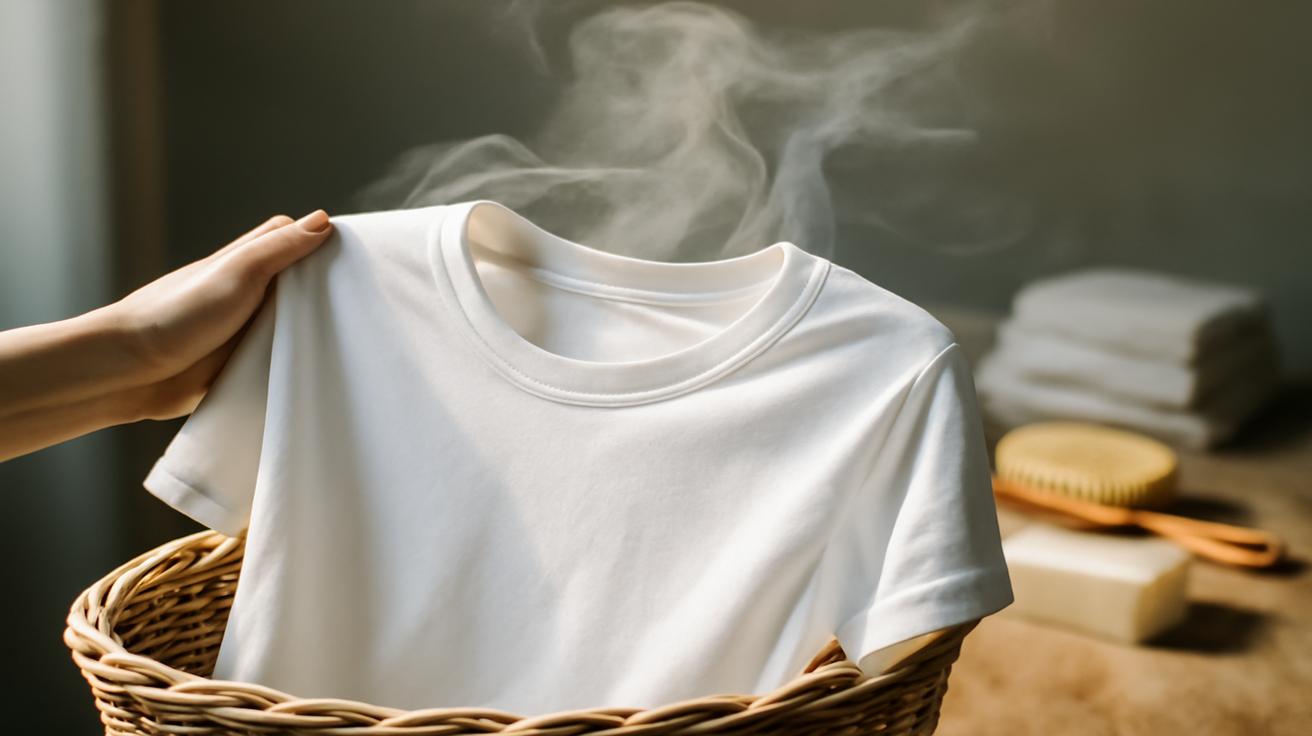
The scent finds you before the memory does. A faint, papery sweetness as you step into a quiet living room; the kind of room where the afternoon sun moves slowly across shelves of hardback books, porcelain figurines, and framed family photos gone slightly sepia with time. You pause, inhaling. It’s familiar: a little like old paperbacks, a hint of clean cotton, something that might be described as “musty” but not quite. People have a name for it—“old person smell”—usually spoken with a half-joking wrinkle of the nose. But the room is spotless, the carpet recently vacuumed, the bathroom gleaming, the laundry neatly folded. Nothing here screams poor hygiene. And that’s the quiet truth most people never learn: this scent of age is not a failure of cleanliness. It’s a story written in molecules, chemistry, and time.
The Invisible Perfume of Aging
Scientists have an unromantic label for it: nonenal. More specifically, 2‑nonenal, a compound that shows up more as we grow older, like silver strands in our hair or fine lines near our eyes. You can’t see it. You can’t scrub it off with a harsher soap or drown it with a more expensive perfume. It simply exists—produced by the living, breathing chemistry of older skin.
This surprises people. We’ve been trained to think of smell as a moral indicator. Good smells: clean, civilized, acceptable. Bad smells: lazy, dirty, shameful. The phrase “old person smell” sits right in the crosshairs of that judgment. It suggests someone “let themselves go,” that they didn’t wash enough, didn’t clean their house enough, didn’t care enough. But our noses are old-fashioned detectives; they leap to conclusions without understanding the modern evidence. Science, when you look closely, tells a very different story.
In the early 2000s, researchers in Japan began analyzing the scent compounds in the air surrounding people of different ages. They discovered that while every age group has its own aromatic fingerprint, there was a particular increase in 2‑nonenal in people over about 40. This didn’t happen because older people suddenly forgot how to use soap. It happened because their bodies had changed—quietly, gradually, and inevitably. Sebum (the waxy stuff our skin produces), oxidized fats, hormonal shifts, and the thinning of skin layers combined to create a subtle new mixture of odors. It was as much a part of aging as creaky knees or weaker eyesight.
Think about it this way: a teenager’s room smells different from a nursery, which smells different from a gym locker room, which smells different from a quiet apartment where an 85‑year‑old woman knits by the window. Each of these scents contains stories about hormones, activity levels, diet, and environment. One is not morally superior to the other. They are simply chapters in our biological timeline that the nose happens to notice.
The Chemistry Hiding in the Linen Closet
To understand where the so-called “old person smell” comes from, it helps to walk through an older home with your senses tuned a little sharper. The house of an 80-year-old is a museum of slow time. Sunlight has had decades to fade the curtains. Dust doesn’t rush; it drifts, settles, waits. Books line the shelves, pages aging from white to soft tan. The wooden furniture has absorbed endless cycles of humidity and dryness. Clothes in the closet may be rarely worn but frequently washed with the same familiar detergent for years. All of this—textiles, paper, wood, air—is quietly talking in scent.
Beneath that, there’s the chemistry of the body itself. As we age, our skin’s outer layer gets thinner and drier, even as the composition of the lipids (fats) in our skin changes. These lipids oxidize—react with oxygen in the air—especially the unsaturated fatty acids that become a breeding ground for odor molecules like 2‑nonenal. Add in slower cell turnover and changes in hormonal patterns, and the scent landscape shifts again. Not for lack of showers, but because time is redoing the formula.
The clothing that touches that skin daily—shirts, pillowcases, favorite cardigans—absorbs a microfilm of these molecules. Freshly washed, they still carry a soft ghost of that personal chemistry. Over weeks and months, especially in smaller, well-sealed rooms, a faint, consistent aroma builds. It’s not overpowering, more like the aftertaste of a song once the music stops. For anyone walking in from outside, the house has a “grandparent smell.” For the person living there, it barely registers; our noses adapt quickly to the scents we experience every day.
Consider how different environments layer onto this base. An older man who spends hours in a garden may carry a whisper of soil and green leaves mixed with nonenal. An older woman who bakes regularly may smell faintly of vanilla and cooled sugar over that same base note. The core compound might be the same, but the “perfume of a lifetime” is wildly individual.
The Myth of “Not Clean Enough”
We imagine that if something smells different from the sanitized citrus and artificial floral fragrances of modern cleaning products, it must be wrong. But older generations grew up in a world where scent was less standardized. Soap smelled like soap, not passionfruit. Homes had their own natural signatures of wood polish, open windows, damp wool in winter, and sun-dried sheets in summer.
The modern obsession with deodorizing everything—laundry, trash bags, cars, fabrics, even the air itself—has made us suspicious of any scent that can’t be traced back to a product label. So when we encounter the delicate, lived-in aroma of an elder’s home, our brain files it under “strange.” That strangeness becomes “unpleasant,” and from there it’s a quick slide to “unclean.”
Is it possible for mustiness or strong odors to come from poor hygiene or neglect? Of course. Anyone—of any age—can go long enough without cleaning, ventilating, or washing for bacteria, mildew, and sweat to take charge. But that’s a very different smell from the faint, papery, almond-like note that research links with aging. Confusing the two does more than just mislabel a scent; it quietly shames people for something their bodies are naturally doing and reinforces an ageist script that equates youth with cleanliness and worth, and age with decay.
How Our Noses Judge More Than Smell
We don’t just smell; we interpret. The nose sends signals, but the brain adds commentary. When you walk into a high-end spa and inhale eucalyptus and white tea, you don’t think: “This room is clean.” You think: “This place cares about me. This is luxury.” The scent is a story someone has written for your senses. Now imagine the opposite: you enter a small apartment where the air is warm and still, touched with that soft, indefinable “old” scent. No marketing team wrote this story. It’s just reality. And our culture has trained the brain to interpret that reality in stark, unkind terms.
Scent has always been a quiet tool of social division. The poor were said to smell “bad,” city streets “uncivilized,” foreign food “strange.” These judgments were rarely about hygiene alone; they were about power, distance, and prejudice. Aging has become one more category in that invisible system of scent-based bias. We rarely say outright, “Old people are less valuable,” but we’re quick to joke about their smell. The insult slips in under the door of humor and stays there.
Ironically, many older adults grew up in a time when bathing and grooming were rituals of dignity. Saturday night baths, freshly pressed clothes for church, polishing shoes until they shone—cleanliness was a form of respectability. To imply that the grandmother who still folds her towels into neat stacks somehow “smells old” because she’s given up caring is to misread both her and the simple chemistry of aging.
Smell can also act as a bridge rather than a barrier, if we let it. The aroma of an old sweater that still carries a grandparent’s faint scent can be deeply comforting. Many people keep an item of clothing from a lost loved one because the smell makes memory feel physical again. What we mock up close, we crave when it’s gone.
A Closer Look at What Really Contributes to “Old Person Smell”
Although 2‑nonenal is a big player, the overall scent associated with aging is a blend of multiple factors. None of them are inherently “dirty”—they’re more like chapters in a subtle biography written on the air.
| Source | What’s Happening | How It Affects Scent |
|---|---|---|
| Skin lipids (fats) | Changes in composition and oxidation with age | Produces compounds like 2‑nonenal, a key “aging note” |
| Hormonal shifts | Decline in certain hormones, changes in sweat glands | Alters body odor profile compared to youth |
| Textiles & furnishings | Long-term accumulation of natural skin oils and air particles | Gives homes a distinct, persistent background aroma |
| Ventilation patterns | Older people may open windows less, live in smaller spaces | Allows subtle odors to linger and become noticeable |
| Lifestyle & diet | Medication, preferred foods, activity levels | Adds gentle variations—spices, sweetness, or medicinal notes |
Notice what’s missing from the table: “forgets to bathe” or “doesn’t care about cleanliness.” Those things may happen in specific situations—just as they can for a stressed parent or an overworked student—but they are not the foundation of the scent we carelessly lump under one dismissive phrase.
Living with the Scent of Time—Kindly
Once you understand that “old person smell” is largely a product of natural chemistry, the question becomes: what do we do with that knowledge? Not “How do we erase it at all costs?” but “How do we respond in a way that respects the people carrying it?”
First, there’s room for gentle, practical adjustments—if and only if they come from a place of care rather than disgust. Better airflow can make a big difference; an open window, a small fan, or a short daily habit of airing out bedding and clothes. Natural fabrics that breathe—cotton, linen, wool—tend to hold less stubborn scent than synthetic fibers. Mild, moisturizing soaps can support older skin without stripping it and prompting even more dryness and oxidation.
If you’re visiting an older relative and notice a heavier, musty smell that seems new or different, it may be information rather than an insult. Changes in odor can be early signs of health issues: infections, trouble managing laundry or cleaning, or the beginning of cognitive decline that affects daily routines. The compassionate response isn’t: “You smell.” It’s closer to: “How can I help with the housework?” or “Let’s wash these favorites together and freshen the place up.” The same scent that once triggered judgment can become a quiet signal to check in and offer support.
Then there’s the emotional work: examine the reflex that makes us wrinkle our nose at the scent of age. Is it really about the smell—or about fear? The fear of our own aging, of losing control, of becoming less “acceptable” to others? The nose might be sniffing skin chemistry, but the mind is inhaling mortality. Facing that honestly is one way to soften the harshness of our reactions.
Smell as a Keeper of Stories
Imagine standing in a hallway lined with closed doors, each leading to a different life. Behind one, the air holds the faint aroma of talcum powder, fabric softener, and something indefinable and warm. Behind another, there’s the sharp smell of tobacco and aftershave, overlaid with dust and the ghost of decades-old cologne. Each doorway is a tiny time machine, and the first thing that travels through it is not sight or sound, but smell.
There’s a reason certain scents can make us cry without warning. The smell of your grandfather’s house when you were six; the way your grandmother’s coat hugged you, carrying echoes of her lotion, her shampoo, her skin. These weren’t “good smells” or “bad smells.” They were theirs. Distinct enough that if you walked through a crowd and caught a trace of that particular mixture, you’d stop and turn, heart suddenly awake.
When we reduce all of that to “old person smell,” we flatten the complexity of these small, meaningful aromas into a stereotype. We treat the perfume of an entire life as if it were an unfortunate side effect. But what if we saw it instead as a signature? Not something to fetishize or freeze in amber, but something to recognize as real, human, and worthy of gentleness.
After all, our own scent is changing even now, note by note, each year adding or subtracting molecules. The way you smell at 18 is not the way you smell at 38, or 68. One day, without realizing it, you will cross the invisible line where your presence in a room leaves behind a new kind of trace. Someone younger will step into that room after you’ve gone and think, with an odd mix of familiarity and distance, “This smells like them.”
Rewriting the Story We Tell with Our Noses
Perhaps the next time you walk into an elder’s home and your senses pick up that subtle, unmistakable note, you might pause before the old script runs. Instead of thinking, “This smells old,” you could try on a new line: “This smells lived-in.” A room that has seen years of birthday candles, late-night conversations, quiet winter mornings and bright summer afternoons. A body that has been through illness and health, heartache and love, uncountable small daily rituals of getting up, getting dressed, showing up.
You might notice how sparklingly clean the kitchen counters are, how carefully folded the towels, how the bathroom smells faintly of soap and steam. You might see that “old person smell” isn’t clinging to clutter, but hovering lightly in the air like dust motes in the sunlight—a reminder that time has passed here, that someone has survived long enough to wear the fragrance of age.
Few people realize it, but the scent we’ve been taught to mock has nothing to do with laziness, with not caring, with “poor hygiene.” It is, in many ways, the opposite: a testament to endurance. Evidence that this body didn’t vanish at forty, that this life kept going, kept changing, kept producing new molecules of existence. If there’s any justice in how we talk about it, we might retire the phrase “old person smell” altogether and replace it with something less cruel, more curious—an acknowledgment that we are all, slowly, turning into stories that can be read with the nose.
And one day, someone will stand in a room where you once lived. They’ll pause, inhale, and say quietly to themselves: “It still smells like them.” Not like youth, not like age. Just like you.
Frequently Asked Questions
Is “old person smell” really a specific chemical thing?
Yes. Studies have linked age-related body odor to an increase in certain compounds, especially 2‑nonenal, which becomes more common on the skin of people over about 40. This isn’t about being dirty; it’s about natural changes in skin lipids and oxidation over time.
Can better hygiene completely remove this scent?
No. Good hygiene can reduce sweat, bacteria, and strong odors, but age-related scent is tied to body chemistry, not lack of washing. Regular bathing, fresh clothes, and good ventilation can soften it, but not erase it entirely—and that’s normal.
Why do older people’s homes sometimes smell different from younger people’s?
Older homes often have long-lived furniture, books, fabrics, and carpets that have absorbed years of subtle odors. Combined with less frequent window-opening or smaller living spaces, natural body and household scents can linger more noticeably.
Is “old person smell” a sign of illness?
Not usually. A gentle, consistent, papery or slightly musty scent can be a normal result of aging. However, a sudden strong change in odor—especially sour, ammonia-like, or very musty smells—can signal hygiene difficulties, infections, or other health issues and may be worth checking with a healthcare professional.
Can diet and lifestyle affect how someone smells as they age?
Yes. What we eat, the medications we take, how active we are, and how much fresh air and sunlight our living spaces get can all influence scent. Spices, alcohol, smoking, and certain drugs can alter body odor at any age, including in later life.







Leave a Comment