
The first thing you notice is the sound. Not the clatter of zippers or the dull thud of a forgotten coin, but that low, strained groan your washing machine has started making. It’s the kind of sound that makes you pause in the hallway and think, “That… doesn’t sound right.” The drum spins, but not as confidently as it used to. The cycle finishes, but your clothes feel a little heavier, a little damper. A faint, swampy smell hangs in the air. Most people ignore it—until one day the machine simply doesn’t turn on, and a regular Tuesday suddenly includes a frantic search for a repair service and the unwelcome math of replacement costs.
The Quiet Workhorse in the Corner
For a lot of us, the washing machine is the quiet workhorse of the home: rarely admired, mostly taken for granted, absolutely indispensable. It sits in a corner or a basement or a narrow hallway closet, humming through cycles while we’re at work, making dinner, or scrolling on our phones. We notice it only when it stops. Yet inside that steel and plastic shell is a finely tuned sequence of moving parts, valves, pumps, and sensors that all have one thing in common: they last longer when we treat them kindly.
Extending the life of your washing machine isn’t about becoming a full-time appliance technician. It’s about a handful of simple habits—small shifts in how you load, clean, and use the machine—that can add years to its life. Think of these seven steps as a kind of quiet care ritual, like brushing your teeth or changing your car’s oil. You barely notice the effort, but you definitely notice the difference when you skip it.
Step 1: Respect the Load (Your Machine Isn’t a Suitcase)
Picture yourself packing for a trip. There’s that moment where the suitcase is clearly full, but you start sitting on it, stuffing in one more sweater, jamming the zipper closed with a hopeful grunt. Overloading your washing machine is the same kind of move—and the consequences are worse than a wrinkled shirt.
When you cram the drum until clothes can barely move, you’re forcing the motor to work harder, straining the bearings, and throwing off the balance in every spin. Over time, that extra effort shows up as noisy cycles, violent shaking, or those dramatic “walking” machines that shuffle their way across the laundry room.
Instead, think of your drum as needing breathing room. Clothes should tumble, not compress into a damp brick. A good rule: fill the drum loosely, leaving at least a hand’s width of space from the top in a top-loader, or ensuring you can slide your hand over the load in a front-loader without pushing anything down. Heavy items—towels, jeans, blankets—count as more than their volume suggests. Two big towels and a set of jeans may be enough for a single moderate load.
Even distribution matters too. Mixing big and small items allows better movement, less clumping, and more even wear on the drum. It’s a quiet, respectful deal between you and the machine: you don’t overload it, and it doesn’t shake itself to death.
Step 2: Choose Detergent Like It Actually Matters
Step into the laundry aisle and you’re met with a rainbow of bottles, powders, pods, and promises. Bright whites, color care, sensitive skin, mountain air—detergent can feel like a personality test. But beneath the branding, there’s one decision that really does affect the health of your washing machine: how much you use, and whether it’s the right kind.
Too much detergent doesn’t make clothes cleaner; it makes residue. Extra suds need extra rinsing. When they don’t get it, they linger inside the machine: clinging to the drum, the door seal, the detergent drawer, the hoses. That soapy film becomes a buffet for mildew, mold, and bacteria. Then comes the smell—the one that makes clean laundry somehow smell not-quite-clean. Over time, this buildup can clog components and stress the pump.
Use high-efficiency (HE) detergent if your machine calls for it, and respect the lines on the cap or the instructions on the box. In most homes with modern detergents and average soil, you can safely use a little less than the maximum recommended amount. If your water is soft, you probably need even less.
And those pods? Convenient, yes. Just make sure you’re not tossing in two or three “for good measure.” More is rarely better. The real magic trick is moderation.
Step 3: Let It Breathe: Doors, Drawers, and Damp Corners
When a wash cycle ends, there’s a particular kind of silence in the laundry room—the sudden stop of the spin, the little clicks and whirs fading into stillness. Many people grab their clothes, snap the door shut, and walk away. What’s left behind is a warm, damp, dark environment. In nature, we have a word for that combination: perfect.
Perfect, that is, for mold and mildew.
One of the simplest ways to extend the life of your washer—and keep it smelling truly clean—is to let it breathe. After every load, leave the door or lid open for a while. Let air pass through. The same goes for the detergent drawer: slide it open just a little to help any lingering moisture evaporate.
This small habit slows down mold growth on the door gasket (that rubber seal on front-loaders), prevents the sour-sock smell from investing your laundry room, and keeps sensors and seals from being constantly bathed in dampness. Think of it as airing out the room after a hot shower; your machine needs that break just as much.
The 7 Simple Steps at a Glance
If you like seeing everything in one place, here’s a quick snapshot of the habits that help your machine live longer:
| Step | What You Do | Why It Helps |
|---|---|---|
| 1. Respect the Load | Avoid overloading; balance big and small items. | Reduces strain on motor, bearings, and suspension. |
| 2. Right Detergent, Right Amount | Use HE detergent if needed; don’t exceed dosage. | Prevents buildup, clogs, and musty smells. |
| 3. Let It Breathe | Leave door and detergent drawer slightly open after use. | Discourages mold, protects seals and gaskets. |
| 4. Gentle, Regular Cleaning | Run maintenance cycles; wipe seals and filters. | Keeps internal parts free of grime and limescale. |
| 5. Protect the Hoses | Inspect, straighten, and replace aging hoses. | Prevents leaks, bursts, and water pressure damage. |
| 6. Level the Machine | Adjust feet so it sits solid and stable. | Reduces vibration, wear, and noise. |
| 7. Listen and Respond Early | Notice new sounds, smells, or error codes. | Fixes small issues before they become fatal. |
Step 4: Cleaning the Machine That Cleans Everything Else
There’s something counterintuitive about cleaning a washing machine. It already handles detergent and hot water; shouldn’t it be self-cleaning by definition? Not exactly. The inside of a washer isn’t a sterile laboratory—it’s more like a busy little ecosystem. Soap scum, dissolved minerals from your water, body oils, lint, and tiny threads all swirl together in each cycle. Over time they form layers you can’t always see, but your nose and your machine’s components definitely notice.
Regular, gentle cleaning keeps the ecosystem in check. Most modern machines have a “tub clean” or “drum clean” cycle—if yours does, use it every month or two, following the instructions in your manual. Usually this means running an empty hot cycle, often with a specific cleaner or with a simple combination like a washing machine cleaning product.
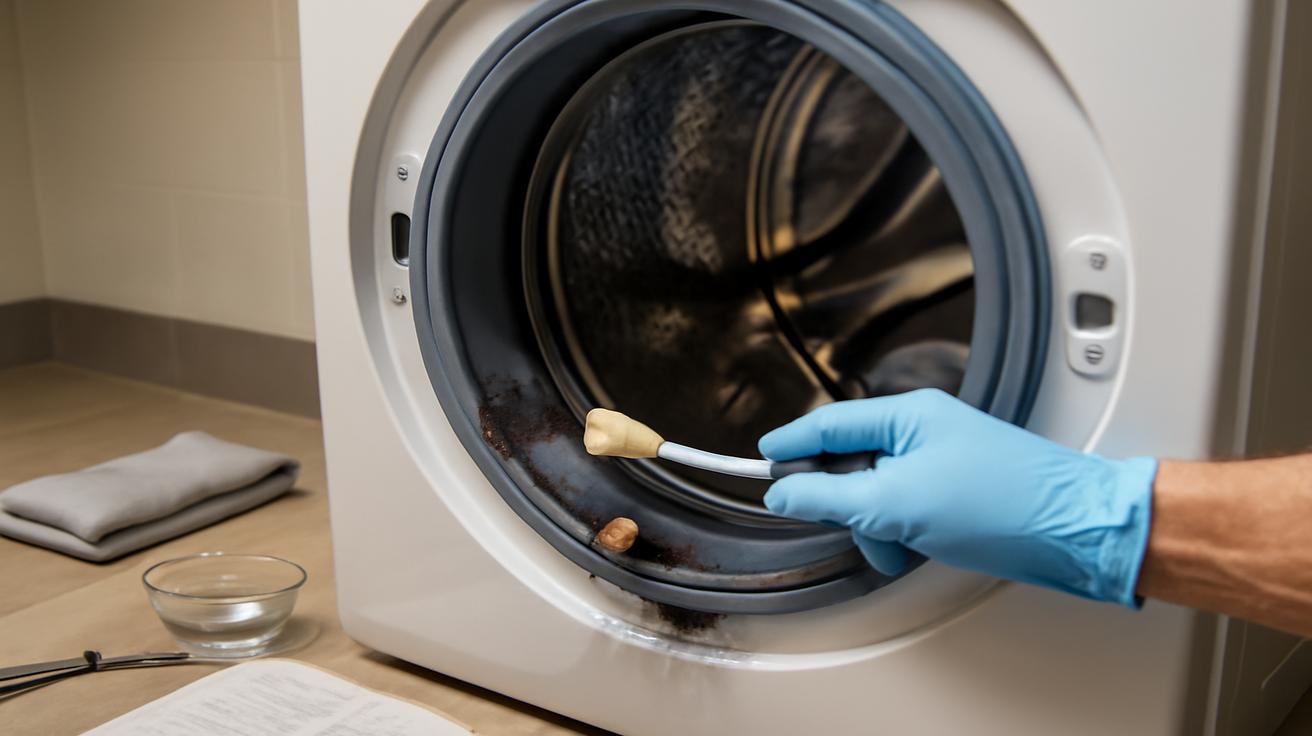
Don’t forget the places your hands can reach: the rubber door gasket on front-loaders (pull it back gently and wipe away trapped lint, coins, and gunk), the detergent drawer (remove it, rinse it, scrub off any slime), and the filter or drain trap if your machine has one. It’s amazing how much debris can collect there: hairpins, buttons, little tufts of fabric, even that missing sock fragment. Clearing this out helps your pump breathe—and prevents those mysterious error codes that appear mid-spin.
This isn’t about making the machine photo-ready for a magazine shoot. It’s about giving its internal organs a chance to operate without being slowly smothered by the leftovers of a hundred laundry days.
Step 5: Hoses, Water, and the Invisible Pressure
Behind the machine, out of sight, water is always waiting. The inlet hoses—usually one for hot, one for cold—sit there pressurized, like small, quiet rivers held back by rubber and fittings. Over months and years, that rubber ages. Tiny cracks appear. Connections loosen. In worst-case scenarios, a hose bursts while you’re away, and you come home not to clean clothes, but to a soaked floor or worse.
Extending your washer’s life includes protecting the parts that aren’t technically inside it. Giving the hoses a quick inspection every few months can save both the machine and your flooring. Look for bulges, cracks, rust on metal fittings, or any signs of dampness. If your hoses are more than five years old, consider replacing them, ideally with braided stainless-steel versions that resist bursting.
Water pressure also plays a subtle role. Excessively high pressure can stress valves and connections. If you notice your hoses bang or jerk when the machine fills, or hear knocking in the pipes, you may want a plumber to check your home’s pressure and possibly install a pressure-reducing valve or water hammer arrestor. It’s not glamorous, but it’s a quiet guardian of your machine’s heart.
If you live in a hard-water area, limescale becomes another invisible adversary, slowly coating heating elements and internal pathways. Here, a periodic descaling cycle—again, following the manufacturer’s guidelines—can keep mineral buildup from shortening your washer’s lifespan.
Step 6: Balance, Stability, and the Art of Staying Put
There’s something oddly alive about a washer in full spin. The drum ramps up, the machine hums, the floor vibrates just slightly. When everything is set up correctly, that movement feels contained, almost musical. When it’s not, it looks like the machine is trying to escape the room.
An unlevel washing machine doesn’t just make a racket. It punishes its own components. Each spin cycle sends uneven forces through the frame, hammering at the suspension, the bearings, and the floor beneath. Over time, those impacts take years off the machine’s life.
Leveling is less mysterious than it seems. A basic spirit level helps, but even a careful eye can do the job. Gently rock the machine from corner to corner. If it wobbles, adjust the feet—most screw in or out—until the machine sits solidly on all four corners. Check that it doesn’t tilt forward, backward, or to either side. Then run a spin-only cycle with a normal load and listen. The difference in vibration can be dramatic.
On delicate floors or in upstairs laundry areas, vibration-dampening pads under the feet can help. Just as important: keep the machine’s surroundings clutter-free. If it’s jammed against walls or cabinets on all sides, it has no room to flex slightly. A little space means fewer hard collisions and less rattling wear.
Step 7: Pay Attention to the Little Whispers
Machines, like people, often give gentle warnings before something really goes wrong. A faint burning smell, a new rattle, a strange error code that flashes mid-cycle and then disappears—these are whispers, not yet shouts. The difference between a minor repair and a major breakdown often comes down to how early we listen.
Maybe you notice that the drum doesn’t turn as freely when you spin it by hand. Maybe the machine takes longer than usual to drain. Perhaps there’s a patch of water on the floor that you’re tempted to blame on a stray spill. Each of these is the laundry-room equivalent of a dashboard warning light. Ignoring them is like turning up the car radio so you don’t hear the engine noise.
Consult your manual when error codes appear; they’re not there to scare you, but to help you pinpoint what needs attention. Some fixes are simple: cleaning a filter, straightening a kinked drain hose, redistributing a load. Others may require a technician—but catching them early can keep a small repair from snowballing into a full replacement.
There’s a quiet satisfaction in this kind of attention. You start to know your machine’s normal sounds, its ordinary rhythms. The laundry room becomes less of an afterthought and more of a place where a small, steady partnership lives: you care for the machine, and it returns the favor, week after week, load after load.
Making These Steps a Gentle Routine
None of these seven steps require specialized tools or a weekend workshop. They’re more like tiny habits, woven into the ordinary rhythm of life. You’re already sorting clothes, measuring detergent, and pressing the start button. Adding a quick gasket wipe here, a hose glance there, a monthly cleaning cycle on a quiet evening—these become part of the story your home tells about how it treats the things that serve it.
Extend the life of your washing machine, and you do more than save money or avoid a sudden, frustrating breakdown. You keep one more appliance from an early trip to the landfill. You reduce the churn of manufacturing and delivery that comes with replacement. You give yourself a little more peace of mind: that next time you hear the familiar rush of water and the patient tumble of clothes, it will feel less like a gamble and more like a trusted, steady ritual.
In the end, the washing machine doesn’t ask for much. A reasonable load. The right amount of soap. A chance to dry out between cycles. A gentle cleaning, a watchful eye. Treat it less like a background prop and more like the quiet, hardworking character it really is, and it will likely reward you with many extra years of faithful, humming service.
Frequently Asked Questions
How often should I clean my washing machine?
For most households, running a cleaning or “tub clean” cycle every 1–2 months is enough. If you do a lot of heavily soiled loads, or notice odors sooner, you can clean it monthly and wipe the gasket and detergent drawer more frequently.
Is it bad to wash small loads?
Occasional small loads aren’t harmful, but consistently washing very tiny loads can be inefficient and sometimes throw off the machine’s balance during spin. If possible, combine smaller items into medium-sized, balanced loads for both energy savings and reduced wear.
Can I use regular detergent in a high-efficiency (HE) machine?
It’s not recommended. Regular detergent creates more suds than HE machines are designed to handle, which can cause residue buildup, poor rinsing, and potential error codes. Use HE detergent and follow the dosage instructions for the best results and longest machine life.
What’s the ideal load size for my washer?
As a guideline, the drum should be loosely filled, not packed. For most machines, that means leaving space at the top (for top-loaders) or being able to slide your hand over the clothes (for front-loaders) without pressing them down. Heavy items count as more, so a load of towels or jeans should be smaller than a load of T-shirts.
How long do washing machine hoses last?
Rubber hoses are often recommended to be replaced every 3–5 years, especially if you see signs of wear. Braided stainless-steel hoses last longer and are more resistant to bursting, but should still be checked periodically for leaks or damage.
Why does my washing machine smell even though my clothes look clean?
Lingering odors usually come from detergent residue, fabric softener buildup, and trapped moisture feeding mold or bacteria. Regular cleaning cycles, leaving the door and detergent drawer open after use, and using the right amount of detergent help eliminate and prevent those smells.
When is it better to replace rather than repair my washing machine?
As a loose rule, if the repair cost is more than half the price of a comparable new machine, or if the washer is already 10–12 years old and needs a major repair (like a new drum or motor), replacement may be more cost-effective. However, for younger machines or minor issues, early repairs can significantly extend their overall life.








Leave a Comment