
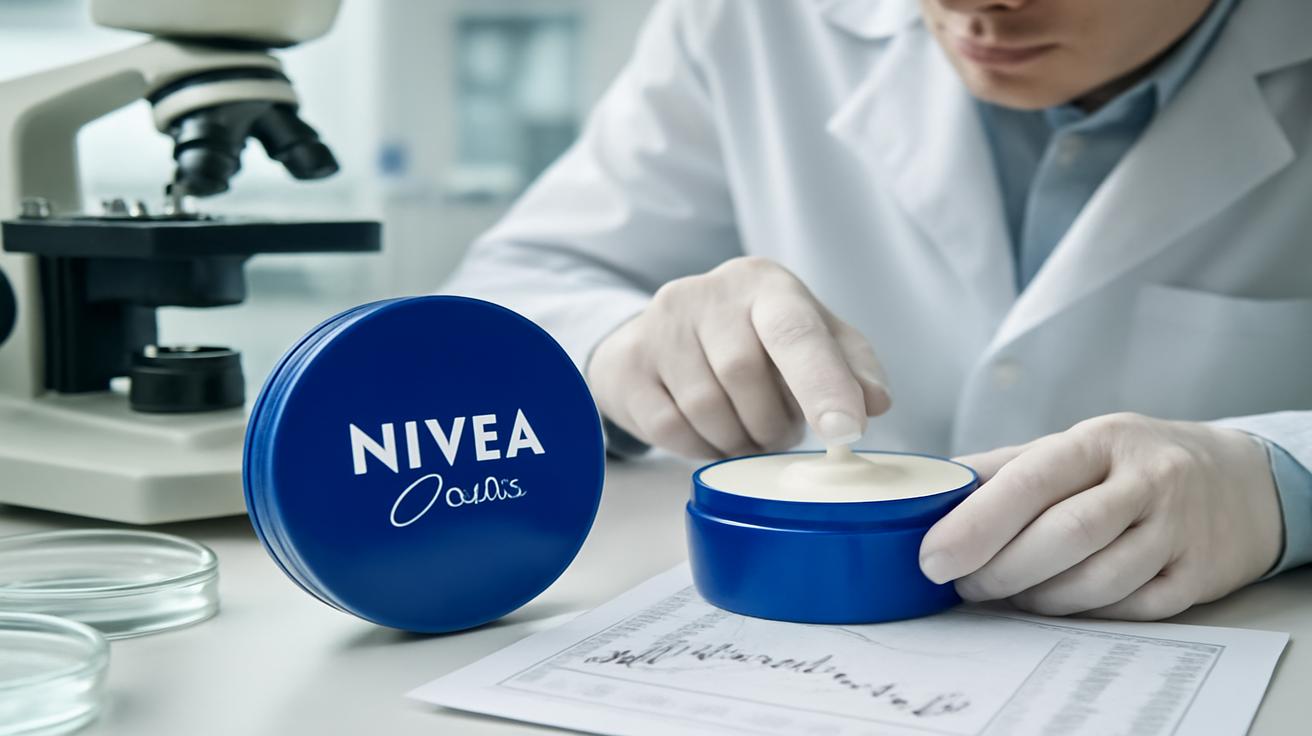
The lid pops with a soft click, the kind you remember from your grandmother’s dressing table. A wave of scent rises—powdery, clean, almost like sun-warmed laundry and soap. Thick, white cream gleams in the light, holding its shape as if time can’t touch it. You press a fingertip in. It resists, then yields, dense and cool against your skin. This is Nivea cream—the blue tin that has followed generations across continents, bathroom shelves, handbags, and hospital wards. It feels like a relic and a promise at once: that something simple can still be enough.
The Tin on Every Nightstand
Ask a roomful of people to name a cream they grew up with, and chances are that familiar cobalt-blue tin will rise like a memory. It’s there in old family photographs, on the edge of a cluttered mirror. It’s in a nurse’s pocket, in a backpack on overnight trains, tucked in a mother’s bag next to a pack of tissues and a worn wallet.
For over a century, Nivea cream has been passed down like a habit—smoothed onto chapped winter hands, rubbed into children’s cheeks before school, dabbed onto elbows, heels, and wind-burnt noses. It’s the sort of product that feels too ordinary to question. Like tap water or a bar of plain soap, it slips under the radar of scrutiny.
And yet, in labs and clinics, at dermatology conferences and cosmetic science forums, experts have been quietly taking it apart—layer by layer, ingredient by ingredient. They heat it, cool it, spin it in centrifuges. They stretch its story between microscopes and mass spectrometers. What they find is part chemistry, part nostalgia, and part cultural mirror.
Because behind that familiar scent is a surprisingly fierce conversation: about safety, skin biology, aging, marketing myths, and what “simple” really means in a world of 15-step routines and glass-skin ambitions.
The Anatomy of a Legend in a Tin
On paper, Nivea cream looks almost modest. The ingredient list is short compared to the encyclopedias on the backs of many modern moisturizers. Yet each component holds a role in a precisely balanced system—a tiny ecosystem in a tin.
Here is a simplified snapshot of what experts see when they look past the marketing and into the formula:
| Key Component | What It Does | What Experts Say |
|---|---|---|
| Water (Aqua) | Hydrates the outer skin layers | Essential, but must be “locked in” to be useful |
| Paraffinum Liquidum (Mineral Oil) | Forms an occlusive film to prevent water loss | Inert and stable; controversial mainly for image, not data |
| Cera Microcristallina (Microcrystalline Wax) | Adds body, thickness, and a long-lasting barrier | Contributes to that “heavy” feel some love and others hate |
| Glycerin | Pulls moisture into the outer skin layer | Highly regarded humectant, used in countless medical creams |
| Lanolin Alcohol | Emulsifier and skin conditioner from wool wax | Effective, but a known allergen for a small percentage of people |
| Panthenol | Soothing, supports skin barrier repair | Dermatologist favorite for irritation-prone skin |
Cosmetic chemists describe Nivea cream as an “old-school, high-occlusive, water-in-oil emulsion.” That phrase hides a kind of quiet engineering elegance. Most trendy facial moisturizers today are oil-in-water—light, lotion-like, quick to sink in. Nivea turns that logic inside out. Tiny droplets of water are held within a continuous phase of fat and wax. That’s why the cream feels dense, why it resists spreading before it softens, why it doesn’t evaporate away in an hour.
From a functional standpoint, the experts nod: this is a true barrier cream. It is built not to dazzle, but to stay. A shield against wind, heating, air-conditioning, plane cabins, and the sting of cold winter air.
The First Surprise: The “Old” Formula is Quietly Smart
In an age of serums that sound like chemistry tests—niacinamide, peptides, ceramides, alpha-arbutin—the ingredients in Nivea cream look almost primitive. There are no exotic plant extracts, no futuristic biotech actives promising to “reset” your skin’s age. Yet when dermatologists map its effect on real skin, a humbler pattern emerges.
What Nivea cream does best is not glamorous: it slows water leaving the skin. Trans-epidermal water loss—TEWL, in lab shorthand—is one of the quiet metrics of skin health. When your skin leaks moisture too easily, it becomes dull, tight, more prone to irritation and fine lines. The barrier weakens. Pollution and harsh cleansers hit harder.
High-occlusive formulas like Nivea can reduce that water escape dramatically. Applied to dry hands or shins, they act like a soft sealant. Trapped underneath, your own natural moisture has time to replenish the upper skin layers. Over days and weeks, this can visibly change texture—softening rough patches, smoothing scaling, easing cracks.
Dermatologists sometimes recommend simple, heavy creams like Nivea to patients with eczema-prone or very dry skin, not for their glamour, but for their stubbornness. The cream stays put. It doesn’t vanish in minutes or peel under makeup. As one cosmetic chemist put it, “It’s not exciting. It just works the way a coat works in winter.”
The surprising part isn’t that Nivea is effective as a moisturizer—it’s that, despite its age, the core of what makes it work aligns with what newer “barrier repair” products are trying to achieve. In a world chasing the new, the blue tin is quietly doing the oldest job of skincare: keep the water in, keep the world out.
Barrier First, Beauty Second
When experts compare Nivea to many “anti-aging” creams, a curious inversion appears. Many modern formulas lean heavily on active ingredients: acids to exfoliate, retinoids to speed cell turnover, antioxidants to fight free radicals. These can transform skin—when used carefully, and when barrier health is strong enough to tolerate them.
Nivea, by contrast, leans almost entirely on barrier function. There is no big hero molecule. It’s the synergy of wax, mineral oil, lanolin derivatives, and humectants that creates a microclimate over your skin. To a scientist tracking behavior under the microscope, the cream isn’t so much treating wrinkles as it is thickening the fortress wall.
Wrinkles in hydrated, well-protected skin simply look different—softer, less etched. Often, what we call “aging” on a tired face is really dehydration, inflammation, and barrier erosion. The blue tin, intentionally or not, targets the foundation instead of the façade.
The Second Surprise: Mineral Oil’s Bad Reputation Doesn’t Match the Data
Of all the ingredients on the label, none stirs more debate than mineral oil. In the court of public opinion, it’s easy to convict: it’s derived from petroleum and often paired in conversation with words like “cheap” or “clogging.” Many natural beauty advocates place it firmly on their never list.
Yet sit down with a cosmetic toxicologist, and the story takes a sharp turn.
Highly purified cosmetic-grade mineral oil—the kind used in Nivea cream—is not the same as industrial oils. It has been filtered and refined to meet strict safety standards. It is chemically inert; it does not react with skin, does not penetrate deeply, and does not interact with DNA or hormones. It sits on top, like a transparent raincoat.
Studies comparing mineral oil to some beloved plant oils show a pattern that confounds expectations. While plant oils often bring antioxidants and beneficial fatty acids, they can also contain natural fragrance constituents and reactive compounds that trigger sensitivity in some people. Mineral oil, stripped of almost everything, is boring in the safest possible way. For surgeons and dermatologists, that’s a compliment.
In hospital wards, mineral-oil-based ointments are routinely used on compromised skin: post-laser, post-surgery, radiation sites, severe eczema. If the ingredient were genuinely suffocating or toxic in the way it’s sometimes portrayed, it would never be allowed near such fragile tissue.
The Breathability Myth
Another misconception experts point to is the idea that mineral oil “suffocates” the skin. Skin does not breathe in the way lungs do; it doesn’t pull oxygen from the air. What it does need is a calibrated exchange of moisture and protection. Very heavy occlusion for prolonged periods can sometimes contribute to clogged pores in acne-prone areas—but this isn’t unique to mineral oil. Thick plant butters and some natural waxes can do the same.
Most dermatologists, when pressed, will say something like: “If you’re not breaking out from it, mineral oil is one of the safest, most studied emollients we have.” The gap between that statement and the fear swirling online is wide—and Nivea cream sits right in the middle of it, quietly used by millions who never read ingredient debates at all.
The Third Surprise: Not Everyone’s Skin Wants This Much Help
For all its strengths, experts are careful to point out that Nivea cream is not a universal hero. Its very design—the dense, occlusive, old-world richness—makes it perfect for some skins and climates and fussy for others.
If your skin is naturally oily or prone to clogged pores, that dreamy, thick layer can become a trap. In humid climates, or on acne-prone faces, a high-occlusive formula may contribute to congestion. It doesn’t necessarily cause pimples directly, but it can create a warm, moist environment where pore blockages are more likely to stick around.
Dermatologists often place Nivea cream in the “selective use” category: excellent for dry patches, hands, feet, elbows, shins, or as a shielding cream over drier cheeks in a cold winter. Less ideal as a daily, full-face, year-round moisturizer for someone living in the tropics with active sebaceous glands.
The Quiet Allergen in the Room
Another nuance experts emphasize involves lanolin-derived ingredients, such as lanolin alcohol. Sourced from the waxy coating on sheep’s wool, lanolin is a superb emollient, but also a known allergen for a small portion of the population. For most people, it’s a comforting, skin-loving ingredient. For a sensitive minority, it can provoke redness, itch, or rash.
This is where the blue tin demands a little personal responsibility. Just because it has a gentle reputation and a century of use does not make it universally hypoallergenic. Patch testing—trying a small amount on a discreet area for several days—is still wise if you have reactive skin, a history of eczema, or allergies.
Experts also note that the fragrance, while nostalgic and pleasant to many, can be an irritant trigger for some. Fragrance-free options exist in the broader Nivea product family, but the classic cream wears its scent like a signature. For purists chasing the lowest possible risk of sensitization, that’s a strike against it.
The Fourth Surprise: It’s Weirdly Versatile in the Hands of Real People
Beyond labs and clinics, Nivea cream leads a second, parallel life in the world of everyday improvisation. Ask people how they use it, and the answers spill out like a folk medicine anthology.
Some dab it on chapped lips when nothing else is around. Others smooth it through the ends of dry hair in winter as a makeshift anti-frizz balm. Makeup artists, especially in colder regions, sometimes tap it onto cheekbones for a dewy highlight on shoots, or layer it under foundation as a protective base on models whose faces have been powdered, scrubbed, and painted too many times in a day.
Hikers smear it on wind-burnt faces and cracked knuckles before setting out into chill air. Freelancers working late at night tuck a tin into their desk, rubbing small circles into cuticles while waiting for emails. Parents slide it across the reddened wrists of children irritated by constant handwashing.
Experts watching this relationship between product and people notice something interesting: Nivea cream behaves more like a toolkit item than a single-purpose cosmetic. It’s not optimized for all these uses—but its dense, occlusive nature makes it adaptable. Wherever the skin barrier is threatened or depleted, the cream steps in as a patch, a buffer, a soft shield.
Skin Minimalism, by Accident
Ironically, just as “skin minimalism” and “fewer, better products” are being heralded as the newest movements, Nivea cream has been quietly embodying that philosophy for decades. No actives carousel, no complicated instructions—just a thick, stubborn cream that can migrate from your heels to your hands to your cheeks depending on the day.
From a sustainability and clutter perspective, many dermatologists and cosmetic scientists are now gently nudging people toward fewer, more purposeful steps. A solid cleanser, a good broad-spectrum sunscreen, and an effective barrier-supporting moisturizer can form the backbone of a routine that does more than drawers full of half-used jars. The blue tin, for all its old-fashioned aura, fits neatly into that pared-down narrative.
The Fifth Surprise: The Story is Bigger Than the Formula
When experts talk about Nivea cream in more philosophical moments, they drift beyond fatty alcohols and emollients. They talk about memory. About how smell can pull us through time, how the sight of that tin can summon kitchens where mothers sat late at night, massaging lotion into cracked winter hands under dim yellow light.
Consumer psychologists note that products like this occupy a rare space: they are both personal care and cultural artifact. We don’t just judge them with our rational minds; we connect them to safety, childhood, and care. That association changes how we experience the cream itself. The act of opening the tin, of scooping a small, slow-moving cloud of white onto a fingertip, carries a ritual weight that the sleek pump bottle of a cutting-edge serum often doesn’t.
From an expert’s vantage, this matters. Because skincare is not only chemistry; it is also behavior. A product you enjoy using—one that feels comforting, familiar, and uncomplicated—is a product you are more likely to apply consistently. Consistency, more than novelty, is what tends to shift skin over time.
So when dermatologists say, “If this works for you, you don’t have to abandon it for the latest trend,” they’re reading not only your stratum corneum but your habits and history. The surprising truth, they admit, is that for many people with dry, non-reactive skin, Nivea cream is not a compromise. It’s an entirely reasonable, effective choice—if you use it wisely.
Choosing Your Own Version of “Enough”
In the end, the blue tin poses a question as much as it offers an answer: what does your skin really need? Do you want fast-absorbing, invisible, high-tech fluids packed with actives, or are you asking for a softer, longer hug—a seal against the world when it feels a bit too abrasive?
Experts, armed with data, don’t hand down a single verdict. Instead, they quietly peel away the myths. No, mineral oil in a cosmetic like this is not a toxin quietly plotting against you. No, “old” does not automatically mean “unsafe” or “ineffective.” Yes, some people will react to lanolin-derived components and fragrance, and should avoid it. Yes, oily, acne-prone faces may find this too heavy. And yes, for many dry, weather-beaten hands and shins, this humble cream may do more good than half a dozen fancier jars.
What surprises them most, perhaps, is that beneath all the marketing noise, the human relationship with this simple cream has remained steady. The world of beauty care spins ever faster, inventing new needs and anxieties. But somewhere in a cupboard, a small blue tin waits to be opened, dense and cool, just as it always has been.
And when you press your fingertip into that surface—feeling it resist, then yield—you aren’t only touching a formulation. You are touching a century of quiet, practical chemistry, wrapped in memories, still doing exactly what it promised: keeping the water in, keeping the world out, one small circle of skin at a time.
Frequently Asked Questions
Is Nivea cream safe to use on the face?
For many people with normal to dry, non-acne-prone skin, Nivea cream can be safely used on the face, especially in dry or cold weather. However, its rich, occlusive texture may be too heavy for oily or acne-prone skin and could contribute to congestion in some cases. Patch test on a small area first and avoid using it on active breakouts.
Can Nivea cream clog pores?
Nivea cream is not universally comedogenic, but its very occlusive formula can increase the risk of clogged pores in people who are already prone to blackheads or acne, particularly in hot, humid climates. It is often better suited for body use, dry patches, or as a targeted treatment rather than an everyday face cream for oily skin types.
Is mineral oil in Nivea cream harmful?
Cosmetic-grade mineral oil, as used in Nivea cream, is highly purified and considered safe by regulatory authorities and dermatologists. It is inert, sits on the surface of the skin, and does not penetrate or disrupt hormones. Its bad reputation stems largely from confusion with unrefined industrial oils and from a preference in some circles for plant-derived ingredients.
Can people with sensitive skin use Nivea cream?
Some people with sensitive skin tolerate Nivea cream very well, especially for dryness. Others may react to its fragrance or lanolin-derived ingredients, which are known allergens for a minority of users. If you have sensitive or reactive skin, patch test on a small area for several days before widespread use, and discontinue if any redness, itching, or burning appears.
Is Nivea cream good for anti-aging?
Nivea cream does not contain strong anti-aging actives like retinoids or exfoliating acids. Its anti-aging benefits come indirectly from improving hydration and strengthening the skin barrier, which can make fine lines look softer and skin appear smoother. It is best viewed as a barrier-supporting moisturizer rather than a targeted anti-wrinkle treatment.
Can I use Nivea cream every day?
You can use Nivea cream daily on areas that are very dry, such as hands, feet, elbows, and shins. Daily use on the face depends on your skin type and climate. Dry or mature skin in cold, dry environments may enjoy daily facial use, while oily or combination skin might prefer occasional or targeted application.
Is Nivea cream suitable for children?
Nivea cream is often used on children’s dry skin, especially on hands and body. However, because it contains fragrance and lanolin-derived ingredients, it may not be ideal for babies, very young children, or those with eczema or known allergies. For infants or medically fragile skin, pediatricians usually recommend fragrance-free, specifically pediatric-tested emollients.







Leave a Comment