
The banana peel lay there in the kitchen trash, folded over a crushed eggshell, a coffee filter drooping like a spent umbrella on top. The lid shut with that familiar hollow thud and, just like that, another tiny miracle was on its way to the landfill. You rinsed your hands, maybe wiped the counter, and went on with your day—never knowing you’d just thrown pure botanical treasure into the bin.
The Gold Nobody Wants
There’s an odd kind of quiet around food scraps. We move fast: chop, slice, cook, eat, toss, repeat. The remains—coffee grounds, onion skins, orange peels, tea bags, vegetable trimmings—disappear so quickly it’s like they never existed. Out of sight, out of mind, literally buried in plastic bags and trucked away.
But step into any thriving garden, any backyard where tomatoes swell like balloons and roses burn crimson against the fence, and you’ll find a secret: someone there is quietly worshipping what the rest of us call “garbage.” They have their hands in a dark, crumbly, earthy-smelling substance that looks unremarkable at first glance. But to plants, it’s everything. Food, medicine, shelter, moisture. It’s what their roots dream about.
Compost. Rotting stuff. Decomposed leftovers. The polite term is “organic matter,” but the truth is simpler and weirder: your trash is trying to become soil again, and your plants are waiting like kids at the window for a long-delayed package.
You can almost hear your houseplants and garden beds sigh every time the trash can closes: “There goes dinner.”
What Your Plants Wish You Knew
Imagine being stuck at a buffet where everything looks good, but all you can actually eat is one sad plate of plain noodles. That’s what life is like for plants in many modern gardens. We pour on synthetic fertilizers—fast, flashy, and shallow—but what plants truly thrive on is the slow, complex feast that comes from organic matter breaking down over time.
Every banana peel in your kitchen is loaded with potassium and tiny traces of other nutrients that help plants form strong stems and vivid flowers. Eggshells bring calcium, fortifying cell walls and helping protect against problems like blossom-end rot in tomatoes. Coffee grounds contribute nitrogen, add texture to soil, and bring in beneficial microbes. Onion skins carry trace minerals. Tea leaves bring in more nitrogen and organic goodness.
But none of that matters if it all goes to the dump, sealed in plastic and choked of air.
Soil is not just “dirt.” It’s a living community—a bustling city of fungi, bacteria, nematodes, insects, and roots all bartering in tiny, invisible exchanges. Compost is the currency that keeps that city thriving. When we send those scraps to the landfill, we’re not just throwing away potential fertilizer. We’re cutting off the energy supply to a living ecosystem right under our feet.
Your plants aren’t craving more store-bought plant food. They’re craving the soft, earthy, broken-down remains of all the things you thought you were done with—the browned lettuce, the apple cores, the limp herbs forgotten in the back of the fridge.
The Quiet Alchemy in the Pile
If you’ve never watched something rot on purpose, the idea sounds a little uncomfortable. We’re trained to think of decay as failure, as filth, as something to spray with chemicals and whisk away before the neighbors notice. But move in close to a compost pile, lift the top layer with your fingers, and there’s a different story.
The first thing that hits you is the smell—or rather, what doesn’t hit you. A well-tended compost pile doesn’t reek of garbage. It smells like a forest floor after rain: deep, mellow, a little smoky with life. The banana peels and carrot shavings you tossed in just a few weeks ago are already changing. Their edges soften, colors fade, and threads of fungi creep through like delicate white roots from some secret underworld.
Microbes are at work. They don’t need you to understand them; they just need you to feed them. Tiny bacteria swarm over every surface, breaking big, complicated molecules into smaller ones. Worms slide through, swallowing bits and leaving behind castings richer than the finest fertilizer on any garden-center shelf. Beetles and millipedes grind and chew, turning whole scraps into fragments, then fragments into something that looks suspiciously like…soil.
This is alchemy without a wizard. Just time, oxygen, and the quiet persistence of decay. And while it happens behind the scenes, your plants are waiting just beyond the curtain, ready to benefit from every crumb of it.
The Secret Menu: What You’re Throwing Away
Stand in your kitchen for one full week and pay attention. Really look at what ends up in your trash or your sink strainer. The odds are, a good chunk of what you throw away could have become food for your soil, and therefore food for you, if you grow edibles. Here’s a glimpse of what your plants see when you reach for the trash can.
| Scrap | Invisible Gift for Plants | Easy Way to Use It |
|---|---|---|
| Banana peels | Potassium for strong stems and blooms | Chop and compost, or bury small pieces near flowering plants |
| Eggshells | Calcium to support cell structure | Dry, crush finely, sprinkle into compost or soil |
| Coffee grounds | Nitrogen and organic matter | Add thin layers to compost; mix lightly into topsoil |
| Vegetable peels & trimmings | Broad mix of nutrients and carbon | Collect in a countertop bin, empty to compost regularly |
| Tea bags & loose leaves | Nitrogen, organic matter | Tear open bags, compost the leaves, discard synthetic bags |
Once you start seeing your scraps this way, it becomes almost painful to throw them out. The banana peel you used to flick away like an afterthought suddenly looks like a small, golden ticket to better soil.
You don’t need a big backyard to use it, either. A narrow balcony, a shared courtyard, even a sunny windowsill can host pots that benefit from compost or compost-based potting mixes. The scale can be tiny; the impact on your plants can be enormous.
Listening to the Soil
Healthy soil has a feel you can’t fake. Kneel down after a rainstorm and push your fingers into it. It should give gently, springing back with a soft, spongy resilience. It smells alive. Squeeze a handful and it holds together in a loose clump, then falls apart again with a light tap. Roots slide through this kind of soil like a swimmer through water.
Now think of the compacted, lifeless dirt in a neglected patch by the sidewalk. It’s pale, clumpy, and hard. Rain beads and runs off. In summer, it bakes. In winter, it crusts over. Plants can survive there, but they don’t thrive. They hang on.
The difference between those two realities is often compost—the quiet, continuous gift of all those things we thought were done with us. When you add compost to soil, you’re not just “fertilizing” it in a narrow, chemical sense. You’re cushioning it, aerating it, stocking it with microscopic life and slow-release nutrients that arrive right on time, season after season.
If you’ve ever wondered why that one neighbor’s roses or tomatoes look like they’re auditioning for a seed catalog, the answer is usually not a secret spray or a miracle powder. It’s years of feeding the soil with what the rest of the world throws away.
Starting Your Own Little Gold Mine
Beginning to compost can feel like starting a new language, but it quickly turns into a simple, almost instinctive habit. You don’t even have to call it composting at first. You can think of it as “keeping the good stuff.”
In a small kitchen, it starts with a simple container—a lidded jar, a metal pail, a ceramic crock on the counter. Into it go the vegetable peels, coffee grounds, tea leaves, eggshells, bits of stale bread, wilted greens. You’ll begin to notice their colors, their textures. You’ll pile in carrot tops still faintly smelling of earth, onion skins like old parchment, apple cores bruised with sweetness.
Outside, or in a larger container on a balcony, you find them a resting place. Maybe it’s a basic compost bin, maybe it’s a tidy corner of the yard, maybe it’s a tumbler you can spin like a barrel. The rules are forgiving: mix your “greens” (fresh, moist scraps) with plenty of “browns” (dry leaves, shredded paper, straw, cardboard). Keep it airy, not soggy. Let nature do what it has always done.
Weeks go by. You add more. At first, it looks like a layered memory of your meals. Then, gradually, it becomes harder to tell where one peel ends and another begins. You turn it, or poke holes, or simply lift the lid now and then. One day, you pull aside the freshest layer and see it: underneath, a dark, crumbly material that looks nothing like trash and everything like forest soil.
Touch it. It should be cool or gently warm, not slimy or sour. Smell it. It should make you think of hiking trails, of rain, of quiet places where no one has swept or tidied for years. This is the gold. This is what your plants have been hoping you’d figure out.
The Moment You Feed It Back
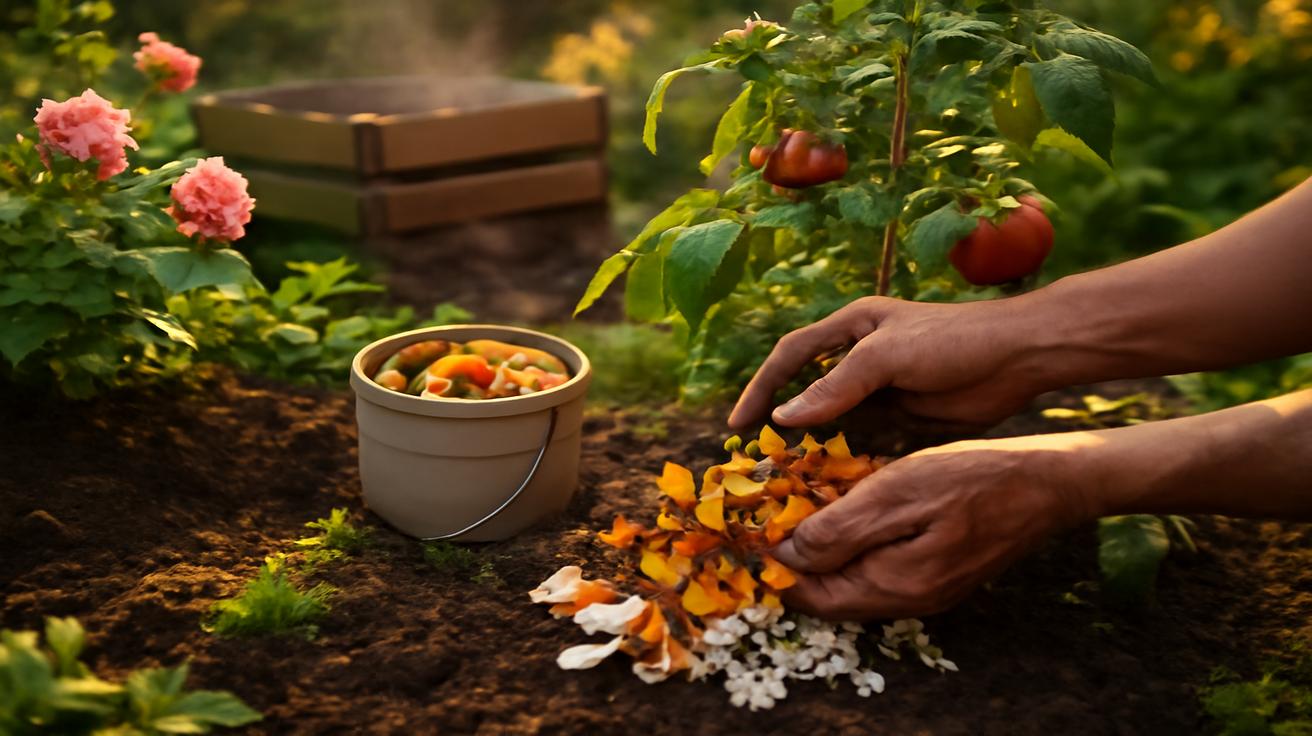
There’s a small, almost private joy in the first time you fold your own compost into a pot or garden bed. It’s an act so simple you could miss its significance. You dig a hole, or loosen the top few inches of soil, and you tip some of that dark material in. It falls like coarse chocolate cake crumbs, nestling among the existing earth. Then you cover it back over and water deeply.
For a while, nothing dramatic happens. The surface looks the same. But below, roots begin to encounter something new. They find pockets of softness where there used to be resistance. They find nutrients not delivered in a chemical flash, but released gently as microbes continue their work. The soil holds more water yet drains better, like a sponge that knows when to let go.
Over weeks, you notice a shift. Leaves are a little deeper green. Growth is sturdier, less leggy. Flowers are richer in color, or last a bit longer before fading. Your peppers are shinier. The basil smells stronger. You didn’t “fix” your plants with a product. You’re simply giving them what they were built to use: the long, circular journey of matter returning to matter.
This is not about becoming perfectly sustainable or zero-waste overnight. It’s about rejoining a cycle that was happening long before we invented garbage bags and landfills—a cycle in which every ending is secretly a beginning.
The Magic in Caring About What No One Sees
Composting is oddly intimate. It asks you to pay attention to what you’d rather ignore: the softening fruit, the limp lettuce, the heel of bread too tough for sandwiches. It nudges you out of that throwaway reflex and into a quieter kind of noticing.
Maybe you start cooking a little differently, knowing those carrot tops aren’t just “waste” but tomorrow’s soil. Maybe you feel a small thrill when the coffee grounds pile up, because you’ve come to recognize them as fuel. Maybe you smile when a banana peel curls in the bin, already imagining it as part of next season’s tomatoes.
Suddenly, you’re connected. Not in a grand, abstract “saving the planet” way, but in a very local, tactile way: hand to peel, peel to pile, pile to soil, soil to root, root to leaf, leaf to your plate. The loop closes, and you’re standing right in the middle of it, no longer just a consumer but a participant.
The most surprising part? It feels good. Caring about what everyone else throws away gives a quiet sense of rebellion, of tenderness, even of hope. You can’t control much about the wider world, but you can decide where your coffee filter lands. You can decide if that banana peel dies in darkness in a plastic bag, or if it dissolves back into sunlight through the veins of a plant.
Somewhere in your future, a tomato might swell and ripen on a vine, its flavor deeper because you cared about something no one else noticed. A houseplant might finally push out a new leaf, glossy and wide, because months ago you chose to keep your kitchen scraps. A rainy afternoon might smell a little better when it hits the soil you’ve nurtured.
Everyone else may still toss it in the trash. But you’ll know better. You’ll know that in the slow, patient language of plants and soil, those scraps were never garbage at all. They were a promise.
FAQ
Is composting going to make my home smell bad?
Not if it’s done correctly. A small countertop container with a lid, emptied regularly, won’t smell worse than your regular trash. Outside, a balanced compost pile smells earthy, not rotten. Bad odors usually mean it’s too wet or has too many “greens” and needs more dry materials like leaves or paper.
Can I compost if I live in an apartment?
Yes. You can use a small sealed compost bin, a worm bin (vermicomposting), or look for local community gardens or municipal programs that accept food scraps. Even a modest setup can transform your kitchen waste into something useful.
What should I avoid putting in my compost?
Skip meat, fish, dairy, oily foods, and large amounts of cooked food; they can attract pests and cause odors. Also avoid glossy or heavily printed paper and synthetic tea bags. Stick mainly to fruit and vegetable scraps, coffee grounds, tea leaves, eggshells, and plant trimmings.
How long does it take for kitchen scraps to turn into compost?
Depending on temperature, moisture, and how often the pile is turned, it can take anywhere from a couple of months to about a year. Smaller, well-aerated piles break down faster. You’ll know it’s ready when it’s dark, crumbly, and smells like fresh soil.
Will compost really make a noticeable difference to my plants?
In most cases, yes. Over time, compost improves soil structure, helps it hold moisture while draining well, and provides a broad spectrum of nutrients. Many gardeners see stronger growth, better flowering and fruiting, and fewer problems with stressed plants.







Leave a Comment