
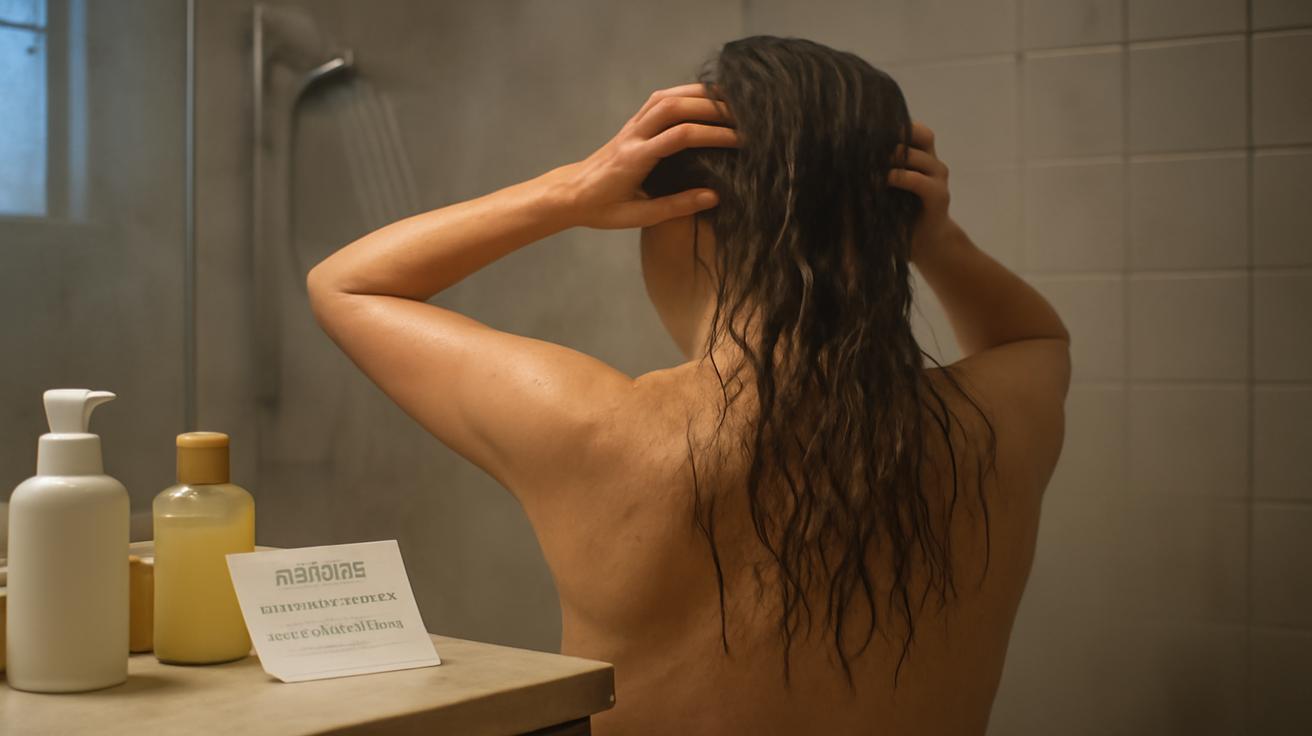
The water was so hot it almost bit. Steam climbed the bathroom mirror, turning your reflection into a soft blur, the kind winter mornings are made for. You step into the shower, shoulders unclenching as the heat begins to melt the cold out of your bones. Outside, the world is a grayscale of bare branches, icy sidewalks, and breath turned visible. Inside, it’s a private sauna. You tilt your head back, let the water drum on your scalp, and stay there longer than you mean to—because in winter, a hot shower feels less like hygiene and more like survival.
Later, you catch yourself in another mirror—the one by the front door or the elevator’s metallic panel—and there it is again. Hair that looks… tired. Ends that fray and snag on your scarf, a dullness that no “extra shine” promise on a bottle seems to fix. You blame the radiators, the wind, the hat you keep shoving on with wet hair. You reach for leave-in creams, oils, masks. You tell yourself your hair is just “naturally dry.”
But the real culprit might be hiding in the one place that feels most comforting in winter: your shower. And more specifically, in those few minutes when the water is at its very hottest, and you let it run and run and run.
The seduction of a winter shower
If summer showers are quick rinses between sweat and sun, winter showers are fully staged rituals. You linger. You stand under the spray like it’s a heat lamp in a reptile terrarium, soaking up warmth to carry with you through a day of drafts and doorways that never quite close properly.
There is something almost primal about it. The tile is cold under your feet, but the water makes a small universe of warmth around your body, your breathing synchronized with the hush of the pipes. You might close your eyes and think of nothing. Or everything. This is the only place where nobody asks you for anything. The only place where the cold can’t follow.
And so, without realizing it, you turn the dial just a little hotter. The kind of hot that makes your shoulders pink and your scalp tingle. The kind of hot that feels like proof you’re thawing out properly.
That’s the moment—right there—where most of the damage to your hair begins.
The number one mistake: chasing heat instead of health
In winter, the number one mistake we make with dry hair starts with one tiny, innocent habit: using water that’s too hot in the shower. Not warm. Not pleasantly steamy. Really, seriously hot.
It doesn’t feel like a mistake. It feels like self-care. But to your hair, that near-scalding shower is less spa treatment and more slow erosion.
Hair is surprisingly delicate. Each strand is built like a tiny layered roof: the outer layer, the cuticle, is made of overlapping scales. When the cuticle lies flat, hair reflects light and feels smooth. When the cuticle is lifted, roughed up, or broken, hair looks frizzy, tangles easily, and feels dry—even if the root is technically healthy.
Very hot water does something sneaky. It swells the hair shaft and raises those cuticle scales, like lifting the shingles on a house during a windstorm. At the same time, it melts away natural oils from your scalp—oils designed to travel down the hair length and protect it, especially in cold, dry climates.
This is why so many of us tell the same winter story: hair that feels brittle at the ends, flyaways that won’t be tamed, roots that get greasy faster, and a constant sense that no conditioner is ever quite enough. We are literally rinsing away our natural protection every morning, chasing a feeling of warmth with water that’s just a few degrees too extreme.
When cold air and hot water collide
Winter itself is not gentle on hair. The air outside is cold and dry. The air inside is warm and dry. That double dryness pulls moisture out of everything it touches: skin, lips, and yes, hair. Add in scarves that rub, hats that create friction, and gusts of wind that whip strands into little knots, and winter becomes a long, slow wear-and-tear process.
Your hair, like your skin, lives somewhere between resilience and surrender. It can bounce back from a lot, but it has limits. When you add scalding showers into that winter mix, you’re not just washing your hair; you’re stripping its shield. What’s left is a strand that’s been roughened up and then pushed into a world of cold air and artificial heat.
You might notice:
- Ends that snag on your coat collar.
- Strands that feel rough when you run your fingers through them.
- Frizz that seems to appear from nowhere, even on “dry” days.
- Hair that looks dull on day one, not just right before you wash again.
What makes this all the more frustrating is that the hotter the shower, the “cleaner” your hair feels right away. There’s an almost squeaky sensation some people chase: that ultra-stripped, ultra-light feeling. It’s satisfying in the moment, but it’s like removing the wax from a wooden table and then being surprised when every stain and scratch shows.
Hair needs a little bit of oil, a little bit of slip. It needs its own weather inside the strand to survive the weather outside your window.
How hot is too hot?
You don’t need a thermometer in your shower to know. If your scalp turns pink, if your skin feels tight afterward, if you see steam billowing as soon as the water hits the floor, your shower is in the danger zone for your hair and skin.
Aim instead for water that feels pleasantly warm, not searing. Like a swimming pool heated to comfort, not like a hot tub. You should be able to stand under it without bracing yourself. Your scalp should feel relaxed, not burned-in-place.
Little rituals, big changes
The beautiful thing is that protecting your hair in winter doesn’t require a suitcase of products or a 20-step routine. It starts with recalibrating the way your shower feels—and what you expect from it.
Imagine this: the bathroom is still steamy, but the water on your scalp is more gentle rain than boiling downpour. You linger under it because it’s soothing, not because it’s scorching. You’re still warm, still cocooned—but your hair is no longer paying the price.
Here are small, tangible shifts that quietly build healthier hair across the winter months:
1. Turn down the heat, keep the comfort
Instead of cranking the temperature for your whole shower, adjust it in zones. Let the water be warmer on your shoulders and back, but slightly cooler when it hits your scalp and hair. You can do this just by angling your head out of the hottest part of the stream or lowering the temp right before rinsing shampoo and conditioner.
Even a small reduction—from “super hot” to “comfortably warm”—can make a huge difference in how your cuticle behaves.
2. Shorten the soak time
Long, dreamy showers are tempting in winter, but the more time your hair spends under running water, the more its internal structure swells and softens, leaving it vulnerable. Try this rhythm:
- Wet hair thoroughly (but quickly).
- Turn the water off or pull your hair out of the stream while you shampoo and massage.
- Rinse, then repeat the “off” strategy while your conditioner sits.
Your hair doesn’t need a constant waterfall to get clean. It needs contact, not immersion.
3. Condition with intention
Conditioner in winter is not a suggestion; it’s non-negotiable. Apply it mostly from mid-lengths to ends, where hair is oldest and driest. Comb it through gently with your fingers or a wide-tooth comb while you’re still in the shower, when hair is slippery and easier to detangle.
Give it a minute or two to sit, even if you’re impatient. Those extra breaths—listening to the echo of water on tile, the small hollow of your own breathing—are how your hair gets time to drink.
4. Finish with a cooler rinse
This doesn’t mean an ice plunge. Just a step or two lower on the temperature dial for the final rinse over your hair. That softer coolness helps the cuticle start to lie flatter again, giving you more shine and less frizz once your hair dries.
The dance between water, products, and habits
Of course, the shower is only one chapter in your hair’s winter story, but it’s the chapter everything else depends on. How your hair leaves the bathroom determines how it meets the day: your blow dryer, your hat, the weather, the static of your coat.
Think of it as a chain reaction:
- Very hot water strips oil → scalp overcompensates → roots feel greasy sooner → you wash more often → hair gets drier overall.
- Cuticle raised by heat → friction from towel or hat causes breakage → ends look frayed → you use heavier products → hair looks weighed down but still dry.
Once you begin to temper the water, other habits suddenly have room to work better. Your leave-in conditioner doesn’t have to fight against a roughed-up cuticle. Your oils and serums can seal in moisture rather than just sitting on a damaged surface.
To make this easier, here’s a simple comparison of winter hair habits that quietly help or silently sabotage, especially around your shower time:
| Winter Shower Habit | Dries Hair Out | Protects Hair |
|---|---|---|
| Water temperature | Very hot, skin-turns-pink showers | Warm, comfortable—not steaming-hot |
| Shower length | Long, daily soaking sessions | Shorter showers, focusing water time |
| Shampooing | Scrubbing lengths and ends every wash | Cleaning mostly scalp, letting suds run down |
| Conditioning | Rinsing out immediately, skipping some days | Daily use on mid-lengths/ends, left on briefly |
| Final rinse | Ending on hottest setting | Finishing with slightly cooler water on hair |
What your hair is trying to tell you
Dry hair in winter often speaks in textures, not words. It shows up in the way your brush catches, in the halo of static when you pull your sweater off, in the way your ponytail feels thinner at the bottom than it did a year ago.
Sometimes, standing under that winter shower, you might even notice the shed hairs circling the drain, the odd “why does it feel like more lately?” thought crossing your mind. While some shedding is normal, hair that breaks mid-length because it’s brittle is avoidable. And hot water is one of the quiet culprits behind that breakage.
Your scalp also has its own language. Does it feel tight or itchy after a shower, even though you rinse carefully? That too can be a sign that your water is too hot and your skin’s barrier—much like your hair’s cuticle—is being compromised. The scalp then sometimes swings between dry and flaky or oily and congested, trying to find balance again.
Listen to that feedback. If your hair feels more fragile in winter, it’s not just “because it’s cold.” It’s because cold outside and heat inside are working together, and your shower might be tipping the scales in the wrong direction.
Building a new winter ritual
There’s no need to give up the deep comfort of a winter shower. The ritual itself is worth preserving—the pause, the warmth, the steam, the small moment of being alone with your thoughts. What changes is the intention behind the temperature and the touch.
You can still step into a cozy cloud of steam, but instead of cranking the dial, you let your body warmth and the room’s warmth do some of the work. You let water be kind to your scalp, not punishing. You move more slowly, but with more gentleness: squeezing water out of your hair instead of wringing it, blotting instead of rubbing with a towel, letting it air-dry partway before reaching for any heat tools.
This is what real winter hair care looks like. Not a thousand products lined up in plastic bottles, but the quiet, often invisible adjustments in how you behave when nobody’s watching—when it’s just you, the water, and the three or four minutes where you decide whether your hair emerges brittle or resilient.
FAQs: Dry hair and winter showers
Is hot water always bad for hair?
Occasionally using slightly hotter water won’t destroy your hair overnight, but consistently very hot showers—especially in winter—will gradually strip oils, roughen the cuticle, and contribute to dryness and breakage. Moderately warm is best for regular use.
Can I still enjoy hot showers if I have dry hair?
Yes, but try to keep the hottest water away from your scalp and hair. Enjoy the heat on your body and lower the temperature when rinsing your head, or tilt your head out of the direct stream when the water is hottest.
How often should I wash my hair in winter?
It varies by scalp type, but many people can reduce washing to 2–3 times per week in winter. Over-washing, especially with hot water, can worsen dryness. If your roots get oily, consider a gentle shampoo and warm—not hot—water.
Does a cold rinse really make hair shinier?
A cool or slightly cooler final rinse can help the cuticle lie flatter, which allows hair to reflect more light and feel smoother. It doesn’t need to be freezing—just cooler than your main shower temperature.
My hair is already very dry—will changing water temperature really help?
Yes. Turning down the heat is often one of the fastest ways to reduce further damage. You may still need nourishing products, trims, and gentle handling, but protecting your hair in the shower stops the cycle from getting worse and lets other remedies work more effectively.
Should I change my shampoo and conditioner in winter?
Many people benefit from switching to more hydrating, sulfate-mild or sulfate-free formulas in winter. But even the best products can’t compensate for daily very hot water exposure, so start with temperature, then fine-tune your products.
Is it okay to leave the conditioner in longer in winter?
Leaving conditioner in for a few extra minutes can help, as long as it’s designed for that purpose and you rinse thoroughly. You can also add a weekly or biweekly deep conditioning treatment—but again, pair it with warm, not hot, water for best results.







Leave a Comment