
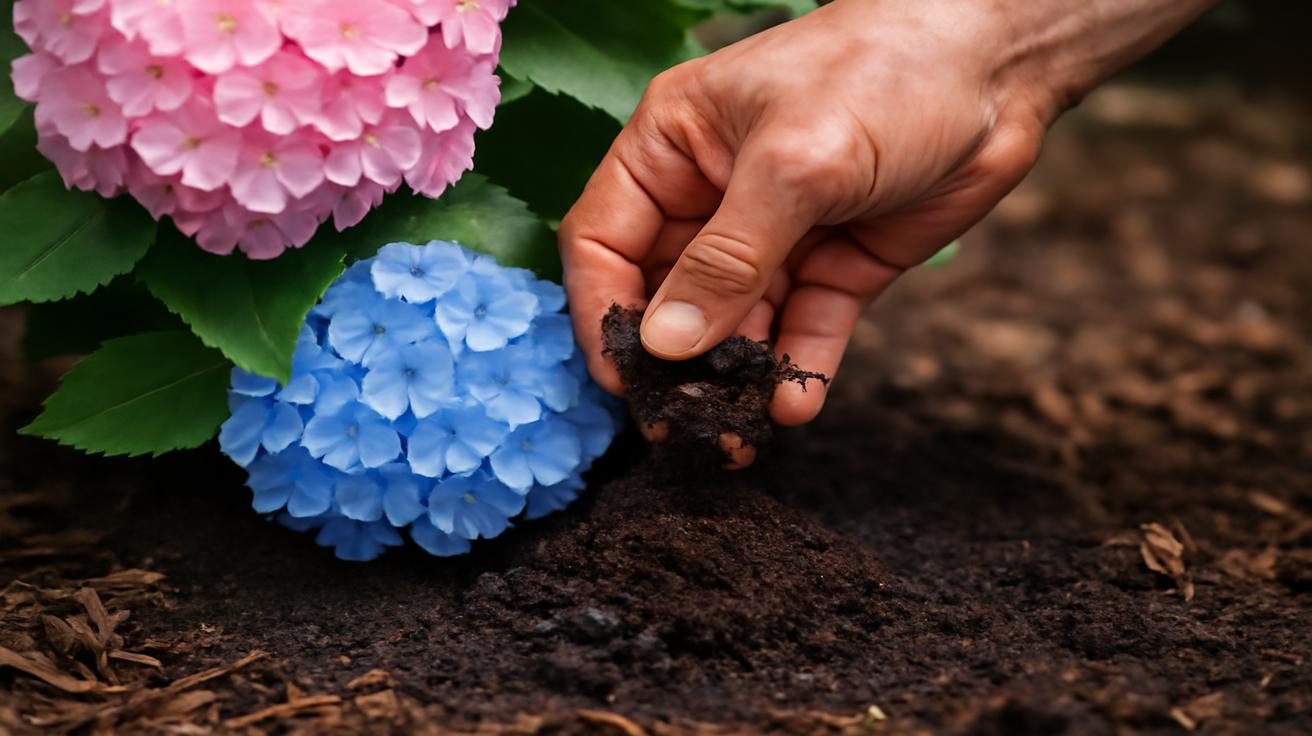
The first time I watched a hydrangea shift from a flat, unremarkable pink to a stormy, moody blue, it felt less like gardening and more like alchemy. It didn’t happen overnight, of course. It was a slow, secret change—like the plant had decided, quietly and deliberately, to reveal a different version of itself. The surprising ingredient behind this little act of magic? Not some expensive soil amendment or specialty garden product, but something most of us drop into the trash without a second thought: used coffee grounds.
The Morning You Stop Throwing Coffee Away
Picture your usual morning. The kettle hisses, the coffee maker gurgles, and that familiar roasted aroma curls through your kitchen, promising clarity. You scoop fresh grounds, brew your cup, and when the last drop has dripped through, you do what you always do—you toss the soggy mound of used coffee into the trash or the compost bin.
But now imagine this same moment with one small change. Instead of throwing those grounds away, you save them in a simple bowl or a jar by the sink. Day after day, they accumulate into a dark, fragrant pile that looks like it still contains a secret. When you step out into your garden and walk toward your hydrangeas, that secret begins to unfold.
Hydrangeas are like mood rings for your soil. Their blossoms can swing from pink to purple to blue depending on what’s happening in the invisible chemistry beneath your feet. Blue hydrangeas, in particular, feel like a kind of garden sorcery—deep lake blues, slate blues, even little pockets of smoky violet where the shades overlap. And as it turns out, those throwaway coffee grounds can help coax your shrubs toward that blue spectrum, simply by nudging the soil in a more acidic direction.
There’s a quiet delight in learning that your morning ritual can reach its hands into the earth and color something living. Suddenly your coffee habit isn’t just a private comfort; it’s a collaboration with your garden.
The Science of Blue Blossoms (Without Getting Boring)
Hydrangeas are one of the rare plants whose flower color can depend heavily on soil pH—the measure of how acidic or alkaline the soil is. Pink and blue hydrangeas are basically two sides of the same coin. The difference has less to do with the flower itself and more to do with what’s happening around its roots.
Here’s the short version: in acidic soil (lower pH), aluminum in the ground becomes more available for the plant to absorb. When a hydrangea pulls that aluminum into its system, it reacts with pigments in the petals and turns them shades of blue. In more alkaline soil (higher pH), that aluminum is locked away, unavailable, and the flowers stay pink or pinkish-purple.
Most gardeners aiming for blue are trying to push their soil into a slightly more acidic range—something between about 5.0 and 5.5 pH, depending on the variety. That’s where used coffee grounds come in. They’re modestly acidic and, more importantly, they gently influence the soil over time. This isn’t a sledgehammer change; it’s more like a subtle nudge repeated week after week.
If you’ve ever felt intimidated by soil chemistry, this is a forgiving place to begin. You don’t need a lab coat. A simple soil test kit from a garden center can tell you if you’re starting closer to alkaline or acidic, and then you can start building a small, everyday ritual with your coffee grounds around that baseline. Hydrangeas don’t need perfection. They respond to patience.
The Coffee–Hydrangea Ritual
There’s something strangely grounding about rinsing your coffee pot and thinking, “This is for the hydrangeas.” It turns what might otherwise be kitchen waste into a gift with purpose. Over time, this can become a ritual every bit as satisfying as your first sip of coffee.
Used coffee grounds, contrary to a persistent myth, are not wildly acidic once brewed. Much of the acidity is extracted into your drink. What’s left in the filter is only mildly acidic—gentle enough to be safe for soil when used with some common sense and moderation. They also offer organic matter, improving soil structure, drainage, and the community of microorganisms that quietly do half your gardening for you while you’re not looking.
Sprinkling those grounds around your hydrangeas is like feeding both the plant and the soil in slow motion. The grounds break down over time, slightly lowering the pH and creating a darker, richer top layer that looks and feels more alive. Worms love it. Microbes move in. The soil becomes less like a static medium and more like a bustling, underground city of nutrition and relationships.
Eventually, if your shrub is a color-shifting type and not locked into white by genetics, you start to notice something. New flower clusters unfurl a little cooler in tone. Pink slides toward violet, violet leans into slate-blue. It’s not an overnight miracle, but if you pay attention over a whole season, or even two, the transformation becomes undeniable. It’s slow magic, but no less magic for that.
How to Use Coffee Grounds Around Hydrangeas
Think of coffee grounds as a slow, supporting actor—not the star of the show. They work best when combined with good general care: enough water, partial shade, and reasonably healthy soil to begin with. Here’s a simple way to fold them into your routine.
- Collect gradually: After brewing, let your coffee grounds cool and spread them out briefly on a plate or tray if they’re very wet. This helps prevent clumping and mold.
- Apply lightly: Once or twice a month during the growing season, sprinkle a thin layer of used grounds around the base of your hydrangea, staying a couple of inches away from the main stems. Think of dusting cocoa on a dessert, not frosting a cake.
- Mix into the topsoil: Use your hand, a small rake, or a trowel to gently work the grounds into the top inch of soil. This keeps them from forming a crust that repels water when they dry out.
- Water afterward: Give the area a light watering to help carry the goodness down to where the roots are waiting.
Combined with other organic materials—like leaf mold, composted bark, or pine needles—your coffee grounds become part of a subtle, ongoing effort to create a more acidic, hospitable soil environment. You don’t need to bury your hydrangeas in grounds. A little, consistently, goes a long way.
How Often and How Much? A Handy Guide
It helps to think in seasons rather than days. Hydrangeas respond to patterns over time, not a single enthusiastic weekend. Here’s a compact guide you can refer to when you’re unsure:
| Season | Coffee Ground Use | Approximate Amount |
|---|---|---|
| Early Spring | First light application as plants wake up | 1–2 small handfuls per mature shrub |
| Late Spring | Second application, mixed with mulch or compost | Up to 1 cup of grounds per shrub |
| Mid–Summer | Optional light top-up if soil is well-drained | Half a cup, lightly worked in |
| Late Summer / Fall | Pause heavy additions; let plants wind down | Very light dusting at most, or none |
These aren’t rigid rules; they’re more of a friendly map. Your particular soil and climate will nudge you to adjust. If your soil is already quite acidic, you may need less. If your ground is stubbornly alkaline, coffee alone might not be enough—but it’s still a helpful piece of the puzzle.
Seeing the Shift: From Pink to Blue
One of the most quietly thrilling experiences in gardening is noticing a change that nobody else would have seen if you hadn’t been paying attention. A hydrangea’s color shift is like that. It doesn’t flip like a switch; it drifts, slowly, sometimes unevenly. One branch might lean blue while another still holds onto its pink. You get gradients, in-between shades, moments where it’s not quite one thing or another.
This in-between stage is where you can start to read your soil’s response. A pink hydrangea edging toward lavender is your plant whispering, “Something’s working. Keep going.” If you’ve been applying coffee grounds, maybe combining them with oak leaves or pine needle mulch, those cool tones are a quiet reward.
It’s helpful to know that not all hydrangeas can change. White varieties typically stay white regardless of soil pH, though they might take on a faint blush as they age. For color transformation, you’re looking primarily at bigleaf hydrangeas (Hydrangea macrophylla) and sometimes mountain hydrangeas (Hydrangea serrata). Even then, genetics set some boundaries. Some will only move within a certain range of pinks and blues. So if your plant resists dramatic transformation, it may simply be expressing its built-in personality.
But when conditions line up—changeable variety, slightly acidic soil, access to aluminum—you’ll see blue deepening into the petals, especially on new growth. The blues that appear are not uniform. You get dusky sky, hints of denim, even steel-tinted petals that look especially striking on cloudy days when the light is soft and forgiving.
There’s a feeling in this process that’s hard to describe until you’ve lived it: a sense of being in conversation with your garden. You respond to the plant; the plant responds to the soil; the soil responds to what you feed it. And all of it, somehow, connects back to that quiet mound of used coffee grounds in your kitchen.
A Few Gentle Cautions
As enchanting as the idea is—turning your morning brew into blue flowers—there are a few realistic boundaries worth observing. Respecting them keeps your hydrangeas happy and your soil healthy.
- Don’t smother the roots: A thick, compacted layer of coffee grounds can actually repel water and air, both essential to root health. Keep layers thin and mix them into other mulch or soil.
- Watch your soil’s personality: If you already have heavy, clay-rich soil that drains poorly, go especially easy. In soggy conditions, too much organic matter at the surface can create a damp, airless zone.
- Skip flavored or sugary coffees: Grounds from sweetened, flavored, or instant mixes may contain additives your soil doesn’t want. Plain brewed coffee grounds are best.
- Mind the compost balance: If you’re also adding coffee grounds to a compost pile, remember they count as “greens” (nitrogen-rich). Balance them with plenty of “browns” like dried leaves, shredded cardboard, or straw to keep your compost from going slimy.
Used responsibly, coffee grounds are more ally than risk. They’re not a cure-all, but they’re a satisfying, sustainable tool in your larger soil-tending toolkit.
More Than Color: The Quiet Rewards
It’s easy to get fixated on the visible payoff: those blue blossoms. But the real gift of sprinkling coffee grounds around your hydrangeas runs deeper than the color wheel.
In a world where waste piles up casually and quietly, reusing something as simple as coffee grounds for your garden feels like a small rebellion. It’s a choice to see value where habit says “throw it away.” You start to notice other potential helpers: eggshells crushed for calcium, leaves raked in autumn and saved as mulch, grass clippings layered carefully instead of bagged and hauled off.
The more you participate in these little loops—kitchen to garden, garden back to table, leftovers back to soil—the more connected you feel to the quiet cycles happening around you all the time. Your hydrangea becomes not just a plant you admire for a few weeks in summer, but a year-round companion whose needs and responses you begin to read.
And there’s something undeniably delightful about knowing that your blue hydrangeas are, in a roundabout way, wearing the colors of your mornings. Each flower head a soft, living echo of every cup of coffee that started your day.
Blending Coffee Grounds with Other Soil Tweaks
If your soil is particularly alkaline, coffee grounds alone might not shift the dial as far as you’d like. That’s okay. They still play an important supporting role. You can pair them with other gentle acidifiers and practices:
- Mulch with pine needles or oak leaves: Over time, these break down and help maintain a slightly acidic environment, especially when mixed with small amounts of coffee grounds.
- Use acid-loving plant fertilizer sparingly: Products formulated for azaleas, rhododendrons, or blueberries can complement your coffee routine, especially in stubborn soils.
- Test, adjust, observe: A simple soil pH test every year or two helps you see whether your efforts are nudging the soil in the right direction.
The aim isn’t to micromanage every decimal point of pH. It’s to understand the general direction of your soil and give your hydrangeas a friendly push toward the blue they’re capable of showing.
Frequently Asked Questions
Do coffee grounds really make hydrangeas blue?
They can help, but they’re not a magic switch. Coffee grounds contribute mild acidity and organic matter to the soil, which can support the conditions that turn hydrangeas blue—especially when combined with other practices like acidic mulch and proper fertilization. The plant’s genetics and your starting soil pH still set the limits.
Can I just dump fresh coffee grounds around my hydrangeas?
It’s better to use brewed, used grounds. Fresh grounds are more acidic and can be a bit harsh in large amounts. Used grounds are milder and safer. Always apply in thin layers and mix lightly into the topsoil or other mulch.
How long does it take for hydrangeas to change color?
Color changes usually happen gradually over one or more growing seasons. You might see hints of change within months, but a full shift from pink to blue often requires consistent soil conditioning and at least one full year of growth.
Will this work on white hydrangeas?
Most white hydrangeas won’t shift to blue, no matter what you add to the soil. Their color is mostly fixed by genetics. Some may develop a pink or greenish tint as the flowers age, but they don’t typically move into the blue spectrum.
Can I use coffee grounds on other plants nearby?
Yes, many acid-loving plants appreciate small amounts of used coffee grounds—think azaleas, camellias, blueberries, and some ferns. Just avoid overdoing it, and always monitor how your soil drains and how your plants respond.
What if I don’t drink much coffee?
You can still play this game slowly. Save what you do have, or ask a neighbor, friend, or local office if they’d be happy to let you rescue some grounds. Even small, occasional additions can support healthier, more vibrant soil over time.
In the end, turning coffee grounds into blue hydrangeas is less about a trick and more about a relationship—with your soil, your plants, and the quiet rituals that stitch your days together. Tomorrow morning, as the coffee brews and that familiar scent fills your kitchen, you might find yourself looking at those damp, dark grounds with new eyes. Not as waste, but as the first brushstroke in a season of blue.







Leave a Comment