
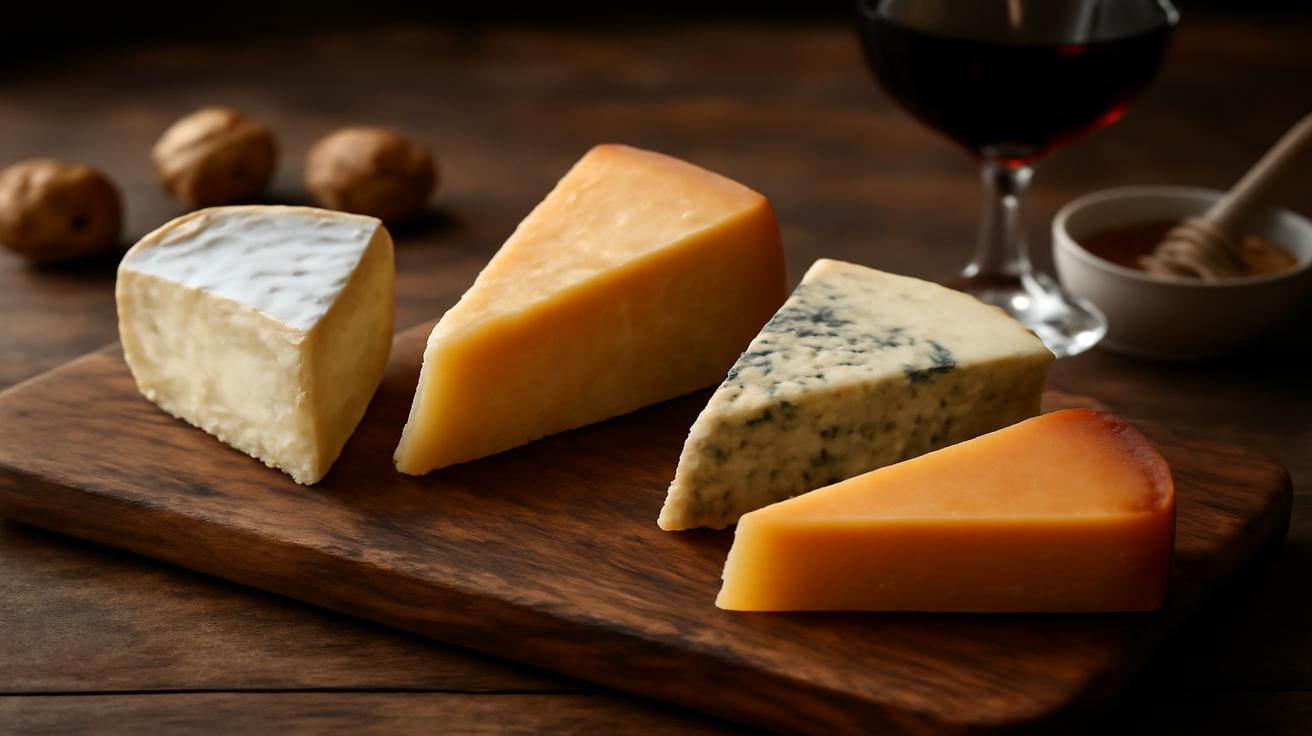
The cheese came out of the fridge still cool with a faint, grassy scent, like a memory of summer trapped in wax. It was a hard, nutty wedge—something between butter-yellow and gold—and as the knife slid through, little crystals snapped under the blade. Outside the kitchen window, late afternoon light spilled over the trees, and for a brief, ordinary moment, the world felt solid and familiar. Then the phone rang.
On the other end of the line, my friend’s voice was tight, thinner than usual. Her mother—once a sharp-witted teacher who could do crossword puzzles in ink—had wandered from the house and forgotten how to get back. “They say it’s dementia,” my friend whispered. “It’s like I’m losing her in fragments.”
I stared down at the plate where I’d laid out a few slices of cheese. The steam from the teapot braided the air above the counter. Everyday rituals: tea, cheese, sunlight, phone calls. And yet somewhere, quietly and relentlessly, millions of brains were losing their pathways, the familiar streets of thought fading into fog. Dementia wasn’t just an abstract medical term—it was moving through families, rearranging futures, one forgotten name at a time.
The Silent, Growing Storm of Dementia
Dementia doesn’t arrive with the drama of a heart attack or the suddenness of a broken bone. It seeps in. A misplaced word here, a missed appointment there, an extra pause as someone searches for the name of a grandchild. At first, it’s easy to write off as “senior moments.” But across the globe, those small moments are adding up to a quiet, staggering crisis.
Today, tens of millions of people worldwide live with dementia, and the numbers are climbing. As populations age and lifespans stretch longer, the brain—which once didn’t often have to last ninety years—is being pushed into decades it was never evolutionarily guaranteed to reach. Families are rearranging living rooms to accommodate walkers and hospital beds. Children are becoming caregivers to parents who no longer recognize them. Health systems are straining to offer care that often needs to be intimate, daily, and long-term.
And here’s the most unsettling part: we still don’t have a cure. Despite billions spent on research, no pill can fully reverse the changes in a brain eroded by Alzheimer’s disease or other types of dementia. Prevention, or at least delay, has become the quiet holy grail. How do we slow this down? How do we protect these delicate webs of memory and identity, before they fray beyond repair?
Scientists are looking everywhere for answers: into genes, into sleep, into pollution, into exercise, into what we eat every day. Somewhere between the morning toast and the evening snack, between a glass of red wine and a bowl of berries, between salt and sweetness and fat and fiber, might lie tiny nudges that shape the brain’s future. And lately, quietly but persistently, one food keeps slipping into the conversation: cheese.
Cheese on the Plateau: An Ancient Food Meets a Modern Problem
Picture a table in a stone farmhouse on a windy plateau in southern Europe. The windows are cracked open just enough to let in the tang of the fields outside—earth, hay, a faint whiff of animals. Bread sits on a rough wooden board. There’s a bowl of olives shining in their own oil. And there, in the middle, a round of cheese sliced into uneven wedges, its aroma walking the line between comfort and wildness.
Cheese is one of our oldest foods, a solution to an ancient problem: how to carry milk into the future. People learned to coax milk into curds, to press and salt them, to let time and microbes carve complexity into flavor. In mountain villages, coastal towns, and tucked-away valleys, cheese became not just a food, but a quiet anchor of culture and survival.
Today, we approach cheese with far more suspicion. Diet headlines warn us about saturated fat, cholesterol, salt, and calories. We hover nervously over nutrition labels, torn between pleasure and fear, told one decade that fat is the enemy and the next that maybe sugar is. Cheese sits at this crossroads—luxurious, rich, often creamy—and yet, strangely, it’s beginning to show up in scientific papers on brain health, not as a villain, but as a possible ally.
In several large population studies, people who regularly eat cheese seem to have a lower risk of developing dementia or show better cognitive performance as they age. It’s not a miracle food, and it certainly isn’t a cure. But the signal keeps appearing: there might be something about this ancient, fermented, slightly funky food that does the brain a quiet favor over the years.
The Unexpected Clues Hidden in Everyday Diets
When researchers investigate diet and dementia, they rarely focus on a single “magic” ingredient. Instead, they track patterns over years, sometimes decades. They follow thousands of people, collecting food diaries, health data, and cognitive tests. Then they look for patterns: Who maintained memory better? Who developed dementia less often? What were these people eating?
Again and again, studies of Mediterranean-style diets—rich in vegetables, fruits, whole grains, olive oil, fish, nuts, and often moderate amounts of cheese and yogurt—have linked these eating patterns with a lower risk of cognitive decline. It’s not that cheese alone carries the weight, but that it appears more often in the diets of people whose brains age more gracefully.
In some research, including large observational studies, people who consumed cheese regularly—sometimes as little as a small serving per day—showed slower cognitive decline compared with those who rarely ate it. In brain health questionnaires, cheese appears as a recurring character, not a cameo. The data isn’t shouting; it’s murmuring. Yet the murmur is consistent enough that scientists are starting to lean in and listen more closely.
This doesn’t mean that piling a plate high with cheese wipes away risk. What it suggests is more subtle: in the complex choreography of nutrients, microbes, and metabolism, cheese might be doing some behind-the-scenes work that benefits the brain.
What Might Make Cheese Protective?
To understand how cheese might matter, you have to zoom in—to the level of fats woven into cell membranes, proteins folded like origami, and armies of bacteria quietly shuttling between your intestine and your brain. It’s not just what’s in cheese; it’s what that cargo does once it joins the long, invisible traffic of the body.
A Symphony of Nutrients in a Small Slice
Cheese is a condensed package of nutrients that, taken together, read like a “greatest hits” list for brain health:
- High-quality protein to support brain structure, repair, and neurotransmitter production.
- Calcium and phosphorus for nerve signaling and structural stability.
- Vitamin B12, crucial for maintaining the myelin sheaths that insulate nerve cells and for preventing certain types of cognitive impairment linked to deficiency.
- Vitamin K2 (in many aged cheeses), which may support vascular health and moderate calcification in blood vessels—including those in the brain.
- Zinc and selenium, important for antioxidant defenses and neuronal function.
Many of these nutrients have individually been associated with better cognitive outcomes in older adults. But in cheese, they arrive together, bound up with fat and fermented cultures, delivered over years of consistent, modest consumption.
The Fermentation Factor and the Gut–Brain Conversation
Spend a moment imagining the interior of a wheel of cheese. To the eye, it’s solid, maybe riddled with holes, veined with blue or dusted with a bloomy rind. To a microbiologist, it’s a living landscape: bacteria, yeasts, and molds shifting flavors, changing textures, and generating an army of bioactive compounds.
Fermented foods are now at the center of conversations about the gut microbiome—the bustling universe of microbes living inside us. These tiny residents help train the immune system, produce certain vitamins, and communicate with the brain along what scientists call the gut–brain axis. Chronic inflammation, which quietly damages brain tissue over time, is often intertwined with disruptions in this microbial world.
Some cheeses, especially aged and traditionally made varieties, host bacteria that may encourage a more balanced gut environment. While not every cheese is a probiotic star, fermentation creates peptides and other metabolites that can influence blood pressure, inflammation, and oxidative stress—all key players in brain aging.
It’s a subtle chain reaction: a bite of cheese nudges gut microbes; those microbes nudge immune cells and blood vessels; healthier vessels and calmer inflammation support brain resilience. No fireworks, no instant transformation—just small, repeated, beneficial whispers through the body’s internal network.
Fat, Rethought: Beyond Old Villains
For years, public health messaging painted saturated fat with a broad, accusatory brush, and cheese became guilty by association. But when scientists look specifically at dairy fat, including in cheese, the story is more nuanced. Some studies suggest that full-fat dairy, in the context of a balanced diet, may not have the harmful effects once assumed, and in some cases could be neutral or even protective for aspects of metabolic and heart health.
Cheese packages its saturated fats with other bioactive compounds—like certain fatty acids and fermentation-derived elements—that may alter how those fats behave in the body. There’s evidence that cheese doesn’t raise LDL (“bad”) cholesterol in the same way butter does, despite similar fat content, likely because of its protein, calcium, and fermentation profile.
Brain cells need fat—especially stable, structured fats—to build and maintain their membranes, keep signals flowing, and protect themselves from damage. While unsaturated fats from fish, nuts, and olive oil play a starring role, the more complex picture emerging around dairy fat suggests cheese may be a supporting character in that story, not the villain it was once made out to be.
Finding Balance: How Much Cheese, and What Kind?
Of course, there’s a chasm between observational research and real life. If you’re standing in the refrigerated aisle or at a bustling market stall, the practical questions press forward: Which cheese? How much? How often? Is this safe for my heart? For my weight? For my blood pressure?
Think of cheese not as a standalone health supplement, but as one voice in a choir. It seems to sing best in diets that are already rich in plants, whole grains, legumes, fish, and healthy fats—dietary patterns where color, fiber, and variety dominate the plate.
| Aspect | Guiding Idea |
|---|---|
| Portion size | Roughly a thumb to two thumbs per day (about 20–40 g) for most adults, within total calorie needs. |
| Frequency | Regular, moderate intake—several times per week, not giant occasional feasts. |
| Types of cheese | Aged, fermented varieties (e.g., cheddar, gouda, parmesan, manchego) and cultured fresh cheeses like feta or certain goat cheeses. |
| Diet context | Most beneficial as part of plant-forward, minimally processed eating patterns (Mediterranean-style, for example). |
| Health considerations | Adjust for blood pressure, kidney disease, or cholesterol concerns; choose lower-sodium options when needed. |
In other words: a small, regular piece of cheese on whole-grain bread, alongside a salad and olive oil, is a different story from a mountain of ultra-processed cheese product on fast food. The health signal isn’t about cheese isolated from the rest of life—it’s about cheese as it tends to appear in simpler, slower, more whole-food ways of eating.
Individual needs still matter. Someone with advanced kidney disease may need to limit certain minerals. A person with very high blood pressure might prefer lower-sodium cheese or smaller portions. Those with lactose intolerance may tolerate many aged cheeses well, since much of the lactose is fermented away, but not all will. As with most things in nutrition, one size does not fit all, but moderation and context are powerful tools.
Beyond Nutrition: The Rituals That Protect Us
There’s another layer to this story, one harder to measure with blood tests and brain scans. It lies in the rituals that so often surround cheese: sitting down for a meal, sharing a plate, slicing a wedge slowly rather than eating in a blur between emails.
Social connection, meaningful routines, and reduced chronic stress are all associated with better brain health and a lower risk of dementia. A small cheese plate shared with friends, a simple lunch eaten away from a screen, a slow evening meal with conversation and clinking cutlery—these moments don’t just feed the body; they signal safety, belonging, and calm to the nervous system.
In communities where dementia appears less frequently or later in life, it’s rarely one thing that makes the difference. It’s a web of habits: daily walking, laughter, modest but frequent contact with others, unhurried meals, purposeful work, and yes, sometimes, a small glass of wine and a piece of cheese as the sun goes down. The food is part of the story. So is the way it’s eaten.
A Growing Crisis, and the Hope Hidden in Ordinary Days
To talk about dementia is to talk about fear—the fear of forgetting, of losing names and places, of becoming a stranger to oneself. It’s also to talk about love: the tenderness of a daughter helping her father button his shirt, the patience required to answer the same question four, five, six times in an afternoon, the grief in watching someone’s world narrow to a chair by the window.
Against this huge, human backdrop, the idea that something as small and familiar as cheese might matter can feel almost absurd. Yet that is where much of the real, durable hope lies: not in a silver bullet, but in the accumulation of tiny, doable choices that nudge the odds in our favor.
A short walk after dinner. A bowl of vegetables at lunch. Learning something new in midlife. Protecting sleep, reducing smoking, staying engaged in community. And perhaps, regularly, without guilt or panic, a modest piece of well-made cheese.
The science is still unfolding. No honest researcher would claim that eating cheese will guarantee protection from dementia, just as no honest storyteller would pretend that any single habit can hold back time forever. But the emerging evidence invites a gentler, more layered relationship with food: one where pleasure, tradition, and biology can coexist rather than clash.
When I think back to that afternoon in the kitchen—the steaming tea, the cool slices of cheese, the phone call that changed the texture of a friend’s life—I think about how fragile and precious our inner landscapes are. Memory is not just data; it’s the smell of your grandfather’s workshop, the way your mother’s handwriting curved on recipe cards, the exact angle of light in the house you grew up in.
We may not be able to choose everything that happens to our brains. Genes and chance and age all play their part. But we can, in countless small ways, build a world that treats the brain with care: feeding it wisely, challenging it often, resting it deeply, and surrounding it with connection and ritual, bite by bite, day by day.
And in that world, on a wooden board between apples and nuts and a heel of bread, there might be a small, regular place for cheese—a quiet, flavorful ally in the long work of remembering who we are.
Frequently Asked Questions
Does eating cheese really prevent dementia?
No single food can guarantee prevention. However, several population studies suggest that regular, moderate cheese consumption, especially as part of an overall healthy, plant-rich diet, is associated with better cognitive performance and a lower risk of cognitive decline. It appears to be one helpful factor among many, not a cure or a shield on its own.
How much cheese is considered “moderate”?
For most adults, a moderate intake might look like about 20–40 grams per day—roughly the size of one to two of your thumbs—within your overall calorie and nutrient needs. This can also be spread over several days rather than eaten daily, as long as the overall pattern remains balanced.
Are some types of cheese better for brain health than others?
Aged and fermented cheeses, such as cheddar, gouda, parmesan, manchego, and certain goat cheeses, tend to be richer in fermentation-derived compounds and vitamins like K2. Many studies do not separate cheese types in detail, but traditionally made, minimally processed cheeses are a reasonable focus if you’re aiming for potential brain benefits.
What if I’m lactose intolerant—can I still eat cheese?
Many people with lactose intolerance tolerate aged cheeses well, because much of the lactose is broken down during fermentation and aging. Hard cheeses like cheddar, parmesan, or Swiss often contain very little lactose. It’s important to test carefully, start with small amounts, and consult with a healthcare professional if you’re unsure.
Is cheese safe if I have high cholesterol or heart disease?
Research suggests that cheese may not affect blood lipids in the same way as other sources of saturated fat, likely due to its protein, calcium, and fermentation profile. Still, if you have high cholesterol, hypertension, or heart disease, it’s wise to keep portions modest, choose varieties lower in sodium, and focus on an overall heart-healthy eating pattern. Always discuss your specific situation with your doctor or dietitian.
Can vegans get similar brain benefits without cheese?
Yes. Many of the brain-supportive nutrients associated with cheese—such as certain B vitamins, minerals, and healthy fats—can be obtained from plant-based sources like legumes, nuts, seeds, fortified plant milks, nutritional yeast, and algae-based omega-3 supplements. The key for vegans is careful planning to ensure adequate intake of B12, omega-3 fats, and other critical nutrients through fortified foods or supplements where needed.
Besides eating cheese, what else can I do to lower my dementia risk?
Evidence points to a combination of habits: staying physically active, not smoking, managing blood pressure and blood sugar, protecting sleep, maintaining a nutrient-dense diet rich in plants and healthy fats, staying mentally engaged through learning and creativity, and nurturing social connections. Cheese can be one small, enjoyable part of that broader protective lifestyle.








Leave a Comment