
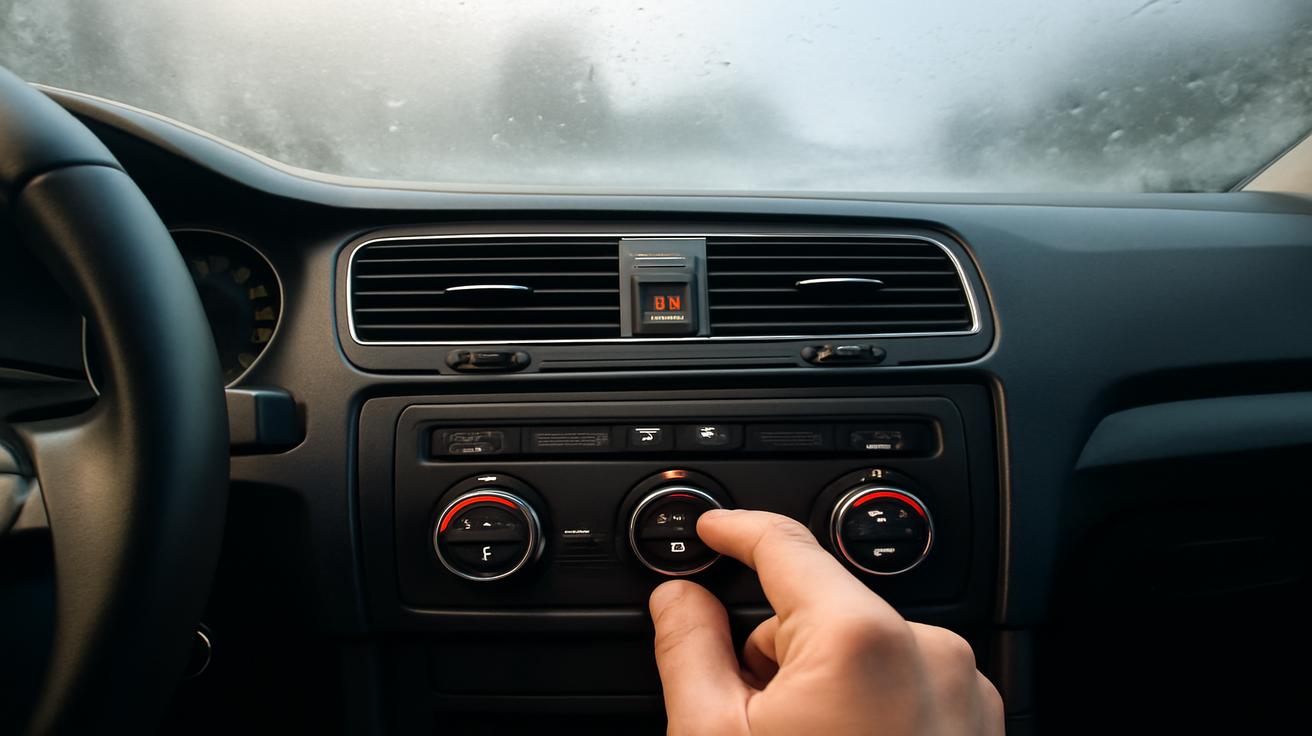
The first time it happens, you feel oddly helpless for someone holding a steering wheel. One moment the road ahead is a clear ribbon of gray, the next it’s dissolving into milky white. The windshield fogs over in a soft rush, like someone breathes out against glass from the inside. The world smears. Headlights become diffuse halos. Your heart rate jumps, fingers tightening on the wheel as you reach blindly for the dashboard controls, jabbing at random buttons and hoping one of them works faster than your rising pulse.
The Moment the World Turns to Frosted Glass
It usually creeps up in the in‑between hours—dawn, dusk, or that lace-thin time after a late dinner when you climb into a still-cooling car. The seats remember the warmth of your body, the windows remember the night air, and the two memories clash in a thin, invisible war.
Inside the cabin, you exhale, slow and warm. Outside, air presses cold against the glass. You don’t see the physics, but you see the effect: microscopic droplets forming in an instant, turning your carefully framed view of the world into something smeared and ghostly. Streetlights stretch like comet tails. The car ahead is still there, but it’s glazed over, half-sketched in moisture.
Instinct does something primitive and unhelpful. You might wipe a circle with your palm, leaving a chaotic smear that buys you a second or two of vision and leaves your hand damp. Maybe you crack a window, inviting in a needle of cold air that knifes straight through your sleeves. Or you start playing the “maybe this button?” game, twisting dials and pushing icons that glow softly in the dim cabin light, hoping one of them is the magic spell.
Most of us treat the battle against fog like guesswork. But car experts, the folks who spend their days swimming in the invisible mechanics of airflow, humidity, and glass, will tell you: there’s one dashboard setting—a simple, often overlooked combination—that can clear fog almost twice as fast as the fumbling we do by habit.
The Hidden Logic in Your Dashboard
If you look closely at your car’s dashboard, there’s a small row of symbols most drivers never truly think about. A windshield icon with little arrows crawling up it. A looping arrow, chasing its own tail in a neat circle. A snowflake or “A/C” light. A fan speed scale. We prod these symbols with the vague idea that more air equals less fog, or warm air equals comfort.
Ask a group of drivers what they do when the windshield clouds over, and you’ll hear a scattered murmur of strategies. Some swear by blasting hot air. Others flip on the defroster and leave the temperature wherever it was before. A few open windows, letting their breath ghost out into the night. Almost no one mentions the button that quietly makes the biggest difference.
Car experts will tell you that the fastest way to beat interior fog is a four-part move—simple once you know it, almost magical in its speed.
The Dashboard Combo That Clears Fog Nearly Twice as Fast
Here’s the setting sequence the pros use when fog rolls in on the inside of your windshield:
- Turn on the front defrost/defog mode (the windshield icon with upward arrows).
- Switch off the recirculation button (make sure the icon with the looping arrow is not lit).
- Turn the A/C on (yes, even in cold weather).
- Set the temperature to warm (not scorching) and increase the fan speed.
This is the combination that cabin airflow engineers, winter driving instructors, and dealership technicians quietly rely on. When they say it clears fog twice as fast, they’re not guessing; they’re describing what happens when you stop fighting physics and start using it.
To understand why this works so well, you don’t need to be a scientist. You just need to remember what it feels like to breathe on a cold window as a kid and watch your name appear, disappearing as the glass slowly dries out.
What’s Actually Happening on the Glass
Fog on the inside of your windshield isn’t magic; it’s just the air around you hitting its limit. Air can only hold so much moisture at a given temperature. When warm, humid air from your breaths touches a colder surface—like winter glass—the moisture can’t stay suspended. It condenses into those fine droplets that scatter light and blur your vision.
What clears that fog isn’t simply heat; it’s dryness. You need air that can absorb water like a thirsty sponge, pulling those droplets back into invisibility. The dashboard combo above is designed, quietly and precisely, to create that kind of air and send it exactly where it’s needed.
Each part of the setting has a role:
- Defrost/defog mode directs the strongest airflow onto the windshield and front windows, concentrating your “drying power” where visibility matters most.
- Outside air (recirculation off) pulls in drier air from outside the car, instead of endlessly reusing the moist, breath-heavy air inside.
- A/C on runs the air through the evaporator, which literally removes moisture—your car’s built-in dehumidifier, working even when it’s cold outside.
- Warm air increases the air’s capacity to hold moisture, helping it pick up condensation more efficiently once it reaches the glass.
When all of that works together, the windshield clears not just from heat, but because you’re scrubbing the air itself, drying it out and sweeping that dryness over the cold glass. Drivers who only crank up the heat often wait much longer; they’re warming but not really drying the air, like trying to wipe a mirror with a damp towel.
Seeing the Difference in Real Time
Imagine two cars parked side by side on a rainy evening. The world outside is a wash of streetlight reflections and wet asphalt. Both cars are full of people. Both windshields are starting to bloom with a thin, obstructing film of fog.
In the first car, the driver does what feels intuitive. They twist the temperature dial to high, leave recirculation on to “keep the heat in,” ignore the A/C (“that’s for summer”), and wait. The fan is loud, the cabin grows warmer, but the fog melts slowly, reluctantly, leaving streaks and hazy patches that linger at the edges.
In the second car, the driver taps into the expert method. One button sends air streaming toward the windshield. Another kills recirculation; the looping arrow fades from amber to dark. The A/C light flickers on, quiet and unassuming. The temperature slides to warm, fan speed rises, and a subtle change begins.
Within seconds, the dense mist at the center of the windshield starts to thin, like breath fading on glass. A clear oval opens up, widening as if someone is gently wiping the fog away from the other side. Side windows sharpen—from smeared ghosts of passing cars to clean silhouettes. By the time the first driver has a patch of usable clarity, the second has a windshield that looks almost freshly cleaned.
To make this easier to remember and compare, think of your options like this:
| Method | Settings | Result |
|---|---|---|
| Expert fast-clear setup | Defrost on, A/C on, recirculation off, warm air, high fan | Fog clears quickly and evenly, interior air dries |
| Common “heat only” approach | Defrost on, A/C off, recirculation on, hot air | Slow clearing, patchy visibility, stuffy cabin |
| Window crack workaround | Windows slightly open, mixed settings | Helps some, but drafty and inconsistent |
The Small Buttons That Matter More Than You Think
The unsung star of this whole routine is the A/C button. It feels wrong, at first glance, to press it when it’s icy outside. You picture summer heat, shimmering highways, the relief of cold air pouring from vents. But inside the guts of your dashboard, A/C is less about cold and more about dryness.
When the A/C compressor kicks in, air is pushed across a cold evaporator coil. Moisture in the air condenses on that coil, forms droplets, and drains away. The air that leaves is drier, even if your temperature knob is set to warm. The car then heats this dried air to whatever level you’ve chosen. That’s why you can have comfortably warm air that’s still aggressively dehumidifying your windshield.
The recirculation button is the secret villain. When it’s on, you’re trapping your own humidity in a loop. Every breath, every damp jacket, every wet shoe adds invisible moisture to the air. The system keeps reusing that same heavy, humid atmosphere, and the glass keeps fogging because the air is already saturated. Turning recirculation off allows outside air—often cooler, usually drier—to slip in and replace the muggy air you’ve created.
This is why experts almost universally say: if you see fog forming in front of your eyes, your first instinct should be to turn recirculation off and A/C on. You’re not just moving air around; you’re changing what that air can do.
Why Warm, Not Scorching, Works Best
There’s also a subtlety in the “warm, not roasting” guidance. If you crank the temperature to its maximum, you’ll certainly warm the glass faster, but you might also end up making the cabin uncomfortably hot, encouraging more sweating and more moisture.
Moderately warm air has plenty of capacity to hold moisture once it’s been dried by the A/C. Think of it as a balance: warm enough to keep the glass from staying cold and clammy, cool enough that you don’t feel like you’ve stepped into a portable sauna just to see the road.
Learning to Read the Glass
Fog on the inside of your windshield has its own language, and once you understand it, your response becomes almost automatic.
On a chilly morning, you might notice a soft, creeping haze beginning at the edges of the windshield, curling inward. That’s your interior air whispering: too warm, too wet. Time for defrost, A/C, and fresh air from outside.
On a humid summer night, a different thing happens—you step out of a cool, air-conditioned car into a thick, warm evening, and suddenly the outside of your windshield fogs over. Here, the dashboard combo won’t help as much because the moisture is not inside with you. In that case, turning the wipers on and briefly increasing the temperature inside to reduce the temperature difference with the outside air can help. Same physics, different side of the glass.
Even the way fog disappears tells a story. If the center of the windshield clears first, forming a clean oval where the defrost air hits most directly, you know your setup is working. If only the lower strip clears while the top remains milky, you might have the fan too low or the air pointed too far downward. If nothing seems to work, your car’s A/C system or ducts could need attention.
Small Habits That Make Fog Less Likely
Car experts also quietly develop little rituals to reduce how often fog happens in the first place. None are complicated, but together they can make the difference between a mildly foggy start and a full, opaque whiteout.
- Shake off moisture before you get in: snow from boots, raindrops from umbrellas, damp from jackets—all of it becomes humidity inside.
- Clear wet floor mats: if they’re soaked, bring them inside to dry now and then instead of letting them steam quietly under your feet.
- Remove snow from the exterior before you drive: melting snow along the cowl near the windshield can add damp air right where you don’t want it.
- Vent the car briefly at the end of a wet drive: if conditions are safe, turning off recirculation and letting drier air in for the last few minutes can leave the cabin less saturated.
None of these replace the dashboard combo, but they give it less work to do when the time comes.
From Panic to Muscle Memory
If you’ve ever had that flash of fear—headlights coming toward you in a blur of fog, your own reflection faintly ghosted in the glass—you know how disorienting it can be. The mind jumps ahead: I can’t see. What if the road curves? What if someone brakes?
What car experts are really offering with this simple technique is not just a faster way to clear glass, but a calmer moment at the wheel. Instead of the frantic, random twisting of knobs, you can treat it like a sequence you’ve practiced:
Fog blooms? Defrost on. Recirculation off. A/C on. Warm the air. Turn up the fan.
The sounds and lights on the dashboard become reassuring: the fan spooling up, the soft click as the compressor engages, the icons glowing steadily, calm and certain. A few breaths later, you watch the fog recede. Vision returns not in a sudden snap, but in a smooth, widening circle of clarity. The curve of the road that was just a suggestion becomes sharp again. Lane lines fall back into place.
In that quiet transformation—from blind panic to easy competence—there’s a small, satisfying sense of knowing the hidden language of your own car. The buttons and lights no longer feel like a cryptic panel; they’re tools, tuned to the way air and water behave on cold glass.
And the next time you slide into the driver’s seat on a damp, chilly morning, coffee steaming gently in the cup holder, you’ll be ready before the glass even starts to bloom. A hand reaches forward, almost on its own, tapping out that expert combination. Outside, the world might still be mist and gray, but inside the cabin, the view ahead sharpens, bright and clear, long before your worries do.
FAQ
Why does turning on the A/C help clear fog even in winter?
The A/C system dehumidifies the air by passing it over a cold evaporator coil, where moisture condenses and drains away. Your car then reheats that dried air to whatever temperature you set. Drier air absorbs moisture from the fog on the glass much faster, which is why A/C is useful even when it’s cold outside.
Should I ever use the recirculation button when my windows are fogging?
No. When windows are fogging on the inside, recirculation usually makes it worse because it traps the humid air you’ve already breathed out. Turning recirculation off lets in fresher, typically drier outside air that helps reduce humidity inside the car.
Is it better to use hot air or cold air on the windshield?
Moderately warm air works best. Warm air can hold more moisture, so once it’s been dried by the A/C, it becomes very effective at absorbing fog from the glass. Extremely hot air can make the cabin uncomfortable and may encourage sweating, which adds more humidity.
What if my windshield fogs on the outside instead of the inside?
Exterior fog usually happens when the glass is cooler than the warm, humid outside air, such as stepping out of an air-conditioned car into a muggy night. In that case, using the wipers helps, and briefly raising the cabin temperature can reduce the temperature difference so the outside of the glass is less likely to fog.
My defrost setting doesn’t seem to work well. What could be wrong?
If the defrost mode clears fog very slowly or not at all, your A/C system might not be dehumidifying properly, cabin filters could be clogged, or the airflow doors may not be directing air correctly. It’s worth having a technician inspect the system, especially if the A/C doesn’t seem to cool well in summer either.








Leave a Comment