
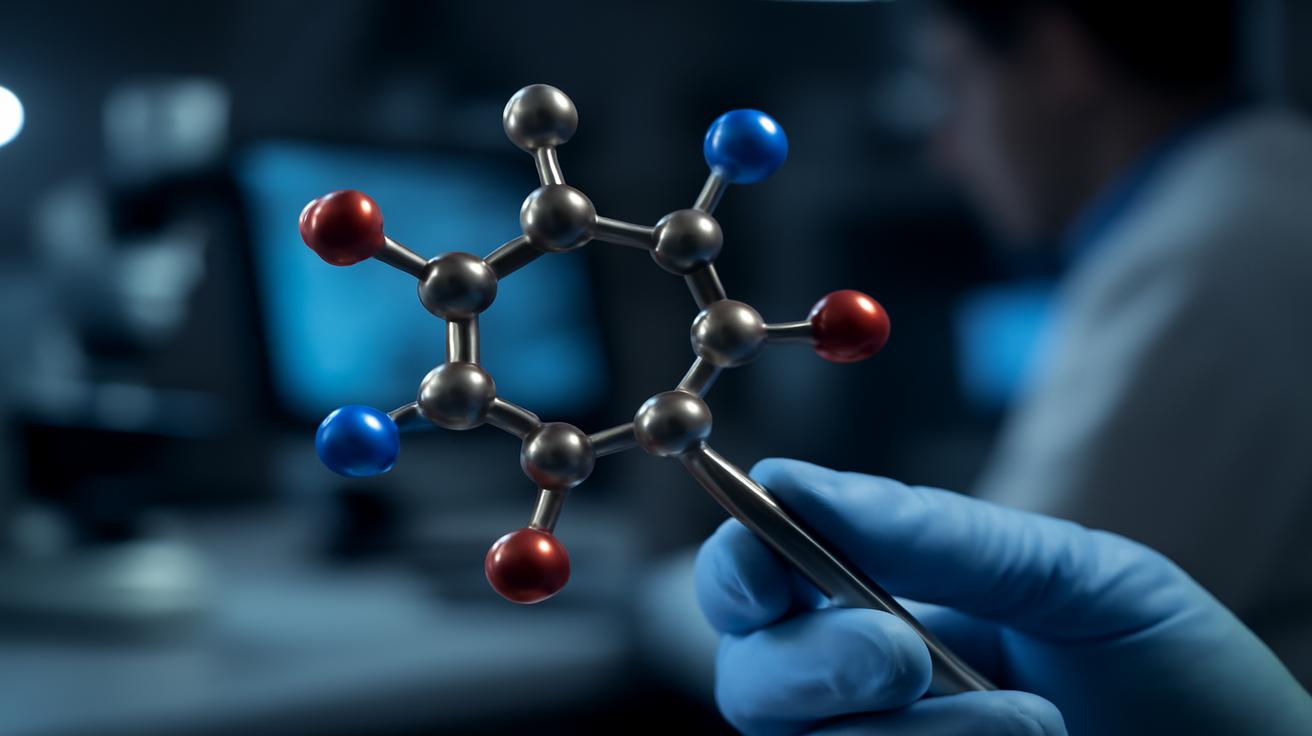
The first thing you notice is the smell. Not the sharp, roasted note of your kitchen coffee maker sputtering to life, but a softer, cleaner version curling through the sterile air of a lab. Somewhere between a café and a clinic, between everyday ritual and clinical trial. A clear vial sits under a ring of cool white light. Inside it swirls a tiny, invisible idea: caffeine, the same molecule that pushes us through Monday mornings, is being coaxed into becoming something stranger and more ambitious—a molecular switch, a new kind of treatment.
When Your Morning Coffee Meets Molecular Engineering
There’s something delightfully subversive about the thought that your daily brew might carry the blueprint for future medicines. Caffeine has always felt like a small rebellion in a cup—speeding up the heart a touch, sharpening focus, stretching the day a little further than it should go. But to a new generation of researchers, it’s no longer just a convenient stimulant. It’s a key. A handle. A toggle on the vast, humming circuitry of the human body.
At its core, caffeine is a simple, plant-made molecule. It evolved as a natural pesticide and a clever way for coffee plants and tea leaves to influence animal behavior—rewarding pollinators, deterring pests, nudging memory in species that might return for more. For decades, we’ve mostly treated it as a lifestyle drug: a productivity tool, a guilty pleasure, sometimes a villain blamed for sleepless nights and jittery hands.
Now the story is changing. In white-walled labs lit by soft blue computer glow, scientists are redesigning cells that can literally “listen” for caffeine. When they sense it, they flip—turning genes on or off, releasing drugs, killing tumors, calming inflammation. Imagine a therapy that comes with instructions as simple as “take with coffee” and means it literally: the caffeine in your morning cup becomes the on-switch for your medicine.
This isn’t science fiction sketched on a napkin in a café. It’s an emerging field at the intersection of synthetic biology, pharmacology, and everyday life, and it starts with a deceptively small question: can we teach cells to respond reliably and specifically to caffeine?
The Quiet Drama Inside a Single Cell
To understand how caffeine becomes a molecular switch, picture a cell not as a blob of biology, but as a small, crowded city. Proteins are the workers and machines, DNA is the central library, and signals—hormones, drugs, nutrients—are messages flying through the streets. If you want to change what the city does, you don’t always knock down a building. Sometimes, you just flip a few traffic lights.
Caffeine has long had its own backdoor into this city. It slips in easily, crosses membranes, and starts blocking certain receptors in the brain—specifically adenosine receptors, which normally signal fatigue and calm. When caffeine gets there first, your brain hears less “slow down” and more “stay alert.” That’s the classic story: block a receptor, change the feeling.
But synthetic biologists are less interested in how caffeine accidentally makes you feel awake, and more interested in how predictably they can make it control a specific circuit inside cells. They build tiny, protein-based “locks” that only caffeine can open, engineered from fragments of natural caffeine-binding proteins or inspired by our own receptors. Once the lock is opened, the cell is instructed to act: produce a therapeutic molecule, turn on a fluorescent tag, release an anti-inflammatory, or even start killing nearby cancer cells.
These designs are often built on modular parts, like Lego bricks. One part recognizes caffeine. Another part is wired to a gene. Link them together and you have what’s called a chemically inducible system—“chemically” because the switch is flipped by a molecule outside the cell, and “inducible” because nothing happens until that molecule shows up. Caffeine becomes the password.
We’re used to pills that dissolve and send their ingredients drifting nonspecifically through the bloodstream. This is more like having a custom outlet in your cells that stays off until you plug in the right compound. And there’s a particular, practical charm in using something as familiar and widely consumed as caffeine to do it.
Caffeine’s Unexpected Advantages
Why caffeine, when the chemical universe is full of options? For one, it’s safe at levels most of us consume daily. Our bodies know it, metabolize it quickly, and generally tolerate it well. It’s cheap. It’s easy to measure in blood. It can be taken in precise doses or woven into daily rituals as simple as sipping a drink.
For engineers designing a switch, this matters. If your molecular on-button is rare, toxic, or unstable, it’s less useful in real life. Caffeine, in contrast, brings its own infrastructure: global production, careful safety data, well-known pharmacology, and the undeniable fact that billions of people already invite it into their bodies with very little persuasion.
That familiarity becomes a scaffold, something medicine can build upon. Researchers can map how quickly caffeine levels rise after a capsule or a cup of coffee, how much is needed to trigger their engineered switch, and how fast the effect fades as the liver breaks it down. It’s a rhythm we already understand: the slow climb of alertness, the late-afternoon taper, the potential for a restless night if we overdo it.
In this new story, those familiar curves become control dials. Tightening them, adjusting them, overlaying them on disease processes—this is where the quiet drama unfolds, not in flashy tech but in careful, patient calibration.
From Jitters to Precision Therapy
Once you accept that cells can be taught to listen for caffeine, the possibilities begin to fan out like the branches of a morning steam rising from a mug. Consider chronic illnesses that require careful dosing: autoimmune diseases, hormone disorders, certain metabolic conditions. What if, instead of a rigid, constant-release medication, your body carried a built-in reservoir of drug, kept silent until caffeine whispered “now”?
Take engineered immune cells, for example. In cancer therapies like CAR-T cell treatment, modified immune cells are unleashed to hunt down and destroy tumor cells. They’re powerful, but sometimes too powerful, risking severe side effects. A caffeine-responsive switch could, in theory, let doctors dial these cells up or down—activating them with caffeine when needed, and letting them quiet when the cup is empty.
Or imagine implanted cells designed to release insulin or anti-inflammatory molecules, standing by like microscopic first responders. Instead of a static infusion pump, your morning coffee could become a gentle nudge: release a little more, now; hold back later. Patients might eventually personalize their treatment not just through doses written on labels, but through small adjustments in how and when they consume caffeine.
It’s not just the macro diseases that tempt this approach. Researchers have already demonstrated cells that glow or change behavior in response to caffeine in controlled lab conditions. These proof-of-concept systems suggest that, in living animals and eventually people, we could have real-time, reversible control over engineered biology using something as simple as a familiar beverage.
Everyday Rituals as Medical Interfaces
There’s a poetic dimension to all this. Medicine has long been a foreign object: injections, hospital visits, plastic pill organizers. The idea that therapeutic control might someday slip gracefully into what we already do—wake, sip, breathe—feels like a softening of the boundary between “being a patient” and simply being a person.
Instead of a buzzing smartphone app demanding attention, the interface becomes the quiet, ceramic weight of a cup in your hand. You might one day be told, “For a stronger anti-inflammatory response, add one extra small coffee in the late morning”—a sentence that blends clinical logic with daily habit in a way that feels strangely gentle.
Of course, this requires that the switch be incredibly reliable. The same cappuccino that wakes you up cannot unpredictably flood your bloodstream with powerful drugs. Beneath the warmth of this narrative lies a bedrock of brutal pragmatism: dose-response curves, toxicity thresholds, population variability. The romance of the idea lives side by side with spreadsheets, error bars, and long, cautious clinical trials.
The Challenges Hiding in the Steam
It’s easy to picture the future like a good advertisement: sunlight through a kitchen window, clean blue fonts promising “smart, caffeine-controlled care.” Reality, as always, is messier.
Caffeine isn’t a uniform experience. One person’s calm, clear focus is another’s racing heart. Genetics play a large role in how quickly we metabolize it. Environmental factors—other medications, liver health, sleep, diet—shape the curve as well. If you’re building a therapeutic switch out of caffeine, you’re essentially stepping into this tangled web of variation.
Engineers can design their molecular switches to respond only at higher, carefully controlled concentrations of caffeine—levels you’d get from a measured dose, not a random energy drink. But human behavior is rarely neat. Someone will always drink too much coffee, or none at all. Someone will decide to quit caffeine mid-treatment. Someone else will live on cold brew.
Then there are the off-target effects. Caffeine is not a blank signal; it affects the cardiovascular system, sleep cycles, anxiety, digestion. Piling a therapeutic switch on top of these side effects means we’re asking a familiar molecule to carry even more responsibility without tipping the balance from helpful to harmful.
There’s also a technical question: can we really make switches that are specific and tight enough to avoid accidental activation? A good molecular switch should be like a finely cut lock—only the right key, in the right orientation, at the right moment. The cell’s crowded interior, packed with other molecules surfing the same biochemical currents, is not always a forgiving environment for such precision.
Ethics in the Cup
Beyond the biochemistry floats another layer: ethics. If therapies can be controlled by a lifestyle molecule as ubiquitous as caffeine, who oversees that control? Could employers push caffeine-linked treatments to optimize productivity? Could insurers design policies around when and how patients “should” consume their daily dose of coffee to keep costs down?
There’s a speculative edge here that cuts both ways. On one side, patient empowerment: you gain finer control over your own treatment, weaving it into your routines. On the other, subtle pressure: health becomes yet another area where behavior is monitored, nudged, or gamified.
We’ve already seen how something as simple as step-counting turned walking into an economy of achievement and data. A medicine that listens to your caffeine intake could, in principle, generate an intimate, continuous record of your habits. Even if the data never leaves your body, the possibility alone invites debate.
Why Scientists Are Still Excited Anyway
With all these challenges, you might wonder why caffeine-as-switch still captures so much imagination in the lab. The answer lies partly in flexibility. Caffeine-based switches don’t have to be the only control lever; they can be part of a panel, one dial among many. They can be restricted to local, implanted systems. They can be confined to critical windows of treatment rather than lifelong use.
And they’re powerful research tools, even before they reach the clinic. A caffeine-inducible gene circuit in cells or animals lets scientists flick on a process and watch what happens in real time. It offers an inexpensive, easy-to-handle way of asking deep questions about disease: What if this pathway were just a little more active? What if this inflammatory signal flickered only when caffeine was present?
Tools shape discovery. Easy tools accelerate it. As caffeine switches become more refined and customizable, they open doors not just to treatments, but to understanding the living systems we’re trying to heal.
Beyond the lab, there is also the simple narrative pull. People respond to stories they can feel in their bodies. Most of us have a relationship with caffeine, however fraught or fond. When we talk about it as a molecular switch, we’re not just discussing abstract chemistry; we’re talking about the same substance that kept you up studying for an exam, or helped you through a night shift, or warmed your hands on a winter morning walk.
That familiarity is not just a convenience. It’s a bridge between specialized science and public imagination—a reminder that the future of medicine may not always arrive as something alien and metallic. Sometimes it arrives as a reiteration of what we already hold, quite literally, between our fingers.
A Snapshot: Caffeine As We Know It Today
Before caffeine can reliably control the subtle machinery of gene circuits, we need to keep sight of what it already does to bodies in their everyday, unengineered state. The table below offers a simple, mobile-friendly snapshot.
| Aspect | Typical Range / Effect |
|---|---|
| Common sources | Coffee, tea, chocolate, sodas, energy drinks, some medications |
| Average cup of coffee | ~80–120 mg caffeine per 240 ml, depending on brew |
| Time to peak in blood | 30–90 minutes after ingestion |
| Half-life in adults | ~3–7 hours, influenced by genetics, liver function, pregnancy, medications |
| Primary biological action | Blocks adenosine receptors; increases alertness and reduces perceived fatigue |
| Common side effects | Insomnia, jitters, faster heart rate, digestive discomfort, anxiety in sensitive individuals |
Any future therapy that leans on caffeine as a switch will have to sit squarely on this foundation, respecting these rhythms and limits. That’s where the art meets the science: bending a familiar curve to new purposes without breaking what makes it tolerable—and even enjoyable—in the first place.
Looking Ahead: Between Lab Bench and Breakfast Table
Picture a time, not so distant, when a doctor’s office smells faintly, not of antiseptic alone, but of brewed coffee from a small machine in the corner. A clinician sits with a patient and explains a new kind of therapy—one where engineered cells implanted under the skin are “listening” for caffeine. The doctor does not hand over a complex device, just a simple schedule and a reminder to keep an eye on how much coffee, tea, or caffeine tablets they consume.
In this imagined morning, the line between medication and daily life blurs in a way that could feel either comforting or unnerving, depending on your temperament. Yet behind it lies a deep, slow revolution: the shift from brute-force drugs that hammer pathways open or shut, to subtle, programmable systems that can be dimmed, brightened, or paused with a signal as mundane as a morning drink.
For now, caffeine’s role as a molecular switch is mostly a quiet story unfolding in research journals and whispered across conference coffee breaks. Cells engineered to respond to caffeine are being tested in dishes and in animals, their behaviors logged and graphed. Safety studies, specificity tests, the slow march through regulatory scrutiny—all of this stands between the lab bench and your breakfast table.
But the mere existence of this work tells us something profound about where medicine is heading. We are starting to design therapies that don’t just target the body, but that also negotiate with our habits, our preferences, and our patterns of living. Instead of asking patients to fit their lives around medicine, there’s a cautious, growing effort to let medicine tuck itself inside what people already do.
Caffeine, in this story, is both symbol and tool. A familiar molecule learning unfamiliar tricks. A bridge between the wild, green chemistry of plants and the cold precision of gene circuits. A gentle reminder that, in the future, healing may not always arrive with the drama of new machines or incomprehensible drugs. Sometimes it may arrive quietly, in the steam rising from a mug, carrying not just warmth and wakefulness, but the power to flip a molecular switch and start a carefully designed cascade of repair.
Frequently Asked Questions
Is caffeine-based treatment available for patients right now?
At the moment, caffeine as a precise molecular switch for therapies is largely in the research and experimental stage. Some early systems have been tested in cells and animal models, but they are not yet standard clinical options for patients.
Would using caffeine as a switch mean I have to drink more coffee?
Not necessarily. Many proposed systems use controlled doses of caffeine in pill or capsule form, separate from everyday beverages. In some future scenarios, normal coffee or tea intake might be part of the plan, but only if it can be measured and managed safely.
Could caffeine-based switches be dangerous for people sensitive to caffeine?
People who are highly sensitive to caffeine, have certain heart conditions, or experience severe anxiety with caffeine would need special consideration. Any clinical use would have to account for individual tolerance and might avoid caffeine switches for those at higher risk.
What kinds of diseases might benefit from caffeine-controlled therapies?
In theory, any condition that requires finely tuned, on-demand control of a treatment could benefit—cancers treated with engineered immune cells, certain hormone or metabolic disorders, chronic inflammatory diseases, and possibly neurological conditions. Research is still exploring which are most practical and safe.
Will this replace traditional medications like pills and injections?
It’s more likely to complement, not completely replace, existing treatments. Caffeine-based molecular switches are part of a broader movement toward programmable, personalized medicine. They may become one option among many, used where their unique strengths—reversibility, familiarity, and controllability—offer clear advantages.








Leave a Comment