
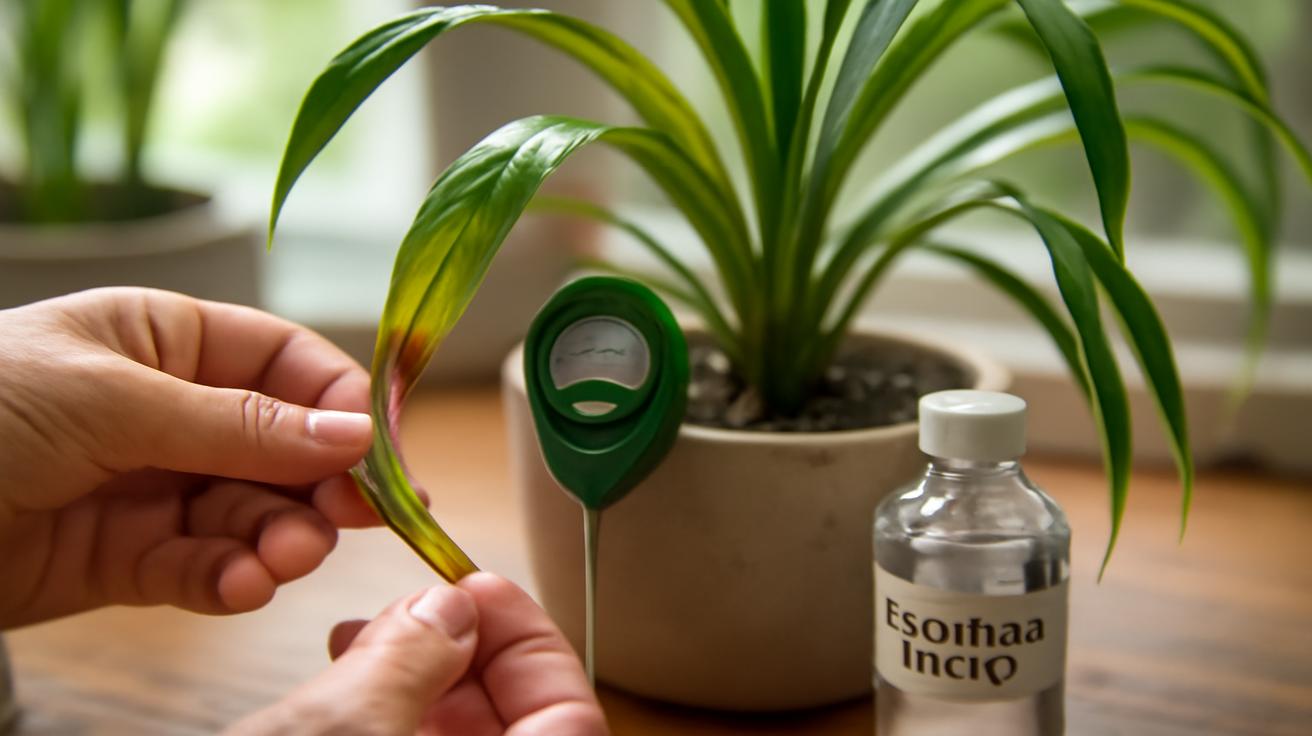
The first time you notice it, it’s just a whisper of color. The leaf tip on your favorite plant has gone from a lively green to a crisp, tired brown. You run your fingers over it and it crackles faintly, like paper held too close to a candle. You pull your hand back, oddly guilty, as if you’ve neglected a pet. A week later, another leaf shows the same bruise of brown on the edge. Then another. Soon you’re convincing yourself the whole plant looks… sad.
This is the quiet panic most plant lovers know too well. You water more, then less. You Google symptoms at midnight. You turn the plant, move it to a different window, apologize to it on your way out the door. Why the brown tips? Are you overwatering? Underwatering? Do you need fertilizer? Different soil? Is your plant just being dramatic?
Here’s the truth hiding in those crunchy little leaf tips: they’re not an accusation. They’re a language. Your plant is telling you a story about the air, the water, the light, and the way you care for it. Once you learn to read that story, those brown tips stop being a mystery—and become a set of gentle instructions.
The moment your plant starts talking: what brown tips are really saying
Stand in front of your plant for a second and really look at it. Are the brown patches just at the very tips, like someone lightly burned the ends with a match? Or are they creeping along the edges, forming a dry outline around the leaf? Is the center still green and firm, or is it yellowing and mushy?
That pattern matters. Brown tips are usually a symptom, not the actual disease. They’re the place where the plant shows stress first, because the tips and edges are farthest from the main water highways in the stem. When something interrupts that flow—too much salt in the soil, too little humidity in the air, roots sitting in soggy compost, or sun beating down like a magnifying glass—the tips feel it first.
Imagine your plant’s leaves as tiny water balloons connected to an elaborate plumbing system. That system depends on balance: the right moisture, the right minerals, the right temperature. When that balance gets knocked off, the plant has a choice: sacrifice a little piece (the tip) to protect the rest. So it lets that part dry out. It’s not being dramatic; it’s being strategic.
The real work of fixing brown tips is figuring out which part of that balance has been disturbed in your particular space, with your particular habits. It’s less like following a strict recipe and more like adjusting a simmering pot until it’s just right. And it starts with understanding the main culprits.
The usual suspects: why leaf tips turn brown
If you could line up every houseplant with crispy tips and ask them what went wrong, most of them would point to one of a few recurring themes. The trick is that many of these problems look eerily similar on the leaves—so you have to look at the whole picture, not just the damaged tips.
1. Low humidity: desert air for tropical hearts
Most of our favorite houseplants—monsteras, calatheas, peace lilies, ferns—come from places where the air is thick and heavy with moisture. In your home, especially in winter or with air conditioning running, the air is often bone dry by comparison. The thinner the air’s moisture, the faster water evaporates from the leaves. The result? The delicate edges dehydrate first and go brown.
You may notice this especially on plants with thin, wide leaves or fancy patterned foliage. Those incredible calathea stripes? They come with a side of humidity demands. In dry air, the plant is constantly losing more moisture than its roots can keep up with. Brown edges and tips are your first clue.
2. Water quality: the hidden chemistry in your tap
Every time you water, you’re not just giving your plant moisture—you’re also delivering whatever is dissolved in that water. Tap water often contains chlorine, fluoride, and varying levels of minerals and salts. Over time, especially if you water a little bit often but rarely flush the soil, those minerals can build up.
Plants like spider plants, dracaenas, and some palms are particularly sensitive. Their leaves quietly accumulate these salts, and at some point, the concentration in the leaf tips becomes more than the plant can handle. Those cells essentially burn out and die, leaving brown, crispy ends even if you’re watering on schedule.
3. Overwatering and root damage: wet feet, thirsty leaves
It sounds backwards: how can a plant that’s watered too much get brown, dry tips? The answer lies underground. When roots sit in soggy soil for too long, they start to suffocate and rot. Rotting roots can’t transport water effectively, even though they’re surrounded by it.
Above the soil line, that root damage shows up as stress. Leaves may yellow, then brown at the tips or edges. They may feel limp yet dry. The plant is essentially dying of thirst from below, even as it’s drowning in water from above. If the soil smells sour, stays wet for days, or the pot has no drainage hole, overwatering is a strong suspect.
4. Underwatering and inconsistent moisture: feast, famine, repeat
On the flip side, letting your plant dry out completely between occasional gulps of water can also cause brown tips. When the soil becomes dust-dry, the plant pulls moisture from its leaves to survive. The tips, again being furthest from the main transport routes, feel the sacrifice first. They dry, crackle, and brown.
Many of us aren’t chronic overwaterers or underwaterers—we’re inconsistent. We forget for a while, then panic and soak the plant. That constant swinging between drought and deluge is like emotional whiplash for the roots and shows up as tired, damaged leaf edges.
5. Too much fertilizer: feeding becomes burning
There’s a unique kind of guilt that comes from realizing you loved your plant a little too hard with fertilizer. Nutrients are essential, but when you give more than the plant can use, the leftovers stay in the soil as salts. Just like with mineral-heavy water, those salts can pull water out of the roots and leaf cells, burning the edges.
If you’ve been enthusiastic with your plant food, or using a strong fertilizer every watering, and you notice brown tips along with a white crust on the soil surface, over-fertilizing is likely part of the story.
6. Sun and heat stress: a slow scorch
Some plants simply cannot cope with a fierce, hot sunbeam blasting through a window for hours. Leaves may first fade, then bleach, then brown at patches or edges. The tissue literally cooks. This tends to look more like irregular tan or brown patches, sometimes with a dry halo, but tips can crisp up too, especially if combined with low humidity.
Your detective kit: simple ways to figure out which cause fits
Think of this as your plant’s version of a medical check-up. You don’t need fancy gadgets, just your senses and a small willingness to poke around.
- Check the soil with your finger. Is it soggy, cool, and wet even several days after watering? Overwatering or poor drainage is likely. Bone dry and pulling from the pot edges? Underwatering or inconsistent watering is playing a role.
- Lift the pot. A plant that feels unexpectedly heavy for a long time is holding a lot of water. One that feels feather-light probably needs a drink and a more consistent schedule.
- Smell the soil. A sour, swampy smell suggests root trouble. Fresh potting soil should smell earthy, not like a forgotten gym bag.
- Look under the pot. Roots spilling from drainage holes may be circling and stressed. A plant can start showing brown tips simply because it’s pot-bound and struggling to absorb water evenly.
- Watch the room. Is there a heater vent blasting nearby? A cold draft? A sunbeam that hits the leaves hard at midday? Environmental stress often hides in plain sight.
- Think about your water. If you see white crust on the soil or around the pot edges, or you live in an area with notoriously hard water, mineral build-up could be part of the puzzle.
Once you’ve gathered these little clues, patterns start to emerge. Your plant isn’t just “failing”; it’s handing you instructions. The next step is making practical, gentle changes.
From crispy to content: how to fix brown tips and prevent new ones
There’s no magic spray that turns brown tips green again—the damaged tissue is dead and won’t revive. But you can stop the spread, prevent new ones, and help your plant grow fresh, healthy leaves that never know the crunch of stress.
1. Trim with care (or don’t)
If the brown spots bother you visually, you can trim them—but do it in a way that respects the leaf’s shape and function. Use clean, sharp scissors and cut along the natural line of the leaf, leaving a thin border of brown. Cutting into the green part can create a new wound that sometimes also browns.
If you don’t mind the look, you can also leave brown tips alone. They don’t harm the plant as long as the underlying cause is addressed; they’re more like old scars than active injuries.
2. Adjust your watering rhythm
Instead of watering by the calendar, water by the plant and the soil. For most houseplants (not all), aim for this rhythm: let the top 2–5 cm (about an inch or two) of soil dry out, then water thoroughly until it drains from the bottom. Empty the saucer so the plant isn’t sitting in a puddle.
For moisture-loving plants like peace lilies, ferns, and calatheas, don’t let them go bone dry. For succulents and cacti, allow the soil to dry out more deeply. Consistency is the real secret—tiny adjustments over time work better than dramatic swings.
3. Upgrade the air: giving your plant a breath of the tropics
If your home is dry, especially in winter, adding humidity is one of the most effective fixes for brown tips—particularly for tropical plants.
- Group plants together so they create a little pocket of shared humidity.
- Use a small humidifier near your most sensitive plants, set to a moderate level.
- Move humidity-lovers to naturally more humid spots like bright bathrooms (as long as there’s enough light).
Misting can be pleasant for you, but it doesn’t meaningfully change humidity for long and can invite fungus if overdone. Focus on steady background moisture in the air instead.
4. Soften the water and flush the soil
If you suspect mineral or salt build-up, there are two main moves:
- Switch your water source. Use filtered, distilled, or rainwater for sensitive plants. Even letting tap water sit overnight can allow chlorine to evaporate (though it won’t remove minerals).
- Flush the soil. Every few months, place the pot in the sink or tub and slowly run a generous amount of water through the soil, letting it drain freely. This helps wash out accumulated salts.
Combine this with gentler fertilizing (dilute more than the label suggests, and fertilize only in active growing seasons) and you’ll often see new growth emerge much cleaner, without brown-tipped baggage.
5. Fix fertilizer and feeding habits
Think of fertilizer as vitamins, not meals. Your plant’s real food is light; fertilizer just supports that process.
- Use a balanced, water-soluble fertilizer at half or even quarter strength.
- Feed only during spring and summer for most houseplants, pausing or reducing in fall and winter when growth slows.
- Never fertilize a severely dry or stressed plant—water first, let it recover, then consider feeding later.
6. Rehome or repot when needed
If your plant sits directly in harsh sun and shows scorched edges, shift it slightly back from the window or give it sheer curtain protection. If it’s near heating vents or cold drafts, find a calmer spot. Small changes in position can drastically change what the leaf surface is experiencing.
If roots are circling the pot or you see more root than soil when you slide the plant out, it may be time to repot into a container just one size larger, with fresh, well-draining soil. Better roots mean better water flow, which means fewer crises at the tips.
Quick reference: matching symptoms to likely causes
Use this simple table as a pocket guide when you’re standing over your plant, wondering what to do next.
| What you see | Most likely cause | First step to fix |
|---|---|---|
| Small brown tips, thin leaves, winter heating on | Low humidity | Group plants, add humidifier, move away from vents |
| Brown tips on spider plants/dracaenas, white crust on soil | Mineral build-up / hard water | Switch to filtered/distilled water, flush soil |
| Brown tips plus yellowing, soil always wet, musty smell | Overwatering / poor drainage | Let soil dry, check drainage, possibly repot |
| Crispy edges, soil very dry between rare waterings | Underwatering / inconsistent watering | Establish regular watering based on soil dryness |
| Brown edges after frequent or strong fertilizing | Excess fertilizer (salt burn) | Flush soil, reduce fertilizer strength and frequency |
| Irregular brown patches where sun hits directly | Sunburn / heat stress | Move out of harsh sun, use sheer curtain |
Learning to live with imperfection
There’s an odd relief that comes when you accept this: perfect, untouched leaves are largely a myth of plant shops and staged photos. In a real home, plants bump into life. They get a few scars. A leaf burns a little where the afternoon sun was stronger than usual. The air dries out when the radiators kick on. You go away for a weekend and the soil gets drier than it should. The plant survives, but it remembers, and those memories show at the edges.
Brown tips are not a sign you’re bad at this. They’re a sign you and your plant are figuring each other out in a real environment, with fluctuating seasons and moods and schedules. If you look closely, you’ll often see something else alongside the brown: new leaves, small and tender, curled in the center waiting for their moment. The plant has decided to keep trying. So should you.
Over time, as you tweak how often you water, where you place each plant, how you handle humidity and light, you’ll notice something shift. New leaves emerge smoother, cleaner at the tips. They stay that way longer. Old leaves may always carry their brown badges, but the overall plant looks fuller, more relaxed, more itself.
That’s the quiet magic of paying attention to these tiny details: plant care stops being guessing and becomes a conversation. The brown tips that once felt like failure turn into feedback. You adjust. The plant responds. You both grow into the space you share.
FAQ: Brown tips on houseplants
Should I cut off brown tips from my plant?
You can trim brown tips for appearance, but it’s optional. If you do, use clean scissors and follow the natural shape of the leaf, leaving a thin border of brown so you’re not cutting into healthy tissue. Trimming won’t fix the cause; it only improves the look.
Will brown leaf tips turn green again?
No. Once a part of the leaf has turned brown and dry, those cells are dead and won’t regain color. Your goal is to prevent new brown tips by addressing the underlying issue—watering, humidity, water quality, fertilizer, or light.
Are brown tips a sign my plant is dying?
Usually not. Brown tips on their own are a mild stress signal, not an emergency. If the whole plant is yellowing, dropping leaves, or turning mushy, that suggests a more serious problem like severe overwatering, pests, or disease. But a few brown edges are more like a warning light than a shutdown.
Is tap water bad for all houseplants?
Most plants adapt fine to typical tap water, but some are sensitive to chlorine, fluoride, and mineral build-up. Spider plants, dracaenas, and some palms often show brown tips from water quality. If you suspect this, try using filtered, distilled, or rainwater for a few months and see if new leaves improve.
How quickly will my plant recover after I fix the cause?
Recovery timing depends on the plant type, the severity of the stress, and the growing conditions. You won’t see existing brown tips heal, but you should start seeing healthier new growth within a few weeks to a couple of months. Patience is key—plants move on a slower clock than we do.
Can too much sun cause just the tips to brown?
Yes, especially when strong sun combines with low humidity. While sunburn often appears as irregular pale or brown patches, leaf tips and edges may also crisp where the leaf surface overheats and loses water faster than the plant can replace it. Moving the plant a bit away from the window or using a sheer curtain usually helps.
How do I know if it’s low humidity or underwatering?
Check the soil and the pattern. If the soil is consistently very dry and the whole leaf looks tired and droopy, underwatering is likely. If the soil moisture seems reasonable but you have thin, crispy edges on humidity-loving plants—especially in winter or with heaters running—low humidity is probably the main issue. Often, both factors play a role, and improving watering consistency plus humidity gives the best results.







Leave a Comment