
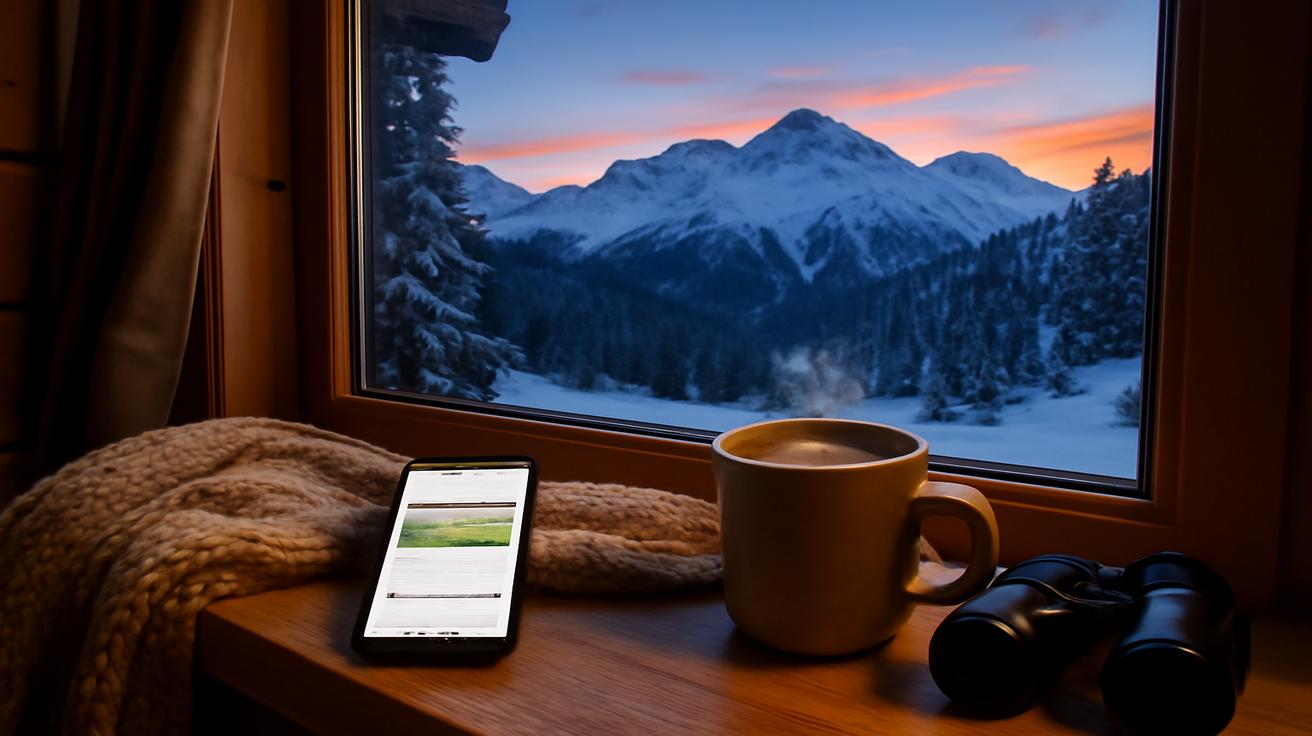
The notification lights up your phone as you stand at the frosted window, watching snowflakes drift like lazy confetti under the streetlamp. It’s a Tuesday night, you’re still in your work clothes, and your brain feels like it’s been left in a too‑bright office microwave. Then the message pops up: Flash sale: 48 hours only. Winter getaways from your city—up to 60% off. You feel that familiar tug. The one that says, what if you could trade the week’s deadlines for pine forests and hot springs, or a cobblestoned old town glowing under holiday lights? You imagine closing your laptop, tossing a sweater and a book into a bag, and letting a plane door thud shut on all your obligations. Last-minute winter trips are a gamble, but they’re also a kind of magic—especially when you know how to play the game and score smart deals instead of panicked bookings.
The Quiet Art of Deciding to Go (Even When It’s Late)
There’s a particular kind of silence that winter brings—the hush of snow settling on roofs, the muffled crunch of boots on packed trails, the way sound seems to fall away when you step into cold air. Last-minute travel taps into that silence, but first you have to push through the noise in your head.
That noise usually sounds like: “It’s too late to book.” “It’ll be insanely expensive.” “I should be more responsible.” And yes, sometimes all of that is true. But winter has its own loopholes. Airlines and hotels hate empty seats and vacant rooms more than you hate your inbox. When a storm changes everyone’s plans, when a midweek lull hits between holidays, or when a ski town has too much capacity and not enough visitors, prices fall for those who are watching and willing to move quickly.
The first move isn’t opening an app. It’s deciding what kind of winter you’re actually craving. Do you want cold that bites your nose, or a sun that feels like a secret? A roaring fireplace in a mountainside cabin, or a compact city where you can spend long afternoons tucked into a café near a window? If you know the feeling you’re chasing, you won’t waste time doom‑scrolling through deals that don’t match. Last-minute doesn’t have to mean directionless.
This is where spontaneity and strategy handshake. You won’t be plotting every moment weeks in advance, but you’re still steering your own story. Think of it as giving winter permission to surprise you—as long as it stays roughly within a budget and a mood you choose.
Where Winter Deals Hide When You’re Not Looking
Good last-minute deals are like animal tracks in fresh snow: once you learn what to look for, you start seeing them everywhere. They’re not random; they follow patterns, and winter has some of the most predictable ones.
Most people travel on weekends and holidays. That means prices often dip on Tuesday through Thursday, and in the odd gap between major winter festivities. The week after the New Year, that soft stretch in late January, the quiet lull before late‑February school breaks—these windows are prime territory. Ski towns relax their prices when everyone’s back at work. Urban hotels that were packed with holiday shoppers suddenly start dangling discounts.
At the same time, winter weather makes the travel world a little wobbly. Storm systems can disrupt bookings but also open up unexpected availability. A corporate group cancels a retreat, a wedding reschedules, or a tour company finds itself with unsold seats. When that happens, the goal on the other side is simple: fill them, fast. That’s where last-minute travelers step in.
Airport hubs are especially interesting in winter. A city that’s a major connection point might be cheaper than you’d expect, simply because airlines are funneling so much traffic through there. If you’re not locked into one particular place, you can ride those currents. Let your departure city be the anchor, and your destination be where the fares and weather quietly line up in your favor.
To keep it tangible, imagine this: it’s Thursday night, and you spot a steep discount for a mountain town two short flights away. You check the forecast: clear skies, good snowpack. A quick search shows that midweek rates at a small lodge just outside town are half the cost of staying slopeside. Suddenly, a trip that would have been unthinkable in high season becomes not just possible but delightfully reasonable.
Smart Tools, Not Endless Tabs
You don’t need every app on your phone or a hundred tabs open. You need a simple, lean toolkit and a willingness to move when the stars align. Price‑tracking tools, flexible date searches, and alert systems can quietly work in the background while you live your life. The key is setting them up before the urge to escape hits, so you’re not scrambling when that flash sale notification arrives.
Think of your tools as your winter scouts. They roam the landscape for you, whispering back when a room drops in price or a flight suddenly dips under your mental ceiling. Rather than checking twenty times a day, you check once with intent. This is what separates impulsive, regrettable bookings from those satisfying, how did I get this for so cheap? kinds of wins.
| Step | What To Do | Why It Helps |
|---|---|---|
| 1 | Set flight and hotel price alerts from your home airport to multiple winter‑friendly regions. | You catch sudden dips without constantly checking. |
| 2 | Keep dates flexible within a 3–5 day range, including at least one midweek option. | Flexibility is the single biggest driver of last‑minute savings. |
| 3 | Choose 2–3 “backup” destinations that fit your winter mood (snowy, cozy city, or warm escape). | You’re ready to pivot if your first choice is overpriced. |
| 4 | Use maps and nearby-town searches instead of focusing only on famous hotspots. | Neighboring areas often have cheaper stays and more availability. |
| 5 | Lock in free‑cancellation stays first, then fine‑tune transport. | You secure a base while keeping some flexibility if prices shift. |
Last-Minute, Not Last-Thought: Packing and Planning on Fast-Forward
The clock is ticking. You just booked a flight for tomorrow night, and the realization hits: you actually have to get ready. This is where most people swing between two extremes—total chaos or over‑planning. The sweet spot is somewhere in the middle, where your bag is light, your essentials are covered, and you’ve left enough space for the trip to surprise you.
Winter adds layers, literally and metaphorically. The weather can change by the hour, and the difference between a magical day out and a miserable slog is often a single forgotten item: gloves, a hat, waterproof boots. The smartest last‑minute winter travelers treat their gear like a permanent, semi‑packed kit. A small bag with a warm base layer, a compact down jacket, a hat, gloves, thick socks, and a travel‑sized moisturizer lives in a closet, ready to meet any climate from mountain snow to coastal wind.
When you’re moving quickly, decisions need to be almost automatic. One pair of boots that can handle slush and city streets. One neutral sweater that works at a café and in a cabin. A scarf that doubles as a blanket on the plane. Instead of packing for every scenario, you pack for warmth, dryness, and comfort, then let the destination fill in the details.
Planning follows the same pattern. You don’t need a color‑coded itinerary, but you do need a few anchors: how you’ll get from the airport to where you’re staying, a sense of what food options are open in winter, and one or two experiences you’d be disappointed to miss. Once you’ve secured those, the rest of the days can unfold more organically.
There’s a certain pleasure in arriving somewhere with only half a plan. You let the weather suggest your schedule: bluebird day, head for the trails; soft snowfall, stay close to town and follow the rhythm of cafés and small shops. A good last‑minute winter getaway feels less like checking boxes and more like following a story as it writes itself.
Winter Cities vs. Wild Places: Choosing Your Flavor of Spontaneity
Not all last-minute winter trips look the same. Some are all about nature: powdery slopes, frozen lakes, steam rising from outdoor pools while the air stings your cheeks. Others are inward, urban, intimate: wandering old streets under strings of lights, settling into a bar with fogged‑up windows, catching a museum exhibit you didn’t know was in town.
Pick a vibe, then let the deals guide you to a specific dot on the map. For a nature‑first escape, smaller mountain towns or lake regions often have better last‑minute accommodation prices than the famous ski resorts a short drive away. You can snowshoe or sled in quiet forests, then dip into resort areas for one special day if your budget allows. If you’re drawn to cities, look for ones that really embrace winter rather than simply endure it. Those are the places where you’ll find seasonal markets, cozy public spaces, and locals who aren’t hiding at home until spring.
Imagine waking up in a city you booked two nights ago, stepping out into air that smells faintly of woodsmoke and roasted coffee. Your only plan: walk until your fingers start to tingle, then duck into the next warm doorway that catches your eye. In the mountains, the same principle applies: maybe you booked because of a cheap room near a ski hill, but you end up falling in love with the quiet of an afternoon spent reading beside a window as the snow deepens outside.
Travel Smarter: Budgets, Boundaries, and Small Luxuries
Spontaneity doesn’t have to equal financial chaos. In fact, the happiest last‑minute trips usually come with a quiet agreement you make with yourself ahead of time: this is how much I’m willing to spend, this is how flexible I can be, and this is where I’ll say no, even if the photos look amazing.
Set your top‑line budget before you fall in love with a destination—total, not just flights. Work backward: subtract a rough daily estimate for food and local transport, then see what’s left for getting there and sleeping there. Winter often offers delicious trade‑offs. A cheaper hotel might be just fine if it lets you splurge on one unforgettable experience, like a guided night snowshoe under starlight or a long soak in mineral hot springs.
Think in terms of “anchors” and “flex.” Your anchors are the non‑negotiables: arriving and leaving safely, having somewhere warm and clean to sleep, making sure you’re prepared for the weather. Your flex is everything else: that extra drink at the bar, the upgrade you really don’t need, the third souvenir scarf because it “looks different from the others.” If you guard your anchors, you can let the flex part breathe without guilt.
One of the secret joys of winter travel is how simple pleasures feel like luxuries. A hot drink after being out in the cold. A long shower after a day in three layers of clothing. Napping under heavy blankets while wind claws at the windows. You don’t have to spend like it’s a once‑in‑a‑lifetime expedition. In fact, treating it as something you could do again makes it easier to stay grounded. This is not your only chance. It’s just this week’s little rebellion against routine.
The Emotional Side of Leaving in a Hurry
Behind every last‑minute getaway is a feeling you’re trying to follow or escape. Burnout. Restlessness. A sadness that’s heavier in early dusk. Or just a simple longing for something different than the inside of your own four walls. Winter can amplify all of that; the days are shorter, the light more precious, the calendar strangely compressed.
Travel won’t fix everything. But there’s something powerfully human about changing your surroundings, even briefly. Stepping off a bus into a town where you don’t recognize anyone, feeling the crunch of unfamiliar snow, hearing a different language or cadence of speech—it rewires your brain just enough to remind you that your life is larger than its most recent problem.
Last-minute trips can also loosen the grip of perfectionism. When you go somewhere without the expectation that it needs to be “ideal” because you planned it for months, you free the journey to just be what it is: a few days in another place, in this particular season of your life. If the weather turns, you adapt. If a restaurant is closed, you stumble on another one down a side street. Imperfections become stories you tell later, not disasters.
Coming Home a Little Changed
Eventually, of course, you come back. The snow at your doorstep looks the same. The emails are still there. The routines, the responsibilities, the too‑bright office microwave of your brain. But something in you has shifted just a fraction, the way fresh snow changes the entire landscape without moving a single building.
Maybe it’s the memory of a morning walk when the world was so quiet you could hear each snowflake land. Maybe it’s the taste of a pastry from the bakery that opened just as you wandered past. Maybe it’s the way your body loosened the moment you sank into that hotel bed, or the stranger on the chairlift who told you about the trail that wasn’t on any map.
When you plan a trip months ahead, you carry expectations with you, testing each moment against what you imagined. When you book last-minute, the balance shifts. Gratitude shows up in smaller, sharper ways: that your flight wasn’t delayed, that your boots really were waterproof, that the barista recommended the perfect drink for your frozen hands. You don’t compare what is with what might have been; you’re too busy keeping up with what is.
The next time your phone lights up with a flash sale, or a three‑day weekend appears like a crack in the ice of your schedule, you’ll remember how it felt to stand in some other winter, breathing in some other air. You’ll know how to scan for those tracks in the snow—those patterns in prices and openings in your calendar—and follow them without burning out your budget or your nerves.
Because spontaneous travel isn’t about being reckless. It’s about being ready. Ready to say yes when conditions align: the right fare, the right mood, the right gap in your life. Ready to pack light, both in your suitcase and in your expectations. Ready to let winter show you one of its many faces—stormy or sunlit, crowded or quiet—before it melts away.
FAQ: Spontaneous Winter Getaways and Last-Minute Deals
Is last-minute winter travel always cheaper?
Not always, but it can be. Prices tend to drop when airlines and hotels need to fill empty seats and rooms, especially midweek or during lulls between major holidays. Flexibility with dates and destinations is the key to actually finding those savings.
How far in advance is considered “last-minute” for winter trips?
Usually within 1–2 weeks of departure, and sometimes as close as 24–72 hours. Some of the best deals appear in that tight window—if you’re prepared to move quickly and can get time off or rearrange commitments.
What’s the best way to avoid getting stuck in winter weather delays?
Choose flights earlier in the day, avoid tight connections through storm‑prone hubs when possible, and keep an eye on forecasts for both departure and arrival cities. Travel with a small carry‑on so you’re more flexible if flights change.
How do I pack light for a cold-weather trip?
Layer smart instead of packing bulky pieces. A base layer, mid‑layer, and one good outer layer usually work better than several heavy items. Focus on warm accessories (hat, gloves, scarf, thick socks) and one pair of versatile, weather‑resistant shoes or boots.
Are last-minute hotel bookings risky in winter?
They can be if you’re heading to a very popular resort during peak dates. In quieter weeks and less obvious destinations, you’ll often find solid availability. Look for properties with clear recent reviews and, if possible, free cancellation in case weather or transport plans change.
How can I keep a last-minute trip from becoming too expensive overall?
Start with a total budget, protect your essentials (transport and lodging), and stay flexible with extras. Consider staying slightly outside major hotspots, traveling midweek, and focusing on low‑cost winter pleasures—walks, views, local markets, and cozy indoor time instead of constant paid activities.
Is it worth taking a short trip—just two or three days—in winter?
Yes. Even a brief change of scenery can reset your mood and energy, especially in the darker months. A well‑chosen nearby destination, easy to reach and simple to navigate, often makes a short winter escape just as satisfying as a longer one.






Leave a Comment