
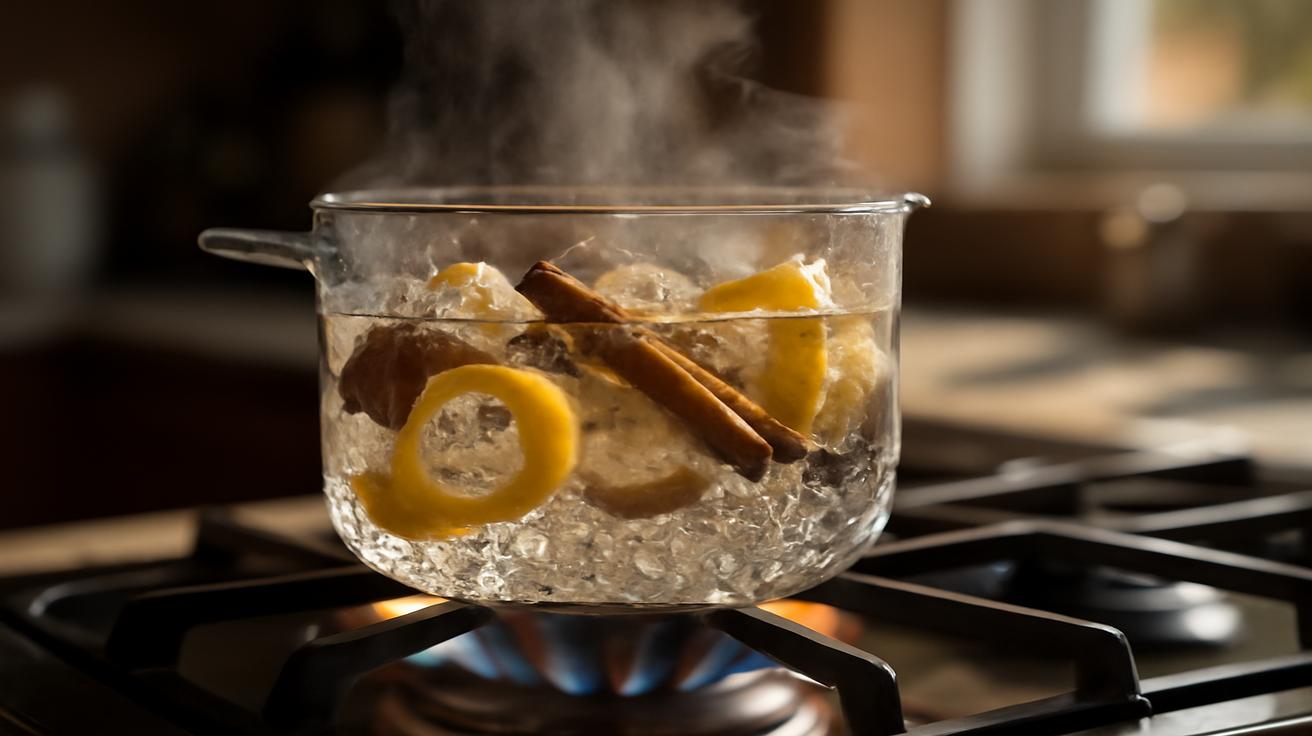
The first thing you notice is the smell. It begins as a shy curl of steam, then suddenly the whole kitchen shifts: bright lemon cut through with the woody sweetness of cinnamon, a spicy, almost peppery lift from ginger. The pot on the stove is barely simmering, but it feels like the air itself has thickened into something warmer, softer, strangely comforting. Someone walking in might not know what’s cooking, only that it smells like care. Like the kind of thing someone makes for you when they’re trying to help you feel better without saying it out loud.
Why This Simple Pot of Peels and Spice Captures So Many People
If you scroll through social media long enough, it appears like a quiet trend humming underneath the louder ones: people boiling lemon peels with cinnamon sticks and slices of ginger. No fancy kitchen. No high-tech gadgets. Just a pot, some scraps you might have thrown away, and a stubborn belief that this little ritual is doing something good.
In one video, a grandmother moves slowly but surely, dropping lemon rinds into water. In another, a young student in a tiny apartment leans on a narrow counter, grinning at their steaming mug. “My mom swears by this,” someone writes in the comments. “Detox!” another person adds. “For colds,” another insists. “For weight loss,” a fourth claims.
It’s a swirl of advice, half-remembered wisdom, and half-tested science. But behind all of the buzz, there’s a simple question: why this? Why lemon peel, cinnamon, and ginger, boiled together like a tiny spell over the stove? What are people really trying to do when they turn on the burner and watch the water turn golden?
Part of the answer is chemical, part of it is cultural, and part of it is something softer that has to do with ritual, with comfort, with the feeling that you’re doing something kind for your body after asking so much of it all day.
The Scent of Old Wisdom: What Each Ingredient Brings to the Pot
Stand over a simmering pot of lemon peel, cinnamon, and ginger, and you’re standing inside centuries of stories. These ingredients didn’t just appear in a TikTok kitchen yesterday; they’ve been passed down in kitchens, herbal notebooks, and oral traditions across continents.
Lemon Peel: The Bright Bit We Almost Throw Away
The peel is the part most of us ignore. We juice the lemon, toss the rind, and move on. But that rind is thick with aromatic oils—especially limonene, the compound that gives lemon its sharp, clean scent. When you boil the peel, those oils bloom into the steam, filling the room and slipping into the hot water.
Inside that sunny yellow skin, there are small amounts of vitamin C, flavonoids like hesperidin, and bitter compounds that traditional healers have long linked with digestion and “lightening” a heavy or greasy meal. In reality, a single pot won’t flood your body with vitamins. But the peel does carry plant compounds that, in larger or more concentrated amounts, have been studied for antioxidant and mild anti-inflammatory effects.
Many people say: “It feels like it cuts through the heaviness.” Maybe that’s partially chemistry, partially the psychological effect of a bright, bitter scent that helps reset the senses. Either way, it’s the lemon peel that makes the blend feel clean, fresh, almost like stepping outside after opening a window in a stuffy room.
Cinnamon: Sweet Wood and Soft Warmth
Drop a cinnamon stick into hot water, and there’s a subtle moment before it releases itself. Then the sweetness starts to seep: woody, vanilla-adjacent, cozy. Cinnamon has been part of folk medicine for everything from digestion to circulation to balancing blood sugar. Modern research has explored some of those claims, especially around insulin sensitivity, though findings are mixed and often depend on the type and dose of cinnamon.
In a humble pot on your stove, cinnamon doesn’t turn into medicine so much as it becomes a flavor anchor. It smooths the sharpness of lemon and the bite of ginger, making the brew easier to sip. It adds a sense of “treat” to what might otherwise feel like punishment—something you have to choke down for your own good.
Its scent also plays with memory. Many people associate cinnamon with baked goods, holidays, warmth. When you inhale that familiar smell out of context—in a simple herbal drink instead of a frosted pastry—your brain still retrieves those same feelings of safety and pleasure. It makes the ritual feel kinder.
Ginger: Heat with a Purpose
Ginger doesn’t tiptoe in. Slice it into coins, drop it into your pot, and just a few minutes later, the water starts to bite back gently against your tongue. That heat comes from gingerol and related compounds, which are part of what gives ginger its reputation in both traditional and modern contexts.
Studies have explored ginger for nausea, motion sickness, and even menstrual discomfort. While it’s no cure-all, there’s reasonably solid evidence that ginger can help ease mild nausea in many people and may offer modest anti-inflammatory effects.
When you’re standing hunched over, sinuses blocked, throat sore, the warmth of ginger rolling down your chest can feel like the world’s smallest but most sincere gift. People brew ginger when they’re sick not just for possible benefits, but for that immediate physical sensation of warmth spreading outward, like a slow internal exhale.
What People Say It’s For — And What It’s Actually Doing
Listen long enough, and you’ll hear a whole catalog of reasons for boiling lemon peel, cinnamon, and ginger. Some sound grounded, some sound wishful, and some sit in that blurry in-between space where science, tradition, and personal experience overlap.
| Popular Claim | What Might Be True | What’s Unlikely or Exaggerated |
|---|---|---|
| “It detoxes your body.” | Drinking more warm, unsweetened liquids can support hydration, which helps your body’s own detox organs work well. | No tea can replace your liver or kidneys, or “flush out toxins” in a dramatic way. |
| “It burns belly fat.” | Choosing this instead of sugary drinks can reduce calorie intake, which may support weight loss as part of a bigger pattern. | There’s no solid evidence that this specific combo melts fat from one area of the body. |
| “It’s great when you have a cold.” | Warm fluids, steam, and some of the plant compounds may make you feel more comfortable and soothed. | It won’t cure an infection, but it may help the days pass more gently. |
| “It helps digestion.” | Ginger and bitter compounds from lemon peel have a long history of use for mild digestive discomfort, and some modern support. | It’s not a fix for serious or chronic digestive conditions on its own. |
Beneath all the dramatic promises, there are a few quiet, believable reasons this little potion keeps appearing in people’s kitchens:
- Hydration and warmth: Many of us go hours without sipping water. A fragrant, warm drink invites you to slow down and hydrate, which alone can ease headaches, fatigue, and that vague “off” feeling.
- Comfort during sickness: Steam for congested sinuses, warmth for an aching throat, and a task to focus on when everything feels hazy—this pot is as much about feeling cared for as it is about chemistry.
- A gentle after-meal ritual: In many cultures, a warm herbal or spiced drink after eating is a way to signal “we’re done here” to both stomach and mind.
- An alternative to sugary drinks: Replacing sodas, sweetened coffees, or heavy desserts with this spiced citrus water can subtly change your daily pattern over time.
None of that needs magic. It comes from small, repeated choices and the way you frame them: not as punishment, but as a quiet act of friendliness toward your own body.
How People Actually Use It: Beyond the Buzzwords
In real life, outside the glow of a carefully edited video, this mixture shows up in small, practical ways. It’s the pot simmering in the background on a gray Sunday. It’s the mug someone holds with both hands as they sit by a fogged-up window. It’s what a tired parent might brew late at night after clearing the table.
A Sickness-Day Companion
On the days when your voice comes out like gravel and your head feels packed with wool, it’s tempting to reach only for quick fixes. But the act of walking into the kitchen, filling a pot, dropping in peels and sticks and slices, is its own slow medicine. While it simmers, you’re forced into a little wait—long enough to sit down, to breathe, to notice how you’re actually feeling.
Is it curing your cold? No. But it’s loosening congestion with steam, easing the roughness in your throat with warmth, perhaps calming your stomach with ginger. More than that, it’s giving structure to a blurry day: brew, pour, rest, repeat.
An Evening Reset Ritual
For others, this mixture is not so much about sickness as it is about transition—the soft, messy boundary between a day of alerts and tasks and the quieter hours that come after. Instead of a glass of wine, instead of scrolling in bed, they put on a kettle and toss in ingredients that by now they could grab in the dark.
As the water changes color, there’s a small mental shift: work mode loosens its edges. The heat of ginger nudges you back into your body; the lemon’s brightness suggests tomorrow might feel fresher; the cinnamon hints at sweetness without demanding it from sugar. By the time you pour it into a favorite mug, the day has a clear closing note.
Using the “Scraps” on Purpose
There’s also a quiet pleasure in the frugality of it. Lemon peels that would have gone straight into the trash now have one more job. The knob of ginger starting to wrinkle in the back of the fridge gets sliced and saved. A stick of cinnamon that’s too tired for baking still has enough spirit left to perfume a pot.
In a world where wellness often comes with price tags, memberships, or rare ingredients, there’s something quietly radical about cobbling together comfort from leftovers and pantry basics. This is the kind of “recipe” that doesn’t care what your kitchen looks like or how new your appliances are. It only asks you to pause long enough to turn the burner on.
How to Make It Your Own Without Turning It into a Miracle Cure
For all the mythology around it, brewing lemon peel, cinnamon, and ginger is wonderfully forgiving. There are no strict rules, no secret measures that change everything. The best version is the one you’ll actually make.
- Start simple: Add the peel of one washed lemon, a small thumb of sliced fresh ginger, and one cinnamon stick to a small pot of water. Bring to a boil, then lower to a gentle simmer for 10–15 minutes.
- Taste and adjust: Too sharp? Add a bit more cinnamon or a splash of honey once it cools slightly. Too mild? Let it simmer longer or use more ginger next time.
- Drink it how you like it: Some sip it hot in small cups; others let it cool and keep it in the fridge for sipping over ice with a fresh squeeze of lemon.
- Use it mindfully: Enjoy it after meals, on slow mornings, or on evenings when you want something soothing that isn’t sweet.
You don’t need to promise yourself that this pot will change your life. It’s enough to let it change your next half hour—how your kitchen smells, how your throat feels, how busy your mind is.
One important note: natural doesn’t always mean harmless. If you’re pregnant, on certain medications (especially blood thinners, blood sugar medications, or anticoagulants), or have conditions like gallstones or liver problems, it’s wise to talk with a health professional before turning this into a daily habit. Spices and citrus peels are gentle for most, but not for everyone, all the time.
What It’s Really For, Beneath All the Claims
Strip away the hashtags and bold promises, and you find something quieter at the center of this simmering pot. Boiling lemon peel, cinnamon, and ginger is, at its core, a small act of intentional care. A way of saying: “I’m going to spend a few minutes doing something that doesn’t produce a report, a post, or a paycheck. I’m just going to make myself—or someone I love—feel a little better.”
It’s for the person who’s been hunched over a screen all day, realizing at 5 p.m. that they haven’t drunk any water. It’s for the friend who texts that they can’t shake this cold, and you show up with a jar still warm from your stove. It’s for the nights when you want to change the channel in your mind from noise to something gentler.
There may be modest health benefits: a bit of digestion support, a touch of relief during a cold, a nudge toward better hydration, a replacement for sugary drinks. But the richest benefit is often the simplest: the way this ritual marks a moment in time as special, cared-for, and yours.
When you stand in front of the stove, watching the thin ribbons of steam rise, you’re not just making tea. You’re pausing. You’re turning ordinary scraps into something fragrant and generous. You’re saying, in a language of scent and warmth instead of words: “I’m here. I’m listening. I’m taking a breath.”
Maybe that’s why people recommend it so passionately, even when the science doesn’t fully match their enthusiasm. Because they aren’t only recommending a recipe. They’re recommending a feeling. And that feeling—the soft glow in your chest as the first sip goes down, the lemon-bright air in your home, the slow miracle of doing something kind for yourself—is real.
FAQ
Does boiling lemon peel, cinnamon, and ginger really “detox” my body?
No specific drink can detox your body in the way people often imagine. Your liver, kidneys, lungs, and skin handle detoxification. This mixture may support hydration and comfort, which helps your body work well, but it doesn’t replace your organs or flush out toxins dramatically.
Can this mixture help with weight loss?
On its own, it won’t melt fat or target belly fat. However, if you use it to replace sugary drinks or late-night snacks, it can be part of a pattern that supports weight loss over time, along with overall diet and movement.
Is it safe to drink every day?
Many people can enjoy it daily in moderate amounts. However, if you’re pregnant, have certain medical conditions, or take medications (especially for blood sugar or blood clotting), check with a health professional before making it a daily habit.
Should I use fresh or dried ingredients?
Fresh lemon peel and fresh ginger give a brighter, more vivid flavor. Cinnamon sticks work well dried. If all you have is powdered cinnamon or dried ginger, you can use them, but start with small amounts—they’re strong and can become gritty if overused.
Can I sweeten it?
Yes. Many people add a little honey, especially when they’re sick or want a softer taste. Just let the drink cool slightly before adding honey to preserve more of its natural qualities. If you’re aiming to reduce sugar, keep the sweetness light.
Can it cure a cold or flu?
It can’t cure infections, but it may help you feel more comfortable—easing throat irritation, encouraging rest, and supporting hydration. Think of it as a helpful companion to rest, not a replacement for medical care if you need it.
Can I reuse the same peels and spices for more than one pot?
You can sometimes get a second, milder batch by adding more water and simmering again. The flavor and aroma will be weaker, but still pleasant. If the ingredients look mushy, dull, or off-smelling, it’s time to start fresh.







Leave a Comment