
The first thing women notice is the air: softer, maybe, lighter somehow. It slips through the door of the salon every time it opens, warm with the promise of later sunsets, faint with the green smell of trees waking up. On the street outside, coats are unbuttoned, scarves loosened, sunglasses pushed up into hair that has survived another winter. Inside, under the hum of hairdryers and the shine of big round mirrors, something subtler is changing. A woman in her early fifties sits down, exhales, and says the line hairdressers all over the world have been hearing on repeat: “I’m ready for something…fresh. But not too young. Just…me. Better.”
The quiet revolution: when hair becomes a spring ritual
Each spring carries its own kind of rebellion. Some years it’s neon sneakers, some years it’s a new lipstick shade, some years it’s the sudden appearance of linen trousers in every shop window. Spring 2026, though, is shaping itself around a quieter, more intimate revolution: the gloss bob on women over fifty.
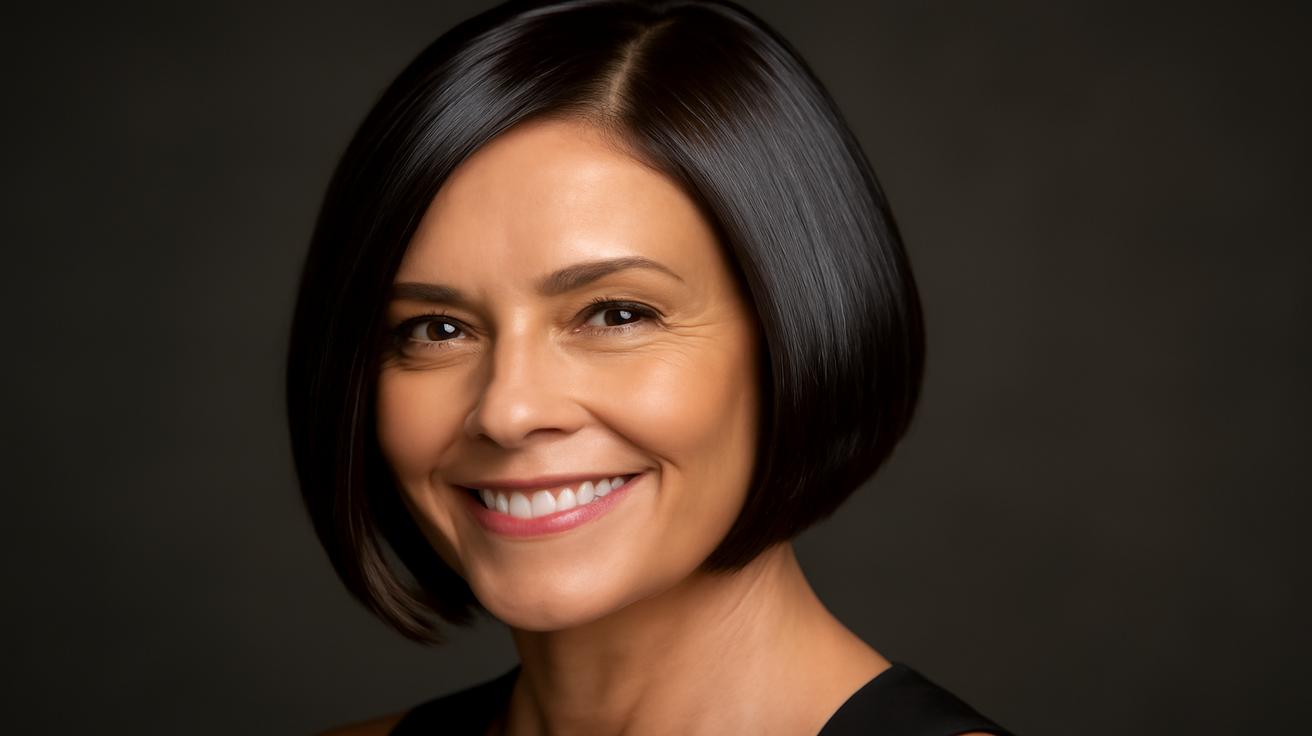
Picture this: soft, blunt ends that skim the jaw or graze the collarbone. A surface so shiny it catches every stray beam of light like water at dusk. Movement, not in flippy layers that fly away in the wind, but in a subtle swing, a gentle roll of hair that moves as you turn your head. It’s the kind of cut that makes a woman tilt her chin up half an inch higher when she leaves the salon—barely visible, but absolutely unmistakable.
The gloss bob is simple to describe but surprisingly hard to forget. It’s not the stiff, geometric bob that demands perfect posture and a minimalist wardrobe. It’s lush, reflective, and quietly expensive-looking, even if it came from a little neighborhood salon where the coffee machine squeaks. It’s a bob with a story.
And for women over fifty, it feels less like a trend and more like a homecoming. Because somewhere between raising kids, building careers, caring for aging parents, and waking up one morning with streaks of silver that weren’t there yesterday, hair stopped being the main character. The gloss bob is changing that script again.
The cut that respects everything you’ve lived
There’s a particular magic to walking into a salon after fifty. You bring your whole life with you—the laugh lines, the sun spots, the memories of perms in the eighties and chunky highlights in the nineties. You also bring a deeper understanding of what you want: ease, polish, and the freedom to not fuss over yourself every five minutes.
The gloss bob works because it doesn’t fight with that wisdom; it folds into it. It knows your hair might be finer than it used to be. It knows your mornings might be split between Zoom calls, grandkids, or long walks with a dog who thinks sticks are currency. It knows you want to look in the mirror and see someone who feels awake and present—not someone chasing a version of herself that only existed in old photos.
On a purely sensory level, it’s a delicious haircut. The stylist’s scissors trace a clean line around your head, and you feel the old weight slipping away—not just the extra centimetres, but the tired ends, the overgrown layers from last year’s “maybe I’ll go long again” experiment. When they blow-dry, the round brush glides, smooth and certain. That first moment when you run your fingers through the finished cut—cool, glossy strands sliding against your skin—is oddly intimate, like reintroducing yourself to your own hair.
What exactly is a gloss bob?
If you had to pin it down, the gloss bob is a medium-short haircut, typically between the jawline and the shoulders, with a smooth, polished finish and a high-shine surface. But that description barely scratches the surface of why it feels so right for spring 2026, and especially for women over fifty.
First, the length. It’s intentional. Short enough to lift your face, show your neck, and give a sense of clarity around your features, but long enough to tuck behind your ears, sweep into a low bun, or clip back on a hot day. It’s the haircut equivalent of cropped trousers: breezy, but not bare.
Then, the shape. Most gloss bobs are softly blunt—no harsh, severe lines, just a clean edge that keeps everything looking modern and tidy. Some versions are all one length, others have whisper-thin internal layers to help the hair move and sit better without visible choppiness.
And finally, the star of the show: the gloss. This isn’t the artificial glassy shine you get from heavy oils that make hair limp. It’s a refined, watery gleam that comes from a combination of healthy ends, gentle styling, and often a semi-permanent glossing treatment that adds depth and reflection to the hair shaft.
The result is a cut that looks expensive even when it isn’t. That shimmer frames your face, brightens your complexion, and makes strands catch the light when you turn your head. Under the sun of early spring, a gloss bob glows.
Why it’s especially powerful after fifty
Hair changes with time, quietly and persistently. Each year can bring a little more dryness, a little less density, a new wave pattern, an unexpected halo of frizz. Post-menopausal hair often feels like a different species altogether than the hair you knew at thirty.
The gloss bob is clever because it leans into those changes instead of pretending they aren’t there:
- Shorter lengths = stronger ends. Cutting away the weight means fragile strands aren’t pulled down and snapped off. Ends look fuller, not wispy.
- Shine equals health. That reflective surface softens the appearance of dryness, making hair look hydrated even on days it’s tired.
- Face-framing lines lift everything. A bob that skims the jaw or high neck gives the impression of lift around the cheeks and jawline, like a visual exhale.
- Less styling stress. With a balanced cut, hair falls into place more easily, so you’re not locked into a wrestling match with your blow dryer.
Instead of promising eternal youth, the gloss bob does something gentler and more radical: it honours the person you are now, while giving your reflection a clean, bright edit.
Feeling the cut: texture, sound, and the mirror moment
The day you decide to go for it often starts quietly. Maybe it’s a morning when you catch your reflection, hair scraped into an elastic for the third week in a row. Maybe your grown child casually says, “You’d look amazing with shorter hair,” and for once, instead of rolling your eyes, you believe them. Maybe it’s the first genuinely warm day of the year, and your winter-length hair suddenly feels like a scarf you forgot to take off.
In the salon chair, you watch wet strands combed straight down, pinned and sectioned with the familiar click of plastic clips. The stylist asks, “Jawline? Chin? Collarbone?” and you point, fingertips grazing the narrow stretch of neck you haven’t seen clearly in years. When the first cut happens, there’s that satisfying snick of scissors closing. A chunk of hair drops into your lap—heavier than expected, like a small, silent decision made visible.
As the cut takes shape, your head feels lighter, more upright. Air brushes the back of your neck for the first time in ages. When the blow-dryer roars to life, warm air skims your skin, and the round brush pulls through your shorter lengths with a smooth, easy rhythm—no tangles, no endless dragging.
Then comes the gloss. Maybe it’s a clear glaze that adds reflection without changing your colour. Maybe it’s a smoky chocolate to deepen your brunette, a tea-rose tint to flatter your blush, or a silvery pearl that negotiates with your natural greys instead of hiding them. The gloss smells faintly sweet, faintly chemical, familiar but less aggressive than old-school dyes. You sit, wrapped in a cape, while the world outside continues on. Inside, your hair quietly drinks in new light.
When they rinse, your scalp feels clean, awake. The water runs cool then warm, pulsing over your neck. You close your eyes and listen: the tap, the low murmur of other conversations, the soft slap of water against porcelain. There’s something oddly ceremonial about it—like washing off the last of a season you’ve decided to outgrow.
And then the mirror moment. Your stylist turns the chair slowly, like the reveal of a painting. You see a version of yourself that looks uncannily like…you. Just fresher. Your jawline looks clearer. Your eyes look brighter. The gloss catches the overhead light, tipping the strands with reflection. You tilt your head, and the bob sways, not stiff, not fussy—just present, alive. You run your fingers through it and feel the new edges: crisp, cool, clean.
Customizing the gloss bob for real life
What makes the gloss bob so widely flattering is how many versions it has. You’re not signing up for a one-size-fits-all trend; you’re commissioning a tailored piece of hair architecture. The choices are quiet but powerful:
- Length. Jaw-skimming if you’re ready for a bold change; chin-length for a classic French feel; collarbone-skimming for a softer, more forgiving transition from longer hair.
- Edge. Super blunt if your hair is straight and you love drama; micro-textured at the ends for waves or curls that need movement.
- Parting. A side part can carve out cheekbones; a soft middle part opens up the face and works beautifully with glasses.
- Bangs or no bangs. Curtain bangs graze the cheekbones and can be pushed aside on low-maintenance days; a side fringe can soften forehead lines without feeling heavy.
- Colour & gloss. For natural greys, a sheer iridescent gloss can make silver strands look deliberate and luxe. For coloured hair, a tinted glaze can add depth without committing to full-on dye.
To keep all of this from feeling abstract, here’s a simple, mobile-friendly table you can show your stylist or refer to when deciding what kind of gloss bob might work best for you:
| Hair Type | Best Bob Length | Finish & Gloss Idea |
|---|---|---|
| Fine & straight | Chin to jawline, mostly blunt | Light, clear gloss for maximum shine and density effect |
| Medium with slight wave | Chin to collarbone, soft ends | Sheer tinted gloss to add depth and emphasize movement |
| Thick or coarse | Below chin to collarbone, subtle internal layers | Smoothing gloss plus heat-protective blow-dry for sleekness |
| Curly or wavy (natural texture) | Collarbone with shaped layering | Moisturizing gloss that enhances curl definition and sheen |
| Silver/grey blend | Chin to collarbone, sharp outline | Iridescent or pearly clear gloss to brighten and tone |
Living with a gloss bob: the everyday rhythm
Of course, the true test of any haircut isn’t how it looks as you step out of the salon. It’s what happens on a Tuesday morning when you’re half awake, the kettle is just starting to boil, and you’ve got ten minutes to be out the door.
The beauty of the gloss bob is that its best days aren’t limited to “fresh cut” days. Because the architecture is so carefully balanced, it holds itself well with minimal intervention. On most mornings, it asks for very little: a comb, maybe a quick pass of a round brush while you blast it with warm air for five minutes, a dab of smoothing cream or light serum if there’s frizz in the forecast.
On weekends, you might let it air-dry, coaxing out any natural wave with a little scrunch and a touch of product. The bob will look different—softer, more undone—but still intentional. On evenings out, a quick, smooth blow-dry and a once-over with a large-barrel curling iron can turn it into something almost red-carpet, the gloss catching candlelight like tiny mirrors.
The routine becomes quietly satisfying: trim every six to eight weeks to keep the line sharp; a gloss treatment every second or third visit to keep the reflection high. Less about chasing youth, more about maintenance as self-respect.
More than hair: a shift in how you move through the world
Some changes sneak up on you not in the mirror, but in how you inhabit your own body afterwards. A gloss bob often has that effect. You notice it when you’re walking down the street and feel the hair swing at the edge of your jaw. When someone compliments your “glow” and can’t quite place that it’s partly the light bouncing off your hair. When you catch your reflection in a shop window and, instead of flinching, you think, “There she is.”
After fifty, so many narratives try to flatten women into one-note characters: invisible, softened, grateful for any crumb of attention. The gloss bob refuses that script. It doesn’t shout, but it also doesn’t apologize. It frames your face the way a good border frames a painting—not overshadowing what matters, just giving it a cleaner edge.
There’s something deeply moving about seeing women claim that for themselves. The teacher who finally cuts off the low ponytail she’s worn for decades. The doctor who schedules her haircut right after her birthday every year, a small ritual of renewal. The grandmother who lets her granddaughters run their hands through her new bob and says, “Yes, I can still try something new.”
Spring 2026’s biggest hair trend doesn’t belong to teenagers on social media. It belongs to women with laugh lines, with stories, with full calendars and full hearts. Women who have earned the right to hair that feels as alive and reflective as they are.
FAQs about the gloss bob after 50
Is the gloss bob hard to maintain if I’m not good with styling tools?
No. The gloss bob is designed to make your life easier, not harder. With a good cut, most women can achieve a polished look in 5–10 minutes using just a blow-dryer and a brush, or even less if you let it air-dry and embrace a softer finish.
Will a shorter bob make my hair look thinner?
In most cases, the opposite happens. Removing length gets rid of weak, frayed ends and makes the perimeter look fuller and denser. A softly blunt bob is one of the best shapes for making fine or thinning hair appear thicker.
Can I wear a gloss bob if I have natural grey or white hair?
Absolutely. Grey and white hair can look stunning in a gloss bob. A clear or pearly gloss treatment can reduce dullness, add reflection, and help your natural colour look intentional and luminous rather than flat.
How often should I get trims and gloss treatments?
For most women, a trim every six to eight weeks keeps the shape sharp and the ends healthy. Gloss treatments typically last four to six weeks, so you can refresh every visit or every second visit, depending on how much shine and tone you want to maintain.
What if I’m nervous about going too short all at once?
You don’t have to. You can ease into a gloss bob by cutting to just above the shoulders first, then going shorter at your next appointment if you love it. Ask your stylist for a collarbone-length gloss bob to start—that length is flattering on nearly everyone and makes the transition feel less drastic.
Is heat styling required to get that shiny finish?
Not always. The gloss itself boosts reflection, and a good conditioner helps smooth the cuticle. A gentle blow-dry with a round brush can enhance shine, but if you prefer to air-dry, using a smoothing cream or serum while hair is damp can still give you a softly glossy effect.
Does a gloss bob work with waves or curls?
Yes, as long as the cut is tailored for your texture. A collarbone-length bob with shaped layering and a moisturizing gloss can highlight curls and waves beautifully. You’ll get a bouncy, textured version of the gloss bob rather than a poker-straight one—and it can be just as modern and flattering.




Leave a Comment